Understanding neurons - their shape, patterns of electrical activity even a profile of which genes are turned on at a given moment - remains as much art as science due to the complexity of research.
But that could soon change: Researchers at MIT and the Georgia Institute of Technology have developed a way to automate the process of finding and recording information from neurons in the living brain. The researchers have shown that a robotic arm guided by a cell-detecting computer algorithm can identify and record from neurons in the living mouse brain with better accuracy and speed than a human experimenter.
Riding into a black hole is a fun mental exercise. General relativity predicts* that an observer who falls freely into a large black hole will have no means with which she can establish whether she is at the event horizon, which is the radius below which there is no escape possible. I explained this more detailed in Black Hole Duality: Not noticing crashing with light speed. Nevertheless, many popular descriptions leave the feeling as if the event horizon is also locally, to the one who falls freely through it and his close surroundings that fall with her, a recognizable place. This can be misleading in interesting ways and a
A 1.5 metric ton block of engraved limestone at the Abri Castanet in southern France is the earliest evidence of wall art - approximately 37,000 years old and evidence of the role art played in the daily lives of Early Aurignacian humans.
The research team has been excavating at Abri Castanet for the past 15 years. Abri Castanet and its sister site Abri Blanchard are among the oldest sites in Eurasia bearing artifacts of human symbolism. Hundreds of personal ornaments have been discovered, including pierced animal teeth, pierced shells, ivory and soapstone beads, engravings, and paintings on limestone slabs.
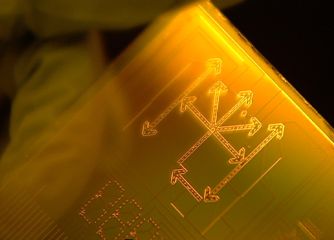
Your cay may soon have a new dashboard, one made of a flexible plastic and oxide layer that could be integrated into the car front window to give the driver direct information
The MULTIFLEXIOXIDES project is designed to develop new cost-efficient, long lasting, light, flexible and transparent devices (can anything be all of those? Only in academia) which can display information directly on the windshield. This is possible using small glass pads with a transparent substrate of nano-sized flexible oxides, which act as a basis for organic LEDs (light-emitting diodes).
The University of Luxembourg has agreed to actively participate in the Open Access initiative. Defined in the Budapest (2002), Bethesda (2003) and Berlin (2003) declarations on Open Access, it is an effort to make scholarly publications freely available to the public - because the content creator pays for publication, rather than a corporation underwriting the cost and retaining copyright while charging a subscription fee for access.
In this sorry age for Supersymmetry (SUSY) phenomenologists, it is quite easy to step on an aching toe while discussing the results of the Large Hadron Collider experiments, whose results have let these physicists down by excluding the presence of SUSY where most of them used to put their moneys until yesterday.
In
the
previous blog post we discussed entropy. I provided you with a less well-known perspective on entropy and demonstrated that this generic perspective is fully compatible with the more traditional (and more narrow) thermodynamics view on entropy.
I promised you a toy model to elucidate the information-theoretical entropy that was introduced. You have been waiting patiently, and you get your new toy today. But before we start playing, let's test your patience for a few more minutes, and first expand upon the results obtained in the previous blog post.
Trivializing The Second law
Researchers have discovered a new nanometer-scale atomic structure in solid metallic materials known as metallic glasses, filling a gap in understanding of this atomic structure.
Glasses include all solid materials that have a non-crystalline atomic structure. They lack a regular geometric arrangement of atoms over long distances. "The fundamental nature of a glass structure is that the organization of the atoms is disordered—jumbled up like differently sized marbles in a jar, rather than eggs in an egg carton," says Paul Voyles, a University of Wisconsin-Madison associate professor of materials science and engineering and principal investigator on the research.
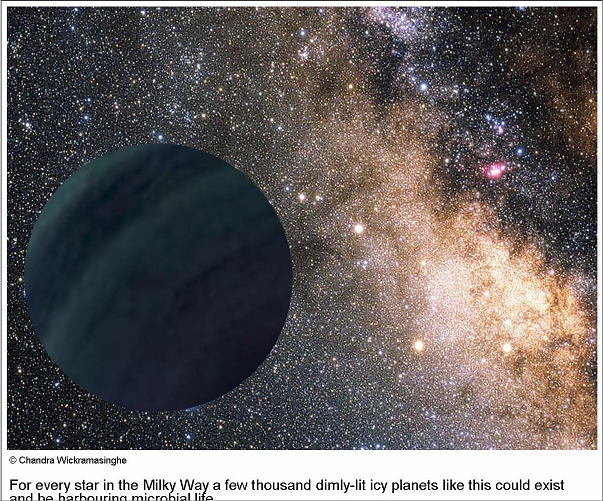
A few hundred thousand billion free-floating, Earth-sized planets may exist in the space between stars in the Milky Way, argues an international team of scientists in Astrophysics and Space Science.
Because it's required for astronomy claims this decade, they make note that those planets could have alien life.
Since "spacetime" is simply a term for a space that has a component we call "time", we need only concentrate on spaces in a somewhat general sense. Now, as
Derek Potter, on this site, pointed out to me,
a little while ago, "To us, a space is somewhere to put a box :)" So, let's take a short "detour" to address what we will mean by a space, in this series.