A new imaging study shows the brains of embryonic chicks can 'wake' long before chicks are ready to hatch out of their eggs - but it took loud, meaningful sounds. Playing meaningless sounds wasn't enough to rouse their brains.
As modern medicine continues to push back the gestational age at which prematurely born infants can reliably survive, pediatricians have worried about the effects of stimulating brains that are still 'under construction'. It turns out that,like adult brains, embryo brains also have neural circuitry that monitors the environment to selectively wake the brain up during important events.
It's been said that science fiction can sometimes turn into science fact.
In that same vein, it may be that stories from
The Onion (
More U.S. Children Being Diagnosed With Youthful Tendency Disorder) may one day become part of the Diagnostic and Statistical Manual of Mental Disorders (DSM).
To the couple of positions I
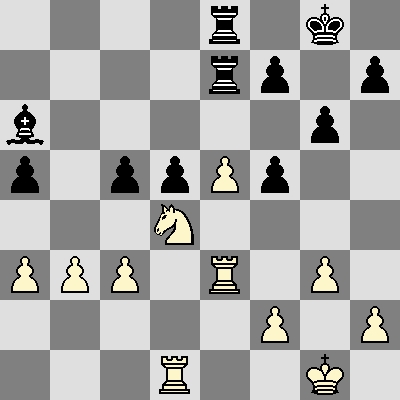
posted yesterday from the Chess Tournament I played this weekend, let me add one I played on round II, when I was white against Fausto Scali, the blind player. The position arose from the Advance variation of the French defense (1.e4 e6 2.d4 d5 3.e5), which however we reached with a transposed move-order (1.e4 c5 2.c3 d5 3.e5). In the position below, black has just played an inaccuracy in an already slightly worse queenless middlegame:
We carry some press releases on Science 2.0 and of course that is what Science Codex in our sidebar is. It's been an intentional effort since the communications arm of Science 2.0 began in 2006. The first, and most important reason, for that is because we think the audience is smart and don't need journalists putting context to most stories. Our audience just wants to know first so if something looks interesting, it will hit this page on the minute the embargo lifts. Everything else is written by scientists or at least (mostly) knowledgeable people(1).
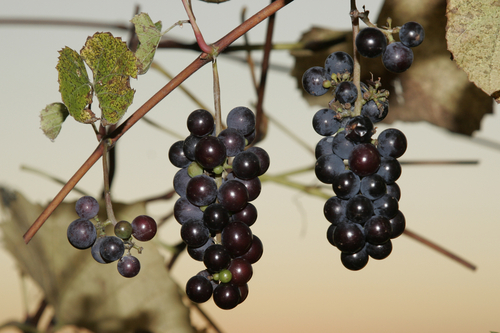
ST. HELENA, CA – It’s a fine Saturday, and the traffic lines up on Highway 29 as the day’s crop of tourists meander from vineyard to vineyard along the road that bisects Napa Valley.
By year’s end, 4.5 million people will have passed through, sampling vintages from the state that grows 92% of the nation’s grapes and supplies 60% of its wine. More than 200 million cases of California wine are sold within the United States each year; a further 250 million find their homes abroad. California is the world’s fourth largest wine exporter, after Italy, France, and Spain.
And Napa Valley is at the heart of it all.
Last week it was asteroid mining, as Peter Diamandis and his partners showed us their bold new venture, Planetary Resources,
aiming eventually to start harvesting trillions of dollars worth of
materials that would then no longer have to be ripped out of Mother
Earth.
The National Academies Press will roll out some new national science standards for K-12 educators and for the first time, those standards will include guidelines on teaching climate change.
Good luck with that. As No Child Left Behind showed, positive results and the welfare of kids will not matter in a political fight - any attempts to create an education standard and accountability are going to flop unless education unions buy into it and any attempts to create a science standard for climate education will flop unless teachers do. And a lot of them don't.
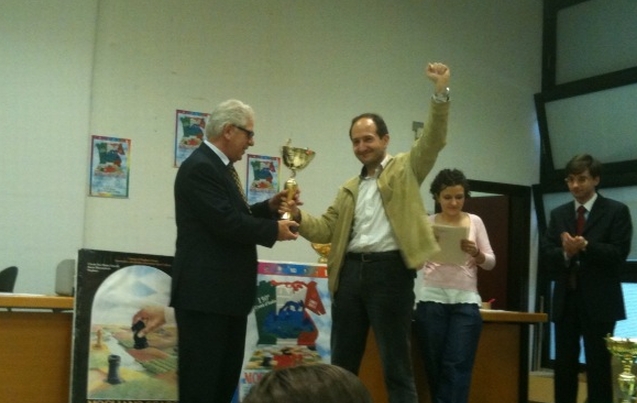
Chess is a game, a sport, and a very radical way to test one's concentration and discipline in pure thought. Besides liking it as a game (a precondition to enjoy the other benefits), I also enjoy immensely the demands that a chess game puts on your brain's functioning; and this is brought to the extreme during a chess tournament, where you are also subject to pressure from competition factors extraneous to the 64 squares where the battles develop.
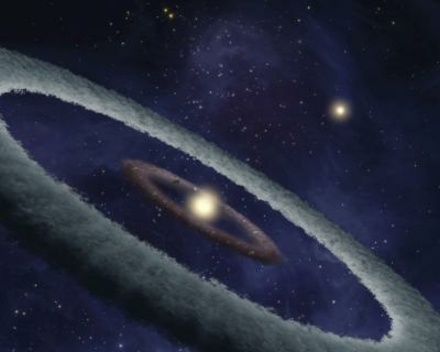
Our solar system is believed to be around 4.5 billion years old, but it's difficult to know how long it actually took to form.
The reason is, basically, our 'clocks'.
Establishing chronologies of past events or determining ages of objects require having clocks that 'tick' at different paces - nuclear clocks used for dating are based on the rate of decay of an atomic nucleus expressed by a half-life, which is the time it takes for half of a number of nuclei to decay, a property of each nuclear species. Radiocarbon dating is the most famous. It was invented in Chicago in the late 1940s and can date artifacts back to prehistoric times because the half-life of radiocarbon (carbon-14) is a few thousand years.
If a species´ reproductive strategy is evolutionarily adapted to the environmental constraints encountered by that species in its natural habitat, such as availability of food resources and predictability of the environment, and the aim generally is to produce the largest possible number of surviving offspring under particular conditions, then common dormice are defying that just a little.