





Plenty of us have been there: waking up after a night out with a thumping headache, feeling sick and swearing never to touch alcohol again. If only there were a way to prevent these terrible hangovers.

It isn’t uncommon for us to mix our drinks, maybe a beer in the pub before moving on to wine. Folk wisdom has something to say about this: “Beer before wine and you’ll feel fine; wine before beer and you’ll feel queer.” This idea is very prevalent and versions of it occur in many languages. In my native country, Germany, for example, we say: “Wein auf Bier, das rat’ ich Dir—Bier auf Wein, das lass’ sein.” This translates as: “Wine on beer, I’ll advise you to drink beer on wine.”

Friends of the Earth, social justice warriors, 1960s-era anti-science activists, occasional lobbyists, and current Political Action Committee (PAC) for Democrats (including Green New Deal darling Rep.
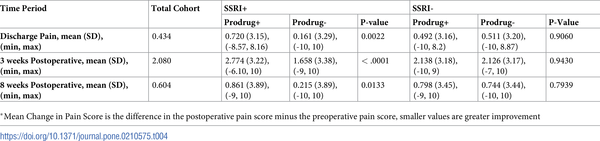
Patients taking selective serotonin reuptake inhibitors, the most common form of antidepressant, who are given the most widely prescribed opioid, hydrocodone (Vicodin) experience less pain relief, a finding whch could help combat the opioid epidemic, as poorly managed pain may lead to eventual illegal and dangerous opioid use. 

Up to 15 percent of Americans take an antidepressant while hydrocodone and codeine are often prescribed to patients who have recently undergone surgery. If they are taking an antidepressant and it leads to greater pain, they may want to increase their dosage.  Because pain medication is prevalent they focused on surgical patients.
Long before human ancestors began hunting large mammals for meat, a fatty diet provided them with the nutrition to develop bigger brains, according to a paper in Current Anthropology.

The paper argues that our early ancestors acquired a taste for fat by eating marrow scavenged from the skeletal remains of large animals that had been killed and eaten by other predators. The argument challenges the widely held view among anthropologists that eating meat was the critical factor in setting the stage for the evolution of humans. This is anthropology, so they may be making a distinction without a difference; in a calorie-poor landscape all was eaten.
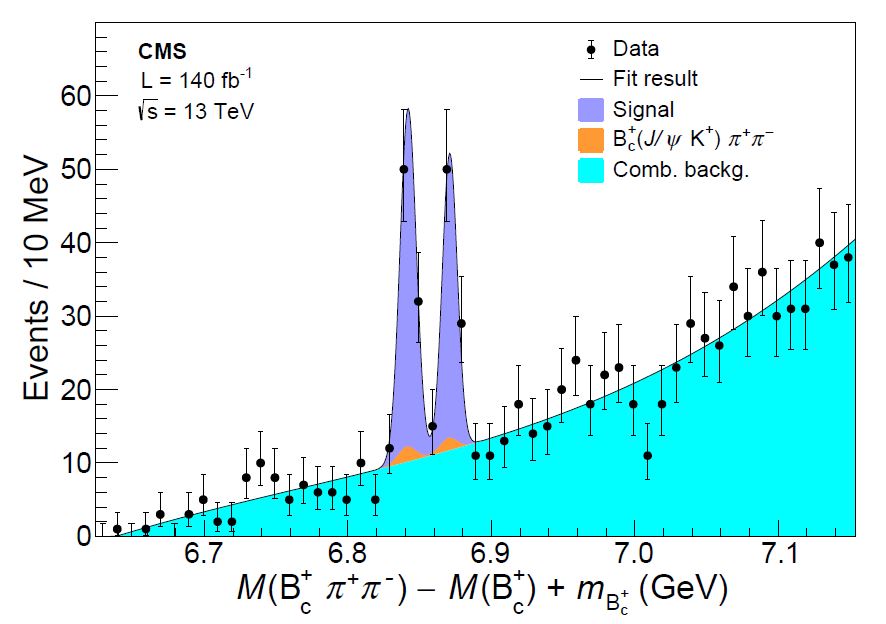
I am very happy to report today that the CMS experiment just confirmed to be an excellent spectrometer - as good as they get, I would say - by discovering two new excited B hadrons. The field of heavy meson spectroscopy proves once again to be rich with new gems ready to be unearthed, as we collect more data and dig deeper. For such discoveries to be made, collecting as many proton-proton collisions as possible is in fact the decisive factor, along with following up good ideas and preserving our will to not leave any stone unturned.

We recently conducted one of the largest-ever studies on perfectionism. We learned that perfectionism has increased substantially over the past 25 years and that it affects men and women equally.

We also learned that perfectionists become more neurotic and less conscientious as time passes.

Perfectionism involves striving for flawlessness and requiring perfection of oneself and others. Extremely negative reactions to mistakes, harsh self-criticism, nagging doubt about performance abilities and a strong sense that others are critical and demanding also define the trait.

A team of scholars has found that magnetic waves in the Sun’s corona, its outermost layer of atmosphere, react to sound waves escaping from the inside of the Sun.

Alfvénic waves are in plasma and have been found to play a crucial role in transporting energy around the Sun and the solar system. They were previously thought to originate at the Sun’s surface, where boiling hydrogen reaches temperatures of 6,000 degrees and churns the Sun’s magnetic field. However, researchers have found evidence that the magnetic waves also react – or are excited – higher in the atmosphere by sound waves leaking out from the inside of the Sun and the sound waves leave a distinctive marker on the magnetic waves.
In 2011 I wrote a book with Dr. Alex Berezow of RealClearScience in which we noted the common cause among the anti-vaccine, anti-energy, and anti-GMO communities. They shared common beliefs about distrust of science and I made a challenge; I said if I drew a radius around a Whole Foods, I could predict with high accuracy how those people with those beliefs voted.
Bees have tiny brains but that is all relative; It seems they also possess complex number skills.

Lots of animals count as shown by how many engage in foraging, shoaling, and resource management arithmetic, addition and subtraction, is rare, only a few nonhuman vertebrates do it.
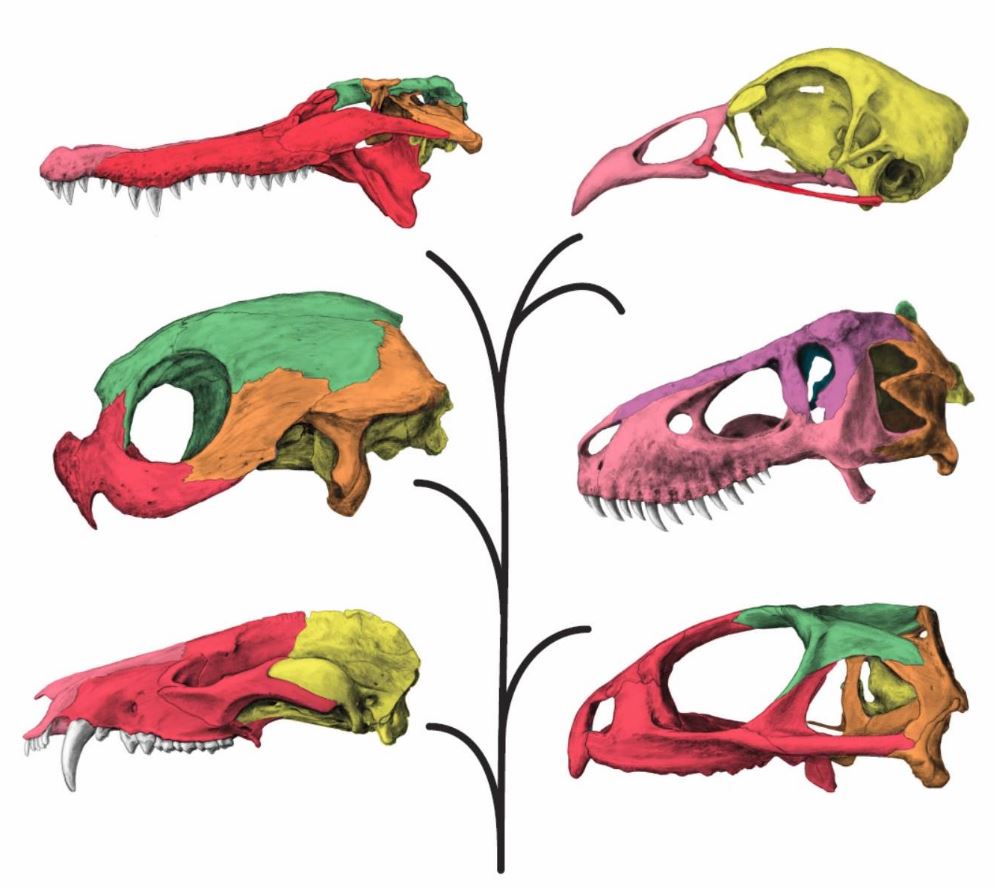
Senckenberg scientist Ingmar Werneburg, together with an international team, re-examined the An examination of the skull structure of Tyrannosaurus rex using “anatomical network analysis” found that the carnivorous dinosaur had an extremely flexible skull structure.

Tyrannosaurus rex – the “King of the Tyrant Lizards” – owes its name in part to its impressive teeth and skull. Researchers compared the skull of T. rex with the skull construction of modern terrestrial vertebrates  to examine which skull bones are connected to each other and found that different bone modules led to a highly flexible muzzle that aided in tearing apart prey animals.

