




Russian author Boris Zhitkov wrote the 1931 short story Microhands, in which the narrator creates miniature hands to carry out intricate surgeries. And while that was nearly 100 years ago, the tale illustrates the real fundamentals of the nanoscience researchers are working on today.

A new observational study claims that cheese increases breast cancer risk, while yogurt can lower it. Since both are dairy, that means they would be suggesting a dairy process causes or prevents cancer.

The case control study has numerous confounders that will not be noticed by most journalists so media outlets looking for context beware.

Adolescents with autism spectrum disorder use 400 percent more emergency room services than peers without it, which puts more strain on an over-burdened health care system and may mean that they need better access to primary care.

Some people have an extreme fear of spiders or other objects while others have breathing difficulties and accelerated heart beat in small rooms or large gatherings of people. Some anxiety attacks occur for no apparent cause. Some patients suffer from the detrimental impacts on their everyday lives, they have problems at work and withdraw from social contacts.

The line between deliberately manipulating a story and poorly reporting the facts is perilously thin.

During Sunday’s Oscars, what is colloquially called the United States’ ‘paper of record’, the New York Times, launched an advertising blitz positioning itself as the highbrow ethical responder to the spate of so-called ‘fake news.’

“The truth is hard…to find…to know,” the ad, widely circulated now on YouTube, proclaimed somberly.

U.S. Right To Know is a small marketing group devoted primarily to endorsing the organic food process and undermining conventional agriculture. Nearly 100 percent of their funding comes from organic food companies, and they seem to believe that for organic food to be cost-effective, regular farming has to become more expensive. (1) Like Sourcewatch, Mother Jones and a few others, they are what the science community calls Deniers For Hire, the junkyard dogs of politically partisan anti-science groups. They hate farmers, and they hate affordable energy, but they hate scientists and doctors most of all. (2)

Genetic variants linked to autism spectrum disorders (ASD) contribute to enhanced cognition and are therefore positively selected in spite of the problems they also bring along – new evidence has just been published in PLOS Genetics [1]. The problems these genes bring along are the price to pay for relatively rapid evolutionary advancements. It needs a much longer time for further natural selection to smooth the bugs out – this is all obvious, simple science. Another example is the genetic predisposition of Ashkenazim Jews to diseases such as Tai-Sachs, which comes along with their high average verbal IQ, also a relatively recent evolutionary advancement.
A new fMRI study used neural activity in 80 people to accurately predict the virality of 80 New York Times health articles.

Well, it's the New York Times, a top five newspaper in the U.S. so the results are going to be skewed by that, as were the articles selected; the public loves weak observational claims about health and the demographic that reads the New York Times is most inclined to believe claims about miracle vegetables, scary chemicals and diet fads. 

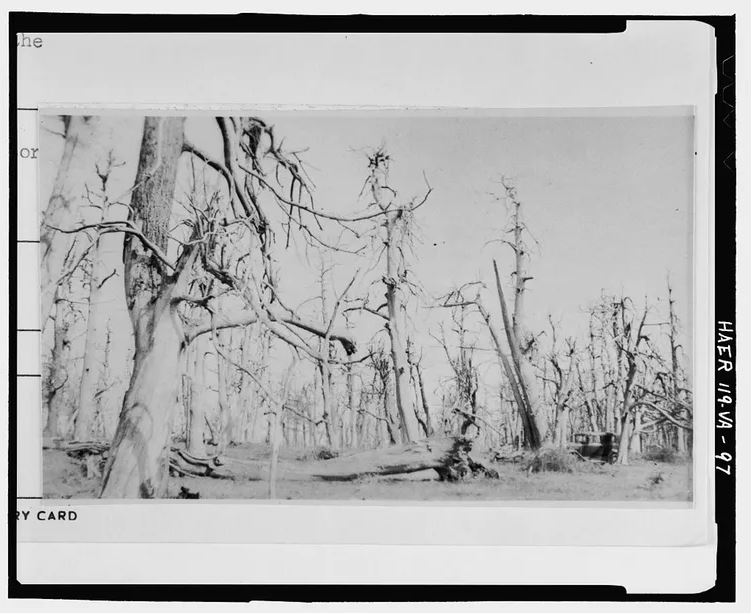
American chestnut trees were once among the most majestic hardwood trees in the eastern deciduous forests, many reaching 80 to 120 feet in height and eight feet or more in diameter.   

The “then boundless chestnut woods” Thoreau wrote about in Walden once grew throughout the Appalachian mountains. They provided habitat and a mast crop for wildlife, a nutritious nut crop for humans and a source of valuable timber. Because of their rapid growth rate and rot-resistant wood, they also have significant potential for carbon sequestration, important in these days of climate change.

I was not supposed to start this piece using the pronoun ‘I’.


