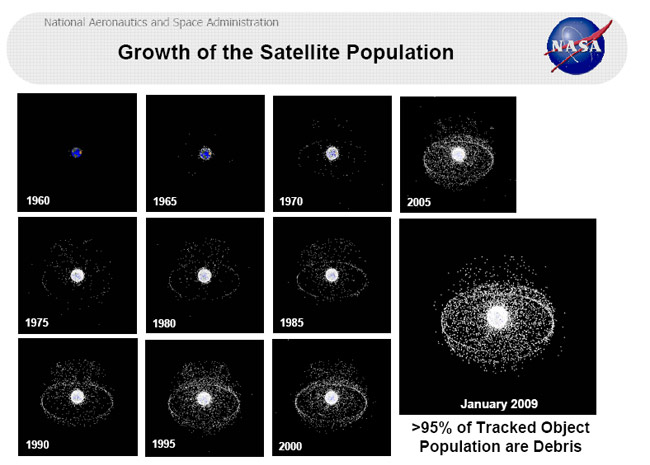





I've some background in space weather-- the influence of solar activity on Earth and near-Earth orbits.  My new job as a professor at Capitol College has brought me into contact with several bright students working on using picosatellites to test our orbital debris removal concepts.  Further, the number of other groups doing balloon and picosatellite work is increasing (yay!)  So it's time to update this column more frequently with not only my progress, but stories of other pico teams.
Over the past century, 70 percent of beaches on the islands of Kaua'i, O'ahu, and Maui have had long-term erosion, according to a U.S. Geological Survey (USGS) and University of Hawai'i (UH) report released today.

They studied more than 150 miles of island coastline (essentially every beach) and found the average rate of coastal change – taking into account beaches that are both eroding and accreting – was 0.4 feet of erosion per year from the early 1900s to 2000s. Of those beaches eroding, the most extreme case was nearly 6 feet per year near Kualoa Point, East O'ahu.
You're in luck. To the consternation of advertisers, we gather almost no information about you so if you are concerned about outsiders learning a lot about you from your visit to this article, fear not.  If we were that clever, this site would make a lot of money.

What Facebook CEO Mark Zuckerberg calls “frictionless sharing” - like sharing music and book choices with the Internet - isn’t really frictionless – it forces on us the new frictions of worrying who knows what we’re reading and what our privacy settings are wherever and however we read electronically. It’s also not really sharing; real sharing is conscious sharing, a recommendation to read or not to read something rather than a data exhaust pipe of mental activity. 
Integrated circuit techniques can do just about anything - perhaps even help cure sepsis.

Margination is natural phenomenon where bacteria and leukocytes (white blood cells) move toward the sides of blood vessels. Now it's the inspiration for a novel method of treating sepsis, a systemic and often dangerous inflammatory response to microbial infection in the blood.
Anthropogenic climate change is so anthropomorphic.  While we think we have a mighty impact on the atmosphere, sauropod dinosaurs millions of years ago shouldn't be left out of the pollution hall of fame - they alone could have produced enough methane to warm the climate many millions of years ago, according to a numerical model.

Like CO2, methane is a greenhouse gas, but with 23X the warming impact of CO2. It's produced by dying plants and cow burps - and cows share one thing in common with hulking sauropods, distinctive for their enormous size and unusually long necks, that were widespread about 150 million years ago. As in cows, methane-producing microbes aided the sauropods' digestion by fermenting their plant food.
This week's graph comes from a recent publication by the CMS experiment, the one I am a proud member of together with about 3000 colleagues from all over the world.
I make the case for replacing business executives with robots.*† This is no smart-ass slur on the intellects of executives. A transformation of business soon will be upon us. In the transformed enterprises, robots will take on more and more business decisions. Humans will retain a smaller but still crucially important role.

The argument involves ‘real options’ and ‘agency theory.’ Explaining them is simple, though lengthy. So let’s get started, using an illustrative example:
An opportunity requires Rineu Corporation to invest $10,000 now, with an assured first-year cash flow of $6,000. The second-year cash flow is uncertain with a 50-50 chance of either a $15,000 gain or a $5,000 loss.

Badly controlled diabetes are known to affect the brain, causing memory and learning problems and even increased incidence of dementia. How this occurs is not clear but a study in mice with type 2 diabetes has discovered how diabetes affects the hippocampus, causing memory loss, and also how caffeine can prevent this. 

Curiously, the neurodegeneration that Rodrigo Cunha,  from the Centre for Neuroscience and Cell Biology of the University of Coimbra in Portugal, sees as result of  diabetes is the same that occurs at the first stages of several neurodegenerative diseases, including Alzheimer’s and Parkinson’s, suggesting that caffeine (or drugs with similar mechanisms) could help them too.

The medium in which light propagates is space. This space can curve. The curvature is not static. So, this space moves. Its behavior can be analyzed by a kind of fluid dynamics. Let us call this method quantum fluid dynamics. It differs from conventional fluid dynamics in the medium that is treated. In conventional fluid dynamics this is a gas or a fluid. Fluid dynamics concerns density distributions and currents. In quantum fluid dynamics these are space density distributions and space current density distributions. They can be combined in quaternionic distributions, where the real part is the space density distribution and the imaginary part is the space current density distribution.

Entropy. A subject that comes back again and again and again and again and again in this blog. And so does the question in my inbox: "what exactly is entropy?" On the internet you can find a plethora of answers to this question. The quality of the answers ranges from 'plain nonsense' to 'almost right'.


