



We are fortune here at Science20 to have come across an early work by Gaston Leroux. This manuscript was dated to 1899, suggesting it was an early, discarded draft of the work that later came to be known as "The Phantom of the Opera". Current speculation is Gaston changed the setting at the beheast of his editor. Here, then, is the unabridged transcript of that early draft. It is set in the historic 1899 Paris Academie des Sciences, and begins with the arrival of two new managers to this prosperous yet troubled place.
[Secretary] "Welcome, new Branch Heads, to our Paris Laboratory! We owe our success to Professor Carlotta, though we do have a new post-doc named Christine Daei. Good luck with the upcoming grant season!"
Fresh from ironing out the mechanical difficulties in the faster-than-light neutrino, CERN and OPERA have licensed the technology to soda giant Pepsi, which will use neutrinos instead of dissolved carbon dioxide to create the drink's iconic fizz.
"This truly is the choice of a new generation," says Pepsi CEO, Indra Nooyi.
Ridicule might delay truth but it can't replace it. In recent weeks astonishing rumors have been spreading fast in science circles, and soon the wider public will be in the know. According to these rumors, despite all the
denial and
ridicule, planet Nibiru is real. Yes, you read that correctly. Nibiru is a fact. Science leaders are ready to admit the observation of Nibiru.
This rogue object was there all the time. Right under our eyes. Since the days of Galileo we are aware of its existence. Initially it was mistaken for a star, and later for a solar system planet. It's neither.
And after all I said about Supersymmetry being an invention, I fear
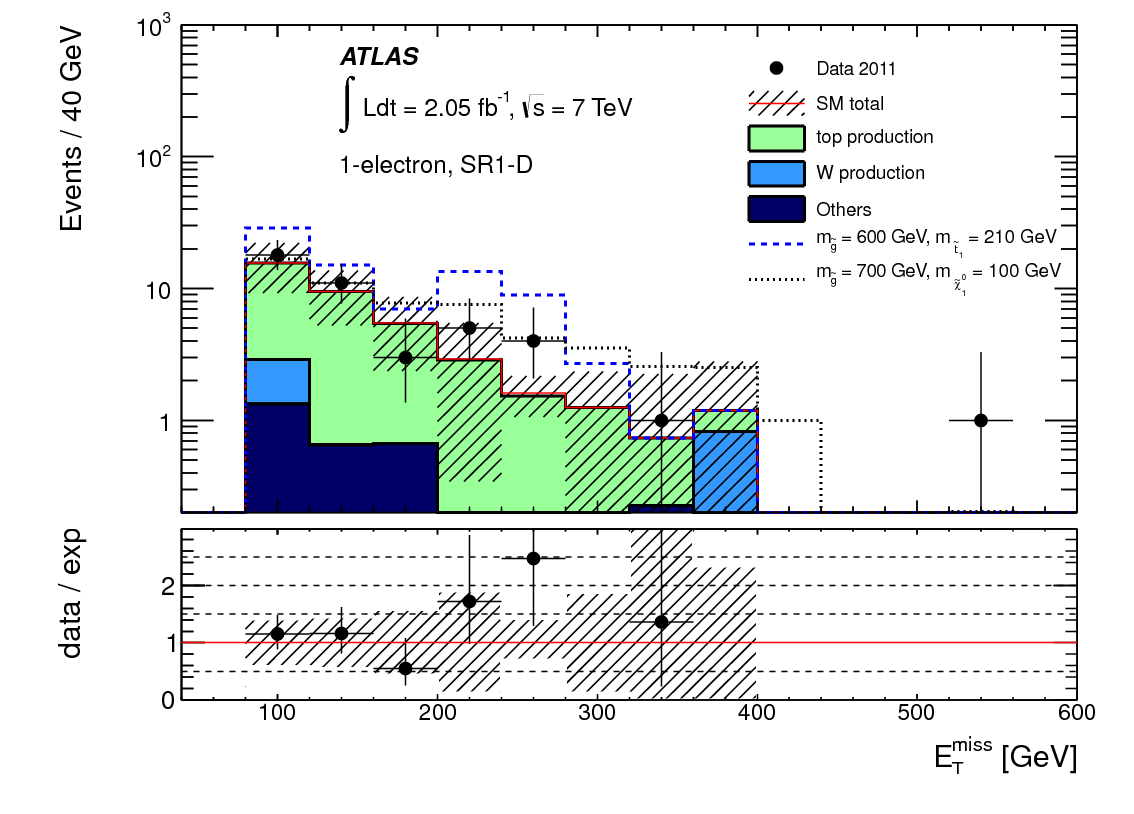
I now have to eat it all with my hat to boot ! The ATLAS Collaboration has just released results of a very striking search for gluinos, which increases the sensitivity over past analyses by employing a much improved and cleaned-up version of missing transverse energy along with a higher-resolution version of the effective mass variable used in the past, and
has found a first strong evidence for Supersymmetric decays !!
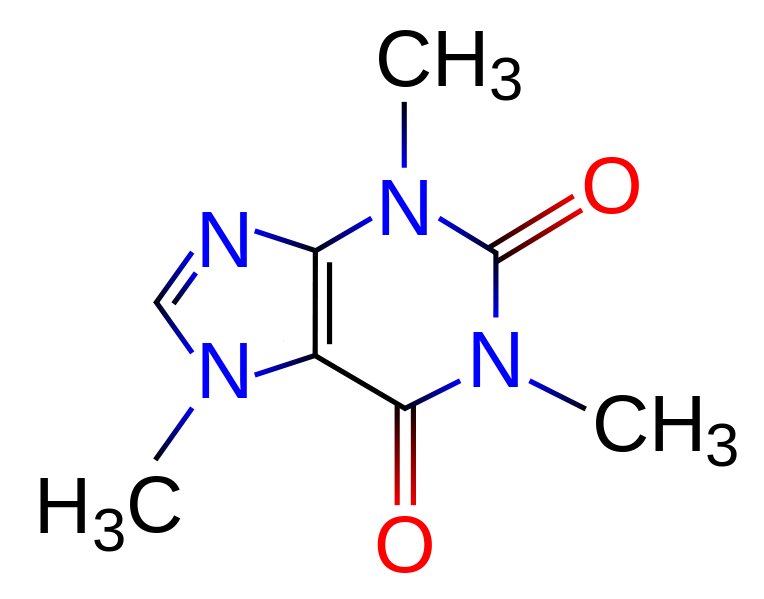
Trimethyl-Xanthine (spoken: Zanthine) is a bitter, white crystalline alkaloid. It is found in varying quantities in the seeds, leaves, and fruit of some plants, where it is naturally synthesized as a pesticide that paralyzes and kills certain insects feeding on the plants. Having evolved for no other reason than to kill a wide variety of animals, it should not come as a surprise that some of its effects on our human bodies are less than desirable.

People can already count since several millennia. Arithmetic is improved over time. Usually we count by using integers. If we want to get more accurate results, then we better use rational numbers. Sometimes we also use numbers that are not expressible in a fraction, such as the number π (pi) and the square root of two . These are real numbers. The square root of a negative number delivers more problems. For this task it is necessary that we move to a two-dimensional number system. The better calculators under us can also handle this problem fluently. The so-called complex numbers are discovered in the sixteenth century by the Italian mathematician Gerolamo Cardano and are now used for all kinds of applications.
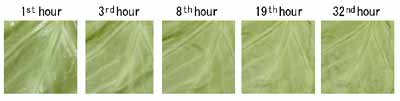
Can people tell how appetizingly fresh a cabbage is, just by looking at photos of the leaves?
In the parallel world where bonobos* developed into those that took over the earth with the help of technology, they never insisted on an absolute nature of time in the first place. Einstein came along and discovered that since we use light as the most basic measurement tool, there should be a certain relativity. They experimented and confirmed that proposal. It was useful, too, and interesting, and nobody called relativity evil, so nobody made defensively a dogma out of it either. Bonobos accepted that relativity can be the emergent symmetry of an Einstein ether in case it is not fundamental all the way.
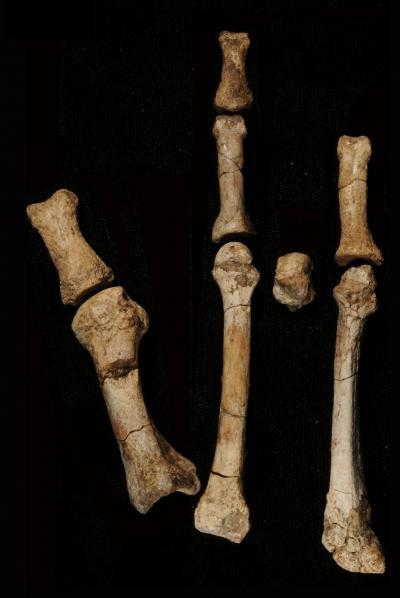
Lucy, Australopithecus afarensis, was not walking around Africa alone three million years ago.
Biologists knew that, of course, the neatly linear line from critter to modern man does not exist, it happened in fits and starts and sometimes different ways numerous times. But as the study of evolution becomes more multi-discplinary our chances of finding new fossils increases, and ideas of what ancestors looked like go from theoretical to real.
A chemical analysis of lunar soil collected by Apollo astronauts forty years disputes the belief that a giant collision between Earth and a Mars-sized object gave birth to the moon 4.5 billion years ago.
In the giant-collision scenario, computer simulations suggest that the moon had two parents: Earth and a hypothetical planetary body called “Theia” but a comparative analysis of titanium from the moon, Earth and meteorites indicates the moon’s material came from Earth alone.

