


If you've studied the martial arts, or know anything at all about Asian culture, you have heard of the ch'i.  It's spelled lots of different ways, which happens when you turn Eastern sounds into Western letters, but essentially it means a life force.(1)

As a young guy, open to the world, it's easy to be drawn into discussions and thoughts about lots of ideas and a life force essential to all humans might as well be in the mix. Some proponents even believe that all matter derives from ch'i, which at least has a science parallel.

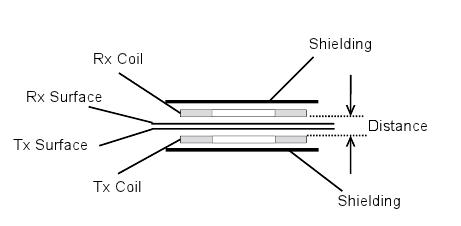
Loudspeakers have improved a lot in the last 50 years but one pesky issue has remained; dead spots.  
 

Modern oudspeakers can be designed to deliver the full frequency range of audible sound but it is difficult to achieve a smooth frequency output in all directions. Dead spots are caused by deconstructive interference as a result of radiating sound waves overlapping and cancellng each other out. This often happens when the sound is radiating from two or more sources, like in the mid-frequency ranges where both the 'woofer' and 'tweeter' loudspeaker cones are both active. This creates areas where the frequency response of the loudspeaker is less smooth, and sound quality is diminished.

The current energy quandary means a lot of basic research is being done in alternative energy solutions; that's good, it's what basic research is for.  It also means political darlings of some politicians and environmentalists should be disqualified from future consideration if they are shown to be untenable.

The production of ethanol from lignocellulose-rich materials such as wood residues, waste paper, used cardboard and straw sounds like a great idea but that isn't a reason to start subsidizing it. A cost comparison in Biofuels, Bioproducts&Biorefining has concluded that using lignocellulose materials is unlikely to be competitive with starch any time soon.

UHFF stands for Ultra-High Field Facility. The project is at times confused with the Extreme Light Infrastructure (ELI), which includes three other experiments apart from UHFF. The total bill is $1.6 billion Euros (as of now).


ELI Hungary – one of four locations in the total ELI project.

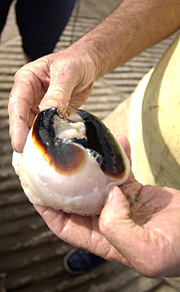
Ambergris is a weird and wonderful thing. It has been tremendously valuable throughout human history, but its creation and functionality have been shrouded in myth and superstition. To this day, no one has ever seen a whale actually excrete the stuff.

But we know for sure that ambergris comes from sperm whales, because it's been found in their stomachs as well as floating freely in the sea. And since the waxy blobs are always full of squid beaks, we think they're probably the whale's way of dealing with these uncomfortable hard parts. 

Mask-Bot, which looks somewhat like a real person (your uncanny valley sense notwithstanding) is actually the prototype of a new robot face that a team at the Institute for Cognitive Systems (ICS) at TU München has developed in collaboration with a group in Japan.

Mask-Bot can reproduce simple dialog. When Dr. Takaaki Kuratate says "rainbow", for example, Mask-bot flutters its eyelids and responds with an elaborate sentence on the subject: "When the sunlight strikes raindrops in the air, they act like a prism and form a rainbow". And when it talks, Mask-bot also moves its head a little and raises its eyebrows.

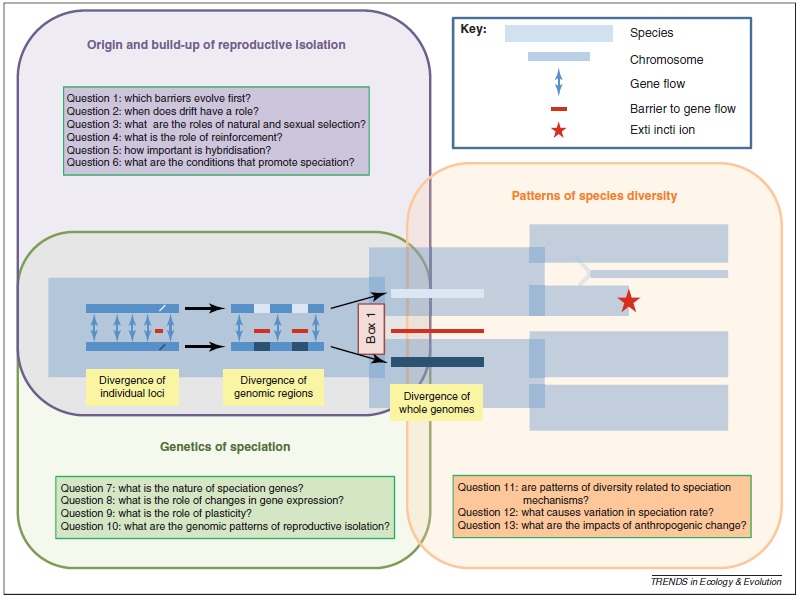
How do new species arise? This question is still being vigorously researched in evolutionary biology. New technologies, such as genomics, provide intriguing new opportunities to investigate the matter, but they also show that some of the previous ideas were not as satisfactory as once thought. So, where does the research go from here?

The members of the Marie Curie SPECIATION Network have recently published a list of what they perceive to be key questions on the topic of speciation, as a guide for future studies. These questions were divided into three main research areas:

These days I am preparing a three-hour course of statistics for particle physicists which I will give at a winter school in a couple of months. This stimulating task forces me to find nice and simple examples of good and bad applications of basic statistics. Stuff with high didactical value, and hopefully also entertaining.
It is approaching fast. And it is big. The next NEO (Near-Earth Object) encounter that is. This Tuesday, a 400 m (1,300 ft) diameter rock, known as 2005 YU55, will pass by earth at a distance that is from astronomical perspective truly minuscule: 0.00217 AU. In a solar system that stretches more than 80 AU in diameter, that is less than a hair width. Such close encounters for objects of this size are expected to occur no more than a few times per century. 


Earth, keep starboard - we are going to pass!

Antibiotic resistance is a huge problem. More and more resistant strains of microbes are appearing. Needless to state that this has a huge human and economic cost. Combining this with the increasing globalization, the threat of a global outbreak of an infection caused by a multidrug-resistant bacterium looms over our heads as Damocles’ sword. This perhaps sounds too ominous, but it speaks for itself that research into the development of antibiotic resistance could prove very useful.

To explore this problem, a group of scientists gathered in Cold Spring Harbor, NY at the Banbury Conference Centre to address the issues involved and identify key steps in dealing with this threat. Seven actions that urgently need to be undertaken were identified: