



Massachusetts implemented health care reform to increase employer-based insurance and to provide no-cost or low-cost insurance to those unable to afford it but it hasn't worked - the uninsured in Massachusetts remain predominantly the working poor, according to a new study by researchers at Harvard Medical School.

Some people have no fingerprints.  That might be handy in a burglary but it can be an issue when passing through immigration or in security situations where a fingerprint is required, like getting a notary public to take your five bucks for some benign document.

Like DNA, fingerprints are unique to each person or set of identical twins. That makes them a valuable identification tool for everything from crime detection to international travel. But what happens when the tips of our fingers are missing those distinctive patterns of ridges?

Kerry Cohen, author of Seeing Ezra, agreed to an interview with Kathleen Leopold and me. Kathleen's questions appear first. (This post appears at the Autism Blogs Directory)


The name "Ezra" means aid or help. Is the title of your memoir a reflection of the idea that in seeing your son for who he is-helped you to see life how it really is. In other words, happiness and happy endings aren't guaranteed-one has to make them happen.
[Introduction: I published the text below last Monday, when the news of this controversial new measurement had spread in the corridors of physics departments, as well as in the threads of popular HEP blogs. I felt I was not doing anything wrong, since all I was reporting were facts, with a cautious opinion on my part. I was however forced to take it down only a few hours afterwards, due to a kind of pressure I could not ignore, my own job being at stake. I understand that the experiment who did this measurement was not too happy to see the news in print before they wanted to, but then again the fault is theirs. And in retrospect, what damage did I cause with the post below ?
Cowritten by Kim Wombles and Kathleen Leopold

Kathleen Leopold and I have been blogging buddies for over two years now, working on various projects together, struggling to figure out our places in the online autism community as we work in the real world to find our place there, as well, to find the best ways to help both our own children, and other children like ours.

A retrovirus enzyme whose configuration had stumped scientists for more than a decade has been solved by researchers who called on the participatory cornerstone of Science 2.0 for help. 

Recently, a lot of attention has gone to epigenetics, or heritable changes in gene expression caused by mechanisms other than changes in DNA sequence. An example of such a mechanism is DNA methylation, where a methyl group (CH3) binds to cytosine or adenine. Epigenetic changes might explain the discrepancies that are being discovered between what the genetic code dictates and how an organism actually looks and functions, ranging from flower shape to the tendency for obesity.

2012 is coming and, with it, kooky end-of-the-world fables.  If the Asgardian calendar and its earthquakes doesn't get us, maybe the Mayans will.  Some people even like to combine Doomsday prophecies - the LHC might bring the end of the world by opening a black hole and out pop Mayans armed with strangelet-powered weapons.
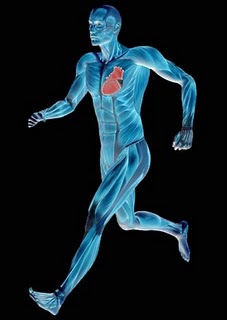
Many people exercise to improve the health of their hearts. Now, researchers have found a link between your heart rate just before and during exercise and your chances of a future heart attack.

Just the thought of exercise raises your heart rate. The new study shows that how much it goes up is related to the odds of you eventually dying of a heart attack.

More than 300,000 people die each year from sudden cardiac arrest in the U.S., often with no known risk factors. Being able to find early warning signs has been the goal of researchers like Professor Xavier Jouven, of the Hopital Européen Georges Pompidou in Paris.

While America debates moving to a health care system more like the UK, the majority of Brits want to try an American approach. According to Simplyhealth's latest survey, 59% of people would consider paying to be seen privately due to concerns about access to diagnosis and treatment. 

 Simplyhealth's report 'Are we an instant health generation?' carried out by YouGov suggests that concerns about cost, waiting times and access to healthcare are driving people to seek private alternatives to the NHS. Just over half believe that they will need to wait longer for treatment than ever before and 45% agree that government changes may mean that they are denied treatment altogether by the NHS.

