




A new study examining regional snow cover trends across the Northern Hemisphere found seasonal shifts in snow - and a lot less of it.

The authors used the Rutgers University Global Snow Lab Northern Hemisphere Weekly Snow Cover Extent Data Record to determine whether snow cover across the Northern Hemisphere is increasing or decreasing. Then their two-state Markov chain model with periodic dynamics was used to analyze snow cover and found that significantly more areas are losing snow cover than gaining it.

And the seasons were changing.


Central Park in New York City. Credit: Mary Pollitz
A bad liver today currently means a replacement, but having enough transplant organs is challenging when families worry their loved ones' skeletons could be sold to middle schools and end up immortalized in prank photos. The future will involve replacements made with a patient's own stem cells, no immunosuppressive drugs or waiting lists needed.
A cohort analysis of preschoolers in Canada has led the authors of the paper to call for bans on so-called "ultraprocessed" foods, charging that it will lead to long-term mental health and well-behaved children.

For four decades, a controversial idea has shaped how autism is understood by researchers, healthcare professionals and the public: the claim that autistic people are “mind blind”. The phrase suggests an inability to grasp what others think or feel. It is simple, memorable – and wrong.

The claim rests on a concept called “theory of mind”. In everyday terms, theory of mind is the ability to recognise that other people’s thoughts, beliefs and emotions may differ from your own. This idea explains why someone understands that a joke can fall flat, that a promise can be broken, or that a friend can be mistaken without lying. It is often presented as the key to how people make sense of one another.

The gut bacterium Bacteroides fragilis has long presented researchers with a paradox. It has been associated with colorectal cancer, yet it also lives quite happily in most healthy people. A new study from a Danish research team offers a possible clue. When they looked beyond the bacterium itself and into its genome, they found a previously unknown virus embedded within it – one that was significantly more common in cancer patients.

By this time 26 years ago, the "Dot-Com Bubble" was ready to burst. People who wanted to raise investor money claimed that they could sell anything affordably on a website; three companies were devoted just to pet food and buying ad space on broadcast television.

So-called AI is enjoying a similar frenzy. Though they are still just Large Language Models (LLMs), and the best analogy for that is a fancy autocomplete, they are attracting huge levels of financial investment partly because of the potential and then primarily because people want to make money on stocks, not companies.
Once the weather got political, more attention became focused on the cyclical climate phenomenon El Niño. Critics charged that too many early models were shaped by understating its effects while proponents insisted its efforts were worse due to CO2 emissions.

There is something for everyone. It is cyclical, but not predictable, because it might bring wetter conditions to some areas and drier to others every two years. Or every seven. Experts can't agree on when it begins or ends, only that it's impacted by changes in what ancient sailors called the trade winds - the air currents that moved cargo ships from from east to west along the equator.

For many people living with psoriasis, the red, scaly skin patches are only part of the story. Another challenge is the uncertainty about whether there is anything they can do themselves to help manage their skin.

Treatments have improved greatly in recent years. Creams, tablets and injectable medicines can all help control symptoms. Even so, many people still ask a straightforward question in clinic: is there anything I can do alongside my medication that might make a difference? Weight often comes up in that discussion. Psoriasis is more common in people who are overweight or living with obesity.

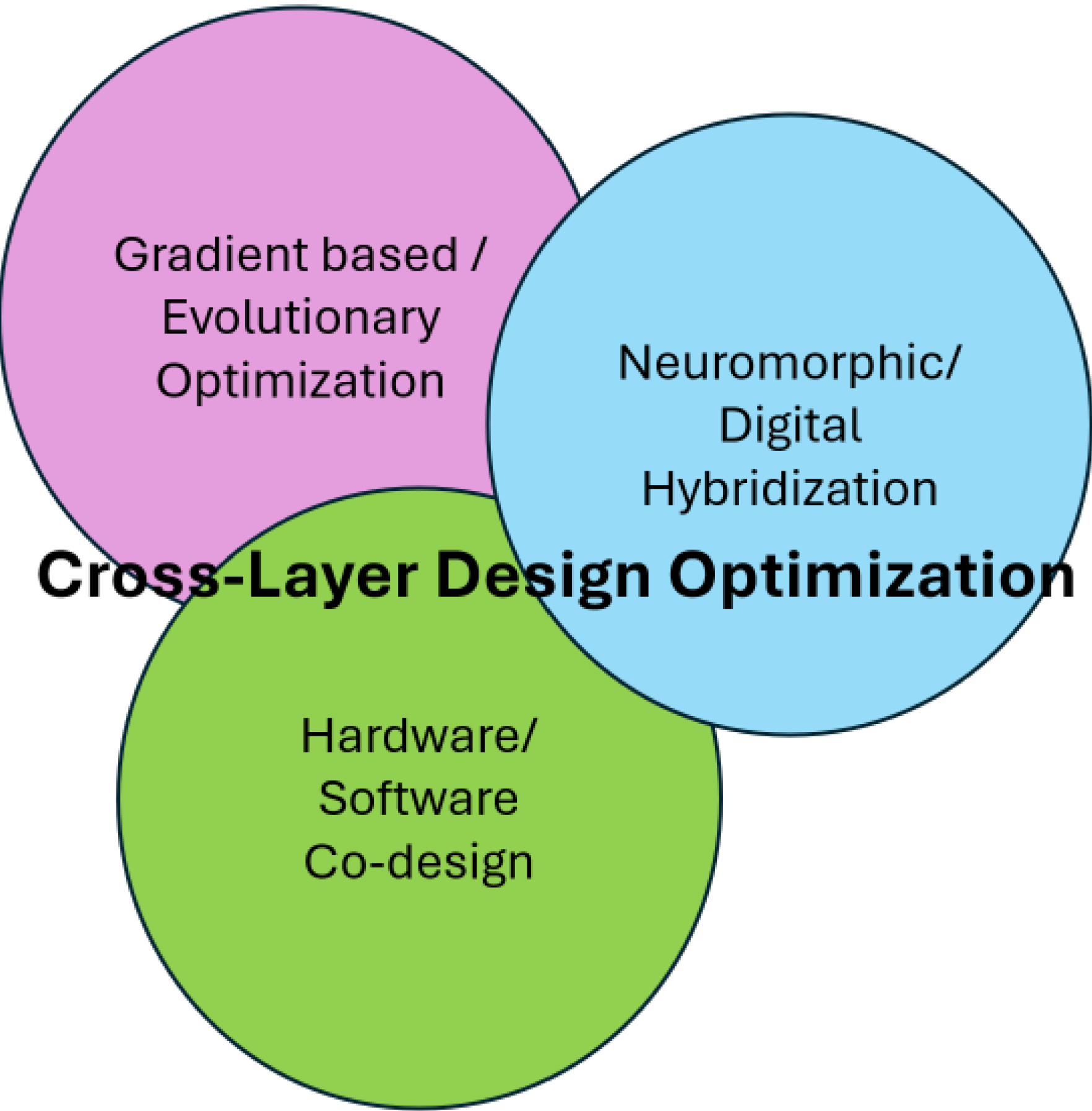
These days I am putting the finishing touches on a hybrid algorithm that optimizes a system (a gamma-ray observatory) by combining reinforcement-learning with gradient descent. Although I published an optimization strategy for that application already, I am going back to it to demonstrate a case where the simultaneous optimization of hardware and software is necessary, for a paper on co-design I am writing with several colleagues.
In the course of the software development, I ran into a simple but still interesting statistical issue I had not paid attention to until now. So I thought I could share it with you here.
A new paper says that players where a few superstars get the money leads to less cooperation and poor team performance. The authors say this salary compression is why teams won fewer games.

The authors also suggest that companies should strive for more equity in pay, to increase synchronized effort. Because individual effort by key people isn't enough.

They may have a point. The U.S. Army pays everyone, good or bad, the same, and it is the best in the world. But current military and veterans will laugh if a humanities academic suggests it it more efficient or cooperative because of equal pay. Instead, they will tell the stories of all the people their unit had to carry, because it's not a meritocracy and reductions only happen at promotion tiers.

