New gaps are opening up in educational achievement between teenage boys and girls, according to a comprehensive new report from the Organisation for Economic Co-operation and Development (OECD).
Analysis of its 2012 Programme for International Student Assessment (PISA) tests of 15-year-olds in reading, mathematics and science across countries, shows that unfortunately, patterns between the performance of girls and boys have not changed much over time, although some of the gaps have closed a little.
Fast food advertising doesn't emphasize healthy menu items enough, and by giving away toys in things like Happy Meals restaurants are being deceptive even by their own self-regulation standards, according to scholars who showed 100 children aged 3–7 years McDonald’s and Burger King children and adult meal ads, randomly drawn from ads that aired on national U.S. television from 2010–11.
After seeing the ad, children were asked to recall what they had seen and transcripts evaluated for descriptors of food, healthy food (apples or milk), and premiums/tie-ins. All children’s ads contained images of healthy foods, like apples and milk, but premiums/tie-ins were recalled much more frequently than healthy food.
A deadly fungus responsible for the extinction of more than 200 amphibian species worldwide has coexisted harmlessly with animals in Illinois and Korea for more than a century, a pair of studies have found.
Amphibians in Illinois have been coexisting with the fungus Batrachochytrium dendrobatidis, or Bd, for at least 126 years without adverse effects seen in other parts of the world such as mass-die offs, according to research published Jan. 13 in the journal Biological Conservation. In a study published March 4 in PLOS ONE, researchers were able to date the fungus in Korea back to 1911. The results will help scientists better understand the disease caused by Bd, chytridiomycosis, and the conditions under which it can be survived.
You can see it through a telescope, or watch a documentary about it, but you can't stick your nose out and take a whiff. Speaking of Chemistry returns this week to answer the very important question, "What does space smell like?" Matt Davenport, Ph.D., reveals the stinky secrets of the cosmos from the people who have been there.
Only 14% of young women who enter university for the first time chose science-related fields of study such as engineering, manufacturing and construction. This is one of the headline findings of a new report from the Organisation for Economic Co-operation and Development that examines gender equality in education across 64 countries and jurisdictions. In comparison, 39% of young men who entered university chose to pursue one of those fields of study.
Ocean tides have changed significantly over the last century at many coastal locations around the world, according to a paper in
Earth’s Future, and increases in high tide levels and the tidal range were found to have been similar to increases in average sea level at several locations.
Average sea levels are rising but tide levels have undergone little change on decadal time scales, nor will they change much over the next century, so long-term changes in tides are not a concern in computer models trying to predict the effects of rising sea levels.
From 2009 to 2013, ESA’s Planck satellite took measurements of the cosmic microwave background (CMB), radiation that originated approximately13 billion years ago, around 380,000 years after the Big Bang.
Due to the expansion of the universe, this light is still observable today at microwave wavelengths across the entire sky so Planck surveyed the sky to map this ancient light.
One result is that the standard model of cosmology remains an excellent description of the universe, unless the Planck data is combined with other astronomical observations, where several deviations emerge. Are the anomalies due to measurement uncertainties or undiscovered physical correlations, which would challenge Einstein’s theory of gravitation?
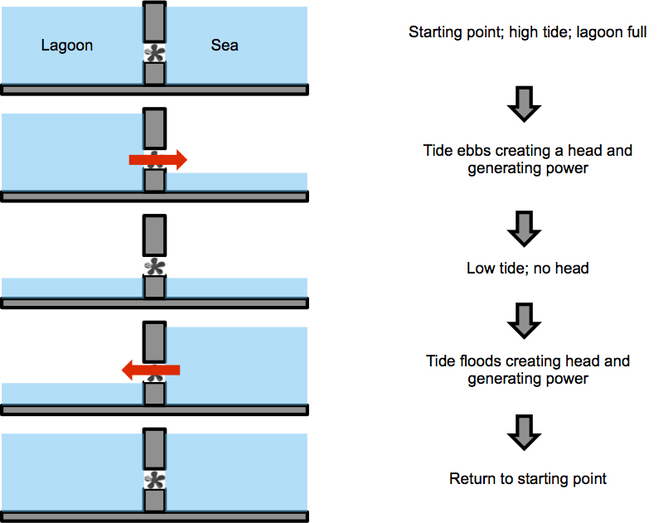
The search for alternative energy sources in the age of climate change has overlooked tidal energy: a vast and unexploited worldwide resource.
For three decades now, tidal lagoon schemes have been recommended as an economically and environmentally attractive alternative to tidal barrages. More recently, two proposals for tidal lagoons in Swansea Bay, Wales have emerged and there have been several reports documenting how such a project there could have the potential to harness significant energy resources.
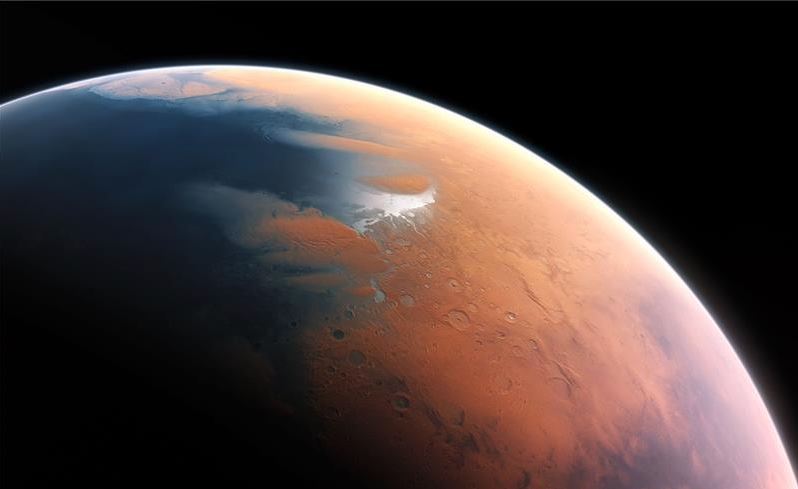
Four billion years ago, a young Mars had enough water to bury its whole surface under 400 feet of ocean, but it is more likely that, as on Earth, it pooled. In the case of Mars, it probably formed an ocean occupying almost half of Mars’s northern hemisphere, reaching a mile deep in some places.
This new finding is based on detailed observations of two slightly different forms of water in Mars’s atmosphere. One is the familiar form of water, made with two hydrogen atoms and one oxygen, H2O. The other is HDO, or semi-heavy water, a naturally occurring variation in which one hydrogen atom is replaced by a heavier form, called deuterium.
According to a 2014 National Consumers League poll, 29% of American adults believe that childhood vaccinations can trigger autism. To many, these views are difficult to comprehend. After all, multiple controlled studies conducted on huge international samples have debunked any statistical association between vaccines and autism.