One of the things that scientists rely on to accurately predict climate change is the amount of carbon sequestered underground. Carbon dioxide in the air leads to increased global warming, exacerbating climate change. When plants have a lot of access to carbon dioxide, they photosynthesize more. Scientists have assumed for a long time that this led to a high concentration of carbon sequestered under the ground. As plants took in this carbon dioxide, they transformed it into compounds and organic structures such as roots and leaves, which would add to the amount of carbon stored underground.
Two recent articles showed showed changes in the focus and funding of clinical trials for Alzheimer's disease therapies.
And they suggested the change might be evidenced by today, when the U.S. Food and Drug Administration (FDA) seemed ready to approve aducanumab (Biogen) as the first new drug therapy to Alzheimer's patients in nearly 20 years.
Namely the emergence of taxpayer-funded government and nonprofit organizations as the primary drivers of research.
Usually, when we talk about our research we discuss things we have recently published, highlighting the importance or novelty of their contribution to the advancement of human understanding or knowledge of the specific field of Science we work on.
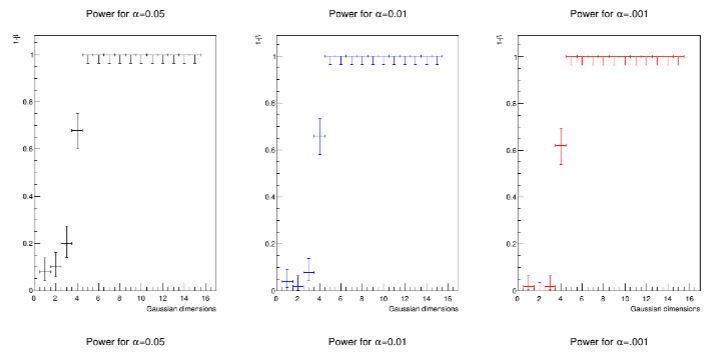
So it is only normal for me to try and go against that particular cliché here, and talk about things I will publish in the future. Admittedly, it is a bit of a mine field (it is never easy to be an anticonformist), but I will try to avoid stepping on the most obvious triggers (violations of confidentiality, scooping risks, impossible promises).
1. A new tool for anomaly detection
Old age is the biggest risk factor for most diseases, but if you have solid nutrition your health is likely to be better throughout all periods of life.
Including during the COVID-19 pandemic. Yet the USDA dietary guidelines produced every five years won't tell you how to optimize nutrition for where you are at in life. They are one size fits all for broad swaths of age and gender, and that needs to change
The dietary guidelines were created to make sure consumers are kept in touch with the latest science and that taxpayer-funded programs like school lunches are properly feeding developing brains.
Advocates for proposed crab gear legislation in California, AB 534, often cite misleading information in support of policies that would destroy California’s iconic and sustainable trap fisheries, while doing noth
Animals can cause diseases in humans. That won't surprise you. What may surprise you is to read that these diseases can be prevented by eating less meat.
In the early days of agriculture, everyone was somewhat equal. While one farmer could work harder or longer than another, it wasn't by an order of magnitude. Oxen and other beasts of burden changed that. A farmer with an ox was doing the work of 7 humans, and that meant a huge advantage over someone who didn't agree with progress - that the old ways were the only way to have "real" food. Thus began economic disparity, as did modern civilization. When not everyone had to hunt and grow their own food, they didn't. They could become craftsmen and priests and mathematicians. Culture was born.
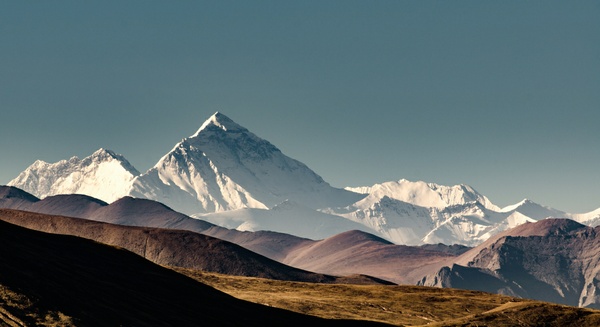
The Tibetan plateau covers nearly 1,600,000 square miles. With an average altitude of nearly 14,000 feet, Tibet is called the Roof of the World for good reason. It contains the world's two highest peaks, Mount Everest and K2, and the vast Himalayan mountain range towers higher than anywhere else on Earth.
Some researchers contend it has been that height for most of its existence while others argue the roof of the world has gotten higher.
Experts got it catastrophically wrong, according to Dominic Cummings, UK prime minister Boris Johnson’s former chief adviser. Cummings has argued that the UK government’s official scientific advice in March 2020 hugely misunderstood how the pandemic would play out, leading to a delay in locking down that cost thousands of lives.
According to Cummings, it was certain specialists with less knowledge of pandemics or medicine – such as data scientist Ben Warner, artificial intelligence researcher Demis Hassabis of DeepMind, and mathematician Tim Gowers – who gave more accurate forecasts at this point.
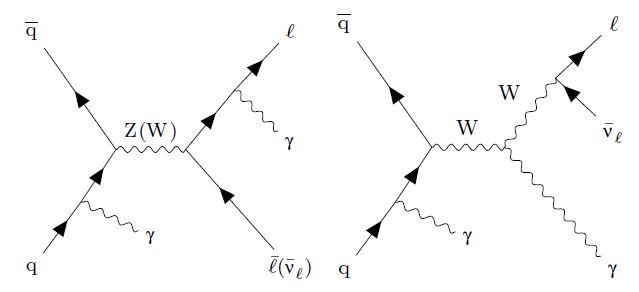
The CMS Collaboration submitted for publication last week a nice new result, where proton-proton collisions data collected by the experiment during the past run of the Large Hadron Collider were scanned in search of very peculiar events featuring a weak boson (W or Z) along with two energetic photons. The rate of these rare processes was measured and found in good agreement with predictions of the Standard Model of particle physics.