


Do you feel like nutritionists are always changing their minds? Do you want science-based information about diet but don’t know whom or what to believe?

If you’re nodding in agreement, you’re not alone: More than 80% of Americans are befuddled.

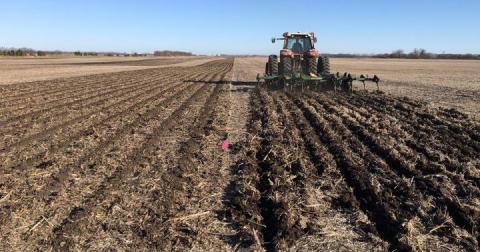
Yet it’s a lament that’s getting quite tiring – if you’re a nutrition scientist, that is. So much so that I refocused my career to shine scientific light on today’s critical food conversations, which have profound impacts on public health and the environment. My mantra: From farm to fork, what we eat matters.


This fellow is the graptolite, Isograptus cf. maximus, from the Piranha Formation, Middle Ordovician (Dapingian), Bolivia.
“When the tide is out, the table is set.” This wisdom from those who call Haida Gwaii home is still true today. The enormous difference between high and low tide in Haida Gwaii – up to twenty three vertical feet – means that twice a day, vast swathes of shellfish are unveiled, free for the taking.
 
If you're lucky enough to swim in the warm, shallow waters of the Indo-Pacific region, you may encounter one of the most charming of all the sea stars, the Protoeaster nodosus. These beauties are commonly known as Horned Sea Stars or, my personal favorite, Chocolate Chip Sea Stars.
A recent review of meta-analyses and 277 randomized controlled trials--in which nearly 1 million adults participated--to find out how various nutritional supplements and diets influenced mortality rates and cardiovascular outcomes found...not much.
An antibody is an agent of the immune system that attaches to an antigen. Usually antibodies recognize antigens on a virus or bacteria and attach to the invader to mark it for destruction by other immune cells.

In a new study,  University of Colorado Anschutz researchers engineered an antibody to recognize and attach to a protein called EGFR. Bladder tumors (but not healthy cells) are often covered in EGFR. Other researchers have hooked molecules of chemotherapy to antibodies that recognize EGFR and have used this antibody-antigen system to micro-target the delivery of chemotherapy. In this case, researchers used nifty chemistry to attach gold nanoparticles to antibodies.

Most people use toothbrushes, toothpaste and dental floss to clean their teeth, but their use is by no means universal. Many indigenous groups, as well as people in developing countries, use traditional techniques to clean their teeth. Some of these techniques are more effective than others.

Many people in the Middle East, and some parts of South and Southeast Asia, use twigs from the arak tree (known as miswak) to clean their teeth. They fray the end of the twig, dampen the resulting bristles with water or rosewater and then rub the bristles against their teeth (see video below). The wood of the arak tree (Salvadora persica) has a high concentration of fluoride and other antimicrobial components that prevent tooth decay.

This well-preserved partial ichthyosaur was found in the Blue Lias shales by Lewis Winchester-Ellis. The vertebrae you see are from the tail section of this marine reptile. The find includes stomach contents which tell us a little about how this particular fellow liked to dine. As with most of his brethren, he enjoyed fish and cephalopods. Lewis found fish bone and squid tentacle hooklets in his belly. Oh yes, these ancient cephies had grasping hooklets on their tentacles. I'm picturing them wiggling all ominously.


This fellow is Chengjiangocaris kunmingensis, a rather glorious fuxinhuiid arthropod. While he looks like he could be from the inside of the Lascaux Caves and their fire-kissed Palaeolithic paintings, albeit by a very ancient Picasso, he was found at a UNESCO World Heritage Cambrian fossil site in southern China.
Meet one of the most adorable of all the Living Fossil species, the Elephant shrew, Macroscelides proboscideus, one of 15 species of this order. These small, quadrupedal, insectivorous mammals strongly resemble rodents or opossums with their scaly tails, elongated snouts, and rather longish legs.

