







Green tea is high in the antioxidant EGCG (epigallocatechin-3- gallate) which helps prevent the body’s cells from becoming damaged and prematurely aged.

Studies have suggested that the combination of green tea and EGCG may also be beneficial by providing protection against certain types of cancers, including breast cancer.

A new study conducted by researchers at the University of Mississippi researchers now finds that consuming EGCG significantly inhibits breast tumor growth in female mice. These results bring us one step closer to better understanding the disease and potentially new and naturally occurring therapies.

Scrapie can be transmitted to lambs through milk, according to new research published in BMC Veterinary Research. The study provides important information on the transmission of this prion-associated disease and the control of scrapie in affected flocks. Scrapie is a fatal neurodegenerative disease of sheep and goats.

Clinical signs include itchiness, head tremor, wool loss and skin lesions as well as changes in behaviour and gait.

Timm Konold and colleagues from the Veterinary Laboratories Agency in Weybridge, UK, investigated the transmission of scrapie by feeding milk from scrapie-affected ewes to lambs that are genetically susceptible to contracting scrapie. The researchers were looking for the presence of the prion protein, PrPd, which is associated with the disease.

Attention-deficit/hyperactivity disorder(ADHD) is a behavioral disorder, usually first diagnosed in childhood, that is characterized by inattention, impulsivity and hyperactivity.

Children with ADHD appear likely to experience sleep problems, according to a report in the April issue of Archives of Pediatrics & Adolescent Medicine. Sleep problems in these children may be associated with poorer child psychosocial quality of life, child daily functioning, caregiver mental health and family functioning.

Mice given caffeine equivalent to a human drinking six to eight cups of coffee a day were protected from developing experimental autoimmune encephalomyelitis (EAE), the animal model for the human disease Multiple Sclerosis (MS), according to researchers at Cornell University.

Caffeine is a well-known adenosine receptor blocker, and the researchers believe results show the importance of this molecule in permitting the infiltration of immune cells into the central nervous system of patients with MS.

Dr. Jeffrey H. Mills, a postdoctoral associate in the laboratory of Dr. Margaret S. Bynoe, presented the findings at Experimental Biology 2008 on April 7. The presentation was part of the scientific programs of the American Society of Immunologists.

Green is in. Even the army is making sure to use environmentally friendly paint on its bombers and environmentally conscious people who have made great efforts to put ethical bullets into mainstream use will be happy that their lead-free status will no longer leave crimes unsolved.

Scientists in Texas say a new, inexpensive test requires only a single speck of gunshot residue (GSR) smaller than the period at the end of this sentence and it could boost the accuracy of results at crime scenes involving gunplay.

Many of the current methods are susceptible to outside interferences that can produce false positive or false negative results. For example, most tests require the presence of lead for a valid reading, including two of the three mainstays of residue analysis — the sodium rhodizonate test and scanning electron microscopy with energy dispersive x-ray detection.

Want ethical clothing? You have to go with bamboo, people say. There hasn't been this much enthusiasm for a renewable product since ethanol in the 1990s.

If you follow the hype, bamboo fabric is soft, durable and elastic. It hangs as gracefully as silk, has an attractive, lustrous sheen and plants grow in 4 years. It is, in other words, perfect. Except it isn't.

Ironically, unless it is treated with harmful chemicals, bamboo is not that great. Raw bamboo fabric lets almost all harmful UV radiation pass through and reach the skin and because cellulose fibers allow moisture to leak in and provide more food for bacteria to eat, the resulting bacterial blooms can lead to unpleasant odors and unsanitary clothing.

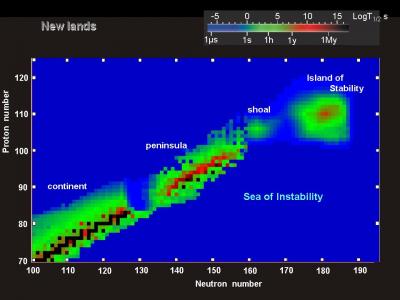
In the uncharted wilderness at the fringes of the Periodic Table of the Elements is a long-sought island — the fabled 'Island of Stability' - and it is apparently home of a new genre of superheavy chemical elements sought for more than three decades.

The periodic table, a fixture on the walls of science classrooms around the world, lists all the chemical elements. These materials make up everything in the universe, from human beings, medicines, and food to stars and swirling clouds of gas a billion light-years across the universe.

The first 92 elements on the table exist naturally. The rest – which now extend to element 118 – were created by scientists in atomic nuclei collision with the aid of particle accelerators.

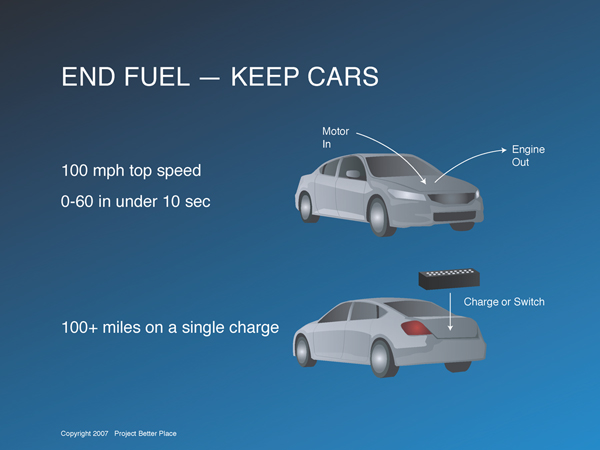
A good friend of mine recently introduced me to an effort that is currently underway that is very ambitious, but also very promising: Project Better Place… the brainchild of Shai Agassi, former President of the Products and Technology Group at SAP AG. The vision of Project Better Place is an oil-free future where personal transportation is no longer dependent upon gasoline-burning vehicles, but by the next generation of battery powered cars. This of course is not a new idea, but what is new about Project Better Place (PBP) is the detailed plans in place to implement that vision.

Mr. Agassi has developed the design of PBP not around the vehicles involved, but around the consumers.

Scientists presented their evidence today that desert heat, a little water, and meteorite impacts may have been enough to cook up one of the first prerequisites for life three or four billion years ago: The dominance of “left-handed” amino acids, the building blocks of life on this planet.

In a report at the 235th national meeting of the American Chemical Society, Ronald Breslow, Ph.D., University Professor, Columbia University, and former ACS President, described his take on how our amino acid signature came from outer space.

Numerous theories have been put forth to explain the dominance of L-amino acids. One, for instance, suggests polarized light from neutron stars traveled all the way to earth to “zap” right-handed amino acids directly. “But the evidence that these materials are being formed out there and brought to us on meteorites is overwhelming,” said Breslow.

Scientists are beginning to develop a clearer picture of what makes some people stand head and shoulders above the rest. A team of researchers who last year identified the first common version of a gene influencing height has now identified a further twenty regions of the genome which together can make a height difference of up to 6cm.

The results, published together with two independent studies online today in the journal Nature Genetics, mean that scientists now know of dozens of genes and genetic regions that influence our height. This provides scientists with a fascinating insight into how the body grows and develops normally and may shed light on diseases such as osteoarthritis and cancer.


