

A major study of the organization and regulation of the human genome published today changes our concept of how our genome works. The integrated study is an exhaustive analysis of 1% of the genome that, for the first time, gives an extensive view of genetic activity alongside the cellular machinery that allows DNA to be read and replicated.

The lead report from the ENCyclopedia Of DNA Elements (ENCODE) Consortium, published in Nature, together with 28 companion papers published in Genome Research, defined in detail which regions of the genome are actively copied in the cell, revealed the location and studied evolution of elements that control gene activity, and defined the relationship between DNA-associated proteins and gene activity and DNA replication.

Genome-wide association studies (GWAs) have received a lot of media attention in the last several months as various research groups have released over a half-dozen such studies, all focused on some of the most widespread Western diseases, including heart disease, type II diabetes, and breast cancer.

A method for increasing plants’ tolerance to salt stress and thus preventing stunted growth and even plant death has been developed. The method has significant consequences for dealing with soil salinization, which is an acute problem for a wide range of crops in many regions of the world.


Magnified photo at left shows the invasion of heavy oxidation (green bubbles) in the membrane of a wild, stressed, salt-sensitive plant. At right, following genetic manipulation, the bubbles are broken up and "caged" into tiny vesicles, thus preventing interference with the flow of vital nutrients in the plant. Credit: Illustration courtesy the Hebrew University

Scientists at UC San Diego have solved the genomic puzzle of an organism discovered in the oceans with potential for producing compounds showing promise in treating diseases such as cancer.

Daniel Udwary and Bradley Moore joined colleagues at Scripps and the Department of Energy’s (DOE) Joint Genome Institute in successfully sequencing the genome of Salinispora tropica. The decoding opens the door to a range of possibilities for isolating and adapting potent molecules the marine organism naturally employs in the ocean environment for chemical defense, scavenging for nutrients and communication.

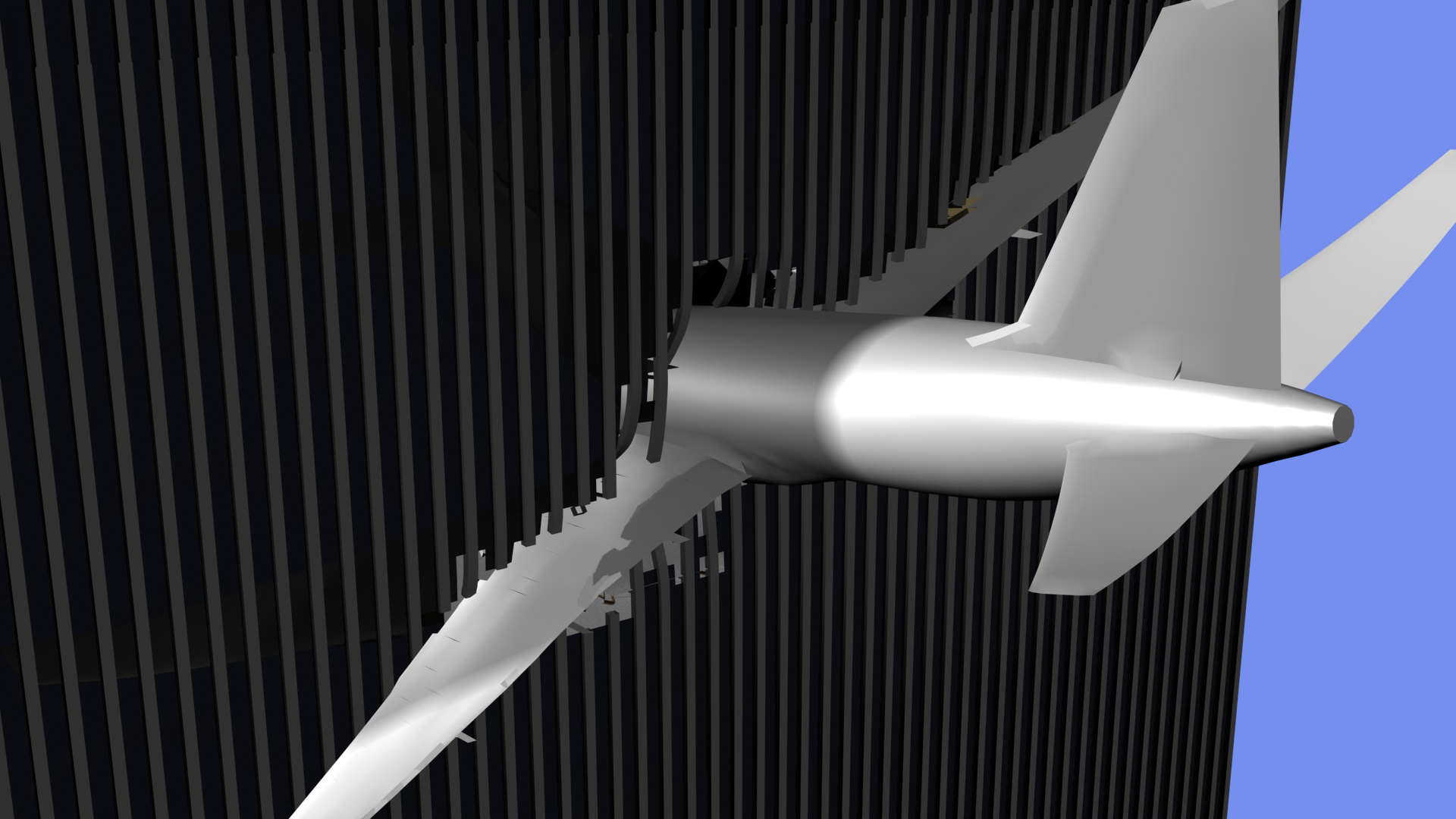
Although most Americans believe they know what brought down the World Trade Center twin towers on Sept. 11, 2001, civil engineers are still seeking answers to questions that could save lives in the future.

Structural engineers need to know from a scientific perspective what happened to the buildings during the terrorist attacks in order to prevent future failures.

The search for answers continues with the help of a state-of-the-art animated visualization created by researchers at Purdue University.

Source: Purdue University

A team of Canadian and U.S. researchers have uncovered evidence that ragged, kilometre-high undulating features on the surface of Mars were shorelines of massive ancient oceans that once covered one-third of the planet in water.

Mars’ oceanic past has been debated since Viking spacecraft images from the 1970’s pinpointed features that seemed similar to shorelines on the Earth. However, in the 1990s, NASA’s Mars Global Surveyor revealed that peaks and dips along these features had topographic differences of nearly 3 kilometres. Since old shorelines on Earth remain nearly flat relative to sea level, there was widespread skepticism that these features represented ancient shorelines.

A unique discovery of two celestial explosions at exactly the same position in the sky has led astronomers to suggest they have witnessed the death of one of the most massive stars that can exist.

A global collaboration of astronomers, led by Queen’s University Belfast teamed up with Japanese supernova hunter Koichi Itagaki to report an amazing new discovery. This is the first time such a double explosion has been observed and challenges our understanding of star-deaths.


Credit (c) Frederic Durillon - www.animea.com, Courtesy Service d'Astrophysique/CEA

Why do some online communities succeed, like Second Life, Facebook and, well, this one, and some fail?

The answer may be in what their communities think about 'giving' and it can tell us a lot about people in general.

Everyone does something on social sites for a reason. People like to 'get paid' even if that doesn't mean money. It is why people submit articles to Digg - submitters get the satisfaction of knowing they brought an interesting article to people that they may not have found themselves.

Sandia National Laboratories is pioneering the future of superalloy materials by advancing the science behind how those superalloys are made.

As part of Sandia’s nanoscale research, a group of experts specializing in inorganic synthesis and characterization, modeling, and radiation science have designed a radical system of experiments to study the science of creating metal and alloy nanoparticles.


CLICK IMAGE FOR FULL SIZE.

A young star’s strange elliptical ring of dust likely heralds the presence of an undiscovered Neptune-sized planet, says a University of Rochester astronomer

Stars in the early stages of life are surrounded by dust clouds that thin out and dissipate as the star reaches maturity, becoming rings in their final stages. One star, however, has a dust ring that has long puzzled astronomers because it is not centered around the star as usual. Instead, the ring is elliptical, with the parent star off to one side.


Hubble image of Fomalhaut and ring. Credit: NASA

