







It's no secret that humans can recognize siblings on a biological level. Now it turns out plants can also, according to biologists at McMaster University. Even more, they get downright competitive with strangers of the same species.

“The ability to recognize and favour kin is common in animals, but this is the first time it has been shown in plants” said Susan Dudley, associate professor of biology at McMaster University in Hamilton, Canada. “When plants share their pots, they get competitive and start growing more roots, which allows them to grab water and mineral nutrients before their neighbours get them.

A team of researchers led by University of Virginia Health System geneticists has uncovered a major secret in the mystery of how the DNA helix replicates itself time after time.

It turns out that it is not just the sequence of the bases (building blocks) in the DNA, but also how loosely or tightly the chromatin (the material that makes up chromosomes) is packed at different points of the chromosome that is critical.

Human-caused nitrogen deposition has been indirectly “fertilizing” forests, increasing their growth and sequestering major amounts of carbon, a new study suggests.

The findings create a more complex view of the carbon cycle in forests, where it was already known that logging or other stand-replacement events – whether natural or not – create periods of 5-20 years when there is a net release of carbon dioxide from forests to the atmosphere, instead of sequestration as they do later on.

A decade or so ago, a spate of high profile legal cases arose in which people were accused, and often convicted, on the basis of “recovered memories.” These memories, usually recollections of childhood abuse, arose years after the incident occurred and often during intensive psychotherapy.

So how accurate are recovered memories? The answer is not so clear. In fact, this question has lead to one of the most contentious issues in the fields of psychology and psychiatry.

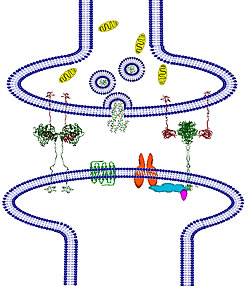
As a result of mapping the structure of the protein complex implicated in autism spectrum disorders, a research team led by scientists at University of California, San Diego have discovered how particular genetic mutations affect this complex and contribute to the developmental abnormalities found in children with autism. Their work should help scientists pinpoint the consequences of other genetic abnormalities associated with the disorder.


Neuroligin/neurexin complex in the synapse

If you've ever thought about running a public company, Sarbanes-Oxley is something you probably dread. Commonly dubbed "The Enron Law", it requires enormous oversight paperwork with the consequence that Chairmen, CEOs and Directors can go to jail if they violate it. A new University of Georgia study finds that the 2002 law has altered the makeup of corporate boards, making them larger and more independent and also had the unintended effect of increasing director pay - by more than 50 percent.

CEO pay as well. If you can go to jail for doing a job, be it Director or CEO, you demand more money to do it.

A new therapy to re-activate silenced genes in patients who suffer from neurodegenerative diseases or stroke is being developed by researchers at the University of Illinois at Chicago and Cornell University.

During and after a stroke, certain cellular events take place that lead to the death of brain cells. Compounds that inhibit a group of enzymes called histone deacetylases can modulate gene expression, and in some cases produce cellular proteins that are actually neuroprotective -- they are able to block cell death.

Human interaction and stimulation enhance chimpanzees’ cognitive abilities, according to new research from the Chimpanzee Cognition Center at The Ohio State University. The study (1) is the first to demonstrate that raising chimpanzees in a human cultural environment enhances their cognitive abilities, as measured by their ability to understand how tools work.

A newly discovered transmembrane protein called "Wurst" (sausage) appears to play a decisive role in breathing – possibly in all animals, from flies to human beings. This insight is reported by scientists from the University of Bonn and the Göttingen-based Max Planck Institute for Biophysical Chemistry.

In the common fruit fly, Drosophila, the protein ensures the proper formation and functioning of the respiratory system. Indeed, it may have a key function in the process of lung maturation in mammals, too. This discovery possibly means that the protein could offer an exciting starting point for the development of new drugs to treat respiratory problems such as impaired lung function in premature infants.

Solid Oxide Fuel Cells (SOFC) have attracted major interest from research and development communities as an alternative source of power. In these fuel cells electricity is generated via electro-chemical reactions using hydrogen based gas and oxygen as a fuel and oxidant, respectively.

Sealing these units is a critical technical issue that needs further work before they can be put into widespread commercial use. In particular the system chosen must exhibit good gas tightness, adhesion with adjoining components (electrolyte and connector), chemical compatibility, matching coefficient of thermal expansion and electrical insulation. Ceramic seal technology recently developed may be the solution.

