


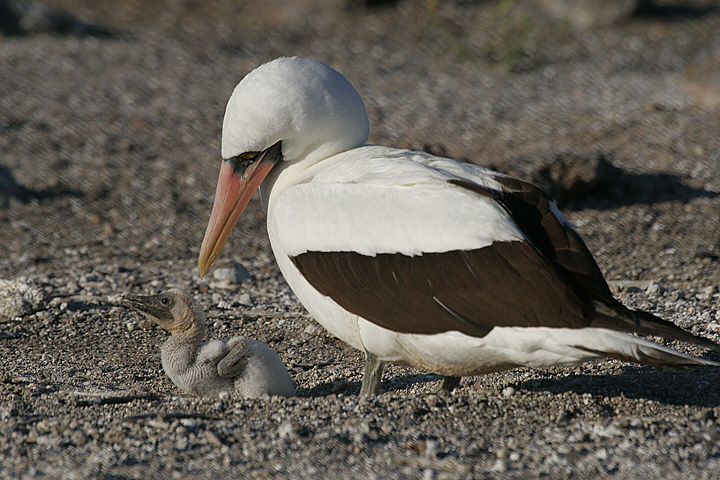




Even Nazca booby families don't stay together after the kids leave the nest these days. The Nazca booby is a long-lived seabird found in the Galapagos Islands off the coast of Ecuador.

Many Nazca booby females switch mates after successfully raising a chick, according to a Wake Forest University study.


You'll be alone again soon, booby

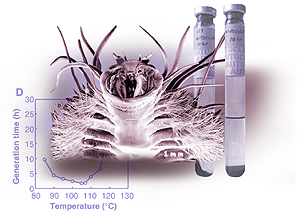
Buried beneath a sulfurous cauldron in European seas lies a class of microorganisms known as “extremophiles,” so named because of the extreme environmental conditions in which they live and thrive. Almost as radical, perhaps, is the idea that these organisms and their associated enzymes could somehow unlock the key to a new transportation economy based on a renewable biofuel, lignocellulosic ethanol.


They're called extremophiles for a reason. Courtesy: University of New South Wales

Women who enjoy good childhood relationships with their fathers are more likely to select partners who resemble their dads research suggests.

In contrast, the team of psychologists from Durham University and two Polish institutions revealed that women who have negative or less positive relationships were not attracted to men who looked like their male parents.

Using a robotic telescope at the ESO La Silla Observatory, astronomers have for the first time measured the velocity of the explosions known as gamma-ray bursts. The material is travelling at the extraordinary speed of more than 99.999% of the velocity of light, the maximum speed limit in the Universe.

"With the development of fast-slewing ground-based telescopes such as the 0.6-m REM telescope at ESO La Silla, we can now study in great detail the very first moments following these cosmic catastrophes," says Emilio Molinari, leader of the team that made the discovery.

Quantum entanglement is one of the many non-intuitive features of quantum mechanics. If two photons of light are allowed to properly interact with one another, they can become entangled. One can even directly create pairs of entangled photons using a non-linear process called SPDC (Spontaneous Parametric Down Conversion).

Those two entangled photons can then be separated but as soon as one of them interacts with a third particle, the other photon of the pair will change its quantum state instantaneously.

Some call it the eighth wonder of world. Others say it's the next Great Wall of China.

Upon completion in 2009, the Three Gorges Dam along China’s Yangtze River will be the world's largest hydroelectric power generator and one of the few man-made structures so enormous that it's actually visible to the naked eye from space.


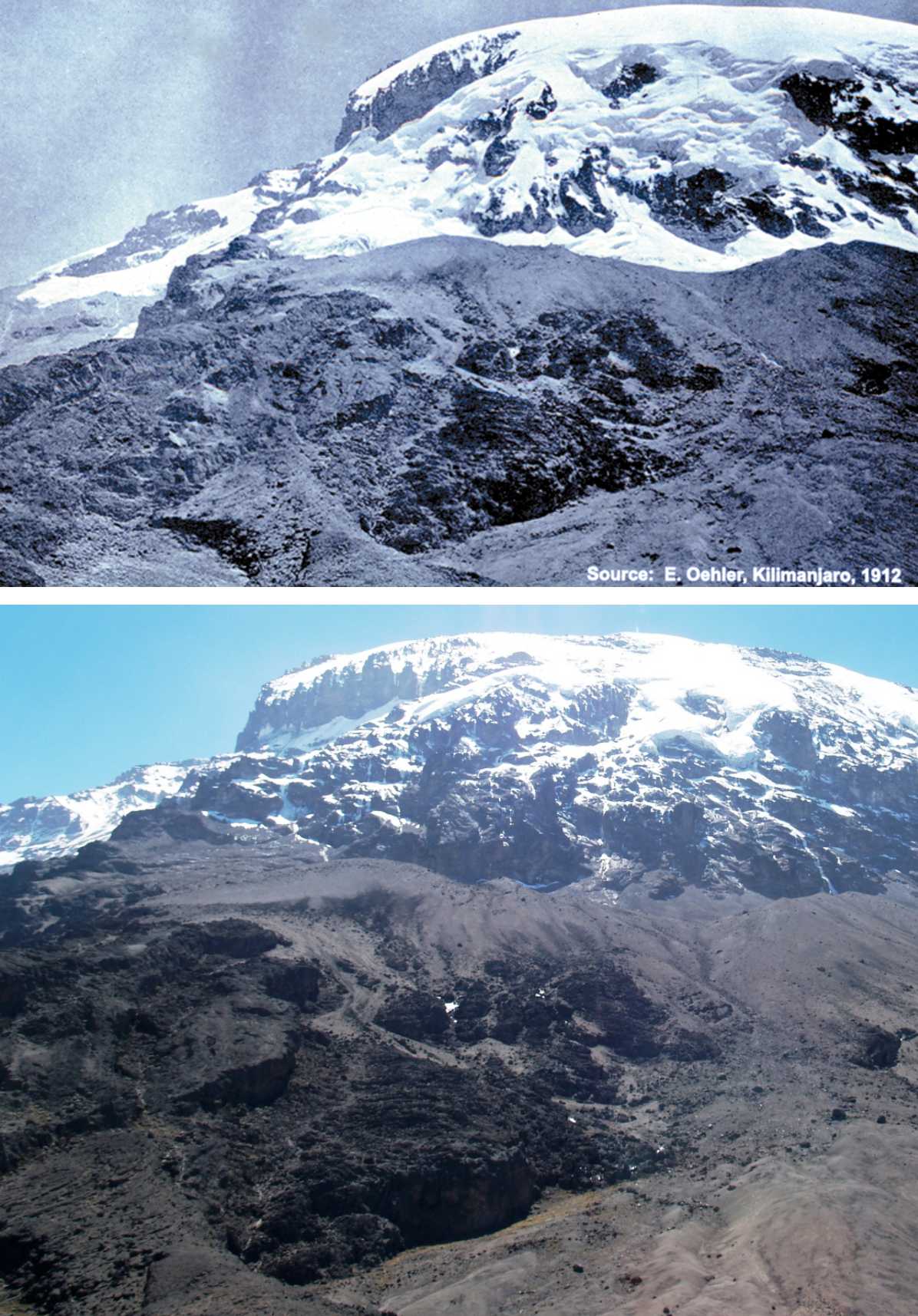
The "snows" of Africa's Mount Kilimanjaro inspired the title of an iconic American short story, but now its dwindling icecap is being cited as proof for human-induced global warming.

However, two researchers writing in the July-August edition of American Scientist magazine say global warming has nothing to do with the decline of Kilimanjaro's ice, and using the mountain in northern Tanzania as a "poster child" for climate change is simply inaccurate.


CLICK ABOVE FOR FULL SIZE.

A remarkable new long-necked, gliding reptile discovered in 220 million-year old sediments of eastern north America has been discovered, scientists report. Mecistotrachelos apeoros (meaning "soaring, long-necked") is based on two fossils excavated at the Solite Quarry that straddles the Virginia-North Carolina state line.


CLICK ABOVE FOR FULL SIZE.
Image of Mecistotrachelos apeoros. Restoration artwork courtesy of Karen Carr.

Primates with severe Parkinson’s disease were able to walk, move, and eat better, and had diminished tremors after being injected with human neural stem cells, a research team from Yale, Harvard, the University of Colorado, and the Burnham Institute report today.

These results are promising, but it will be years before it is known whether a similar procedure would have therapeutic value for humans, said the lead author, D. Eugene Redmond Jr., professor of psychiatry and neurosurgery at Yale.


Photo of a new dopamine neuron after injection. The red is a progeny of the human stem cell. Credit: Yale

Seen thundering across the landscape during an aerial survey, more than 1.3 million white-eared kob, tiang (African antelope), and mongalla gazelle are thriving in Southern Sudan, despite all odds. An estimated 8,000 elephants, concentrated mainly in the Sudd, the largest freshwater wetland in Africa, have also been observed.

Despite the war, some species of wildlife in Southern Sudan, last surveyed more than 25 years ago, have not only survived but have thrived east of the Nile River in numbers that rival those of the Serengeti.


Photo by P.Elkan ©2007 WCS/National Geographic Oryx, Boma National Park

