

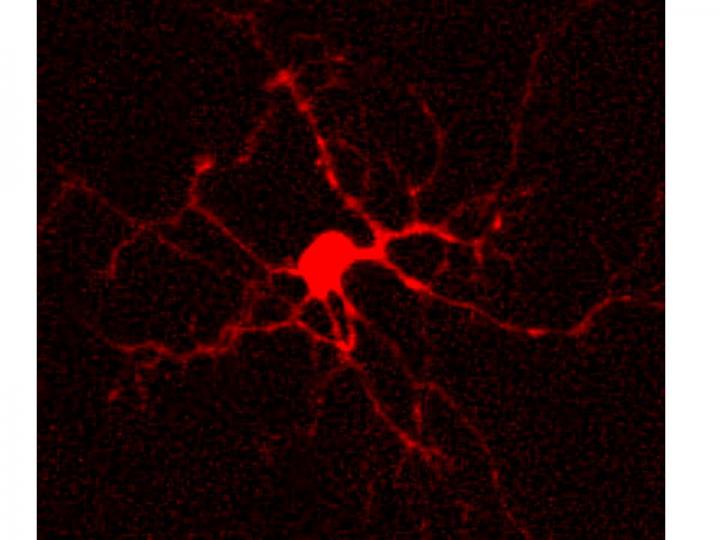

As medicine has improved, increasing our ability to treat disease, our longevity has improved as well. The deterioration of the body with age is a whole other matter, though.

Incessant mountain rain, snow and melting glaciers in a comparatively small region of land that hugs the southern Alaska coast and empties fresh water into the Gulf of Alaska would create the sixth largest coastal river in the world if it emerged as a single stream, a recent study shows.

Since it's broken into literally thousands of small drainages pouring off mountains that rise quickly from sea level over a short distance, the totality of this runoff has received less attention, scientists say. But research that's more precise than ever before is making clear the magnitude and importance of the runoff, which can affect everything from marine life to global sea level.

Trauma is responsible for more global deaths annually than HIV, malaria and tuberculosis combined. Yet healthcare systems in many countries are missing out on life-saving treatments learnt on the battlefield, according to a review by King's College London and published today in the Journal of the Royal Society of Medicine.

Medical advancements made by the military in times of conflict, are increasingly seen in the hospitals of high income countries but are being missed in poorer countries, where trauma is the leading cause of death in young people. Many innovations by frontline doctors in stabilising and treating severely wounded soldiers could be adapted for use in other healthcare settings.

A bipartisan duo has floated the idea of putting an end to having 50 rules for 50 states when it comes to labels on genetically modified foods. The federal government is usually hands off about processes that don't involve safety - they don't do spot testing of organic or kosher food, for example they rely on companies to be honest in filling out paperwork and for the public to be punitive when food makers are unethical. Likewise, GMO is just a process, so the FDA and the USDA hasn't much cared, as long as products show substantial equivalence.

Using melatonin could provide more and better quality sleep compared to using an eye mask and earplugs in a simulated noisy and illuminated environment, according to research published in open access journal Critical Care. This study was carried out on healthy subjects but could have future implications for intensive care unit (ICU) patients.

Melatonin is the hormone secreted by the body to regulate sleep, usually in periods of darkness. Synthetically produced melatonin is used to boost the body's own melatonin levels to treat some sleep disorders, and sometimes as a means of overcoming jet lag. In ICUs, disturbances throughout the night, caused by noise and light, have been linked to slower recovery. This has led clinicians to investigate ways of reducing sleep disturbances.

Canadian taxpayers could save billions by the introduction of a universal public drug plan to provide prescriptions to all Canadians, according to a paper in the Canadian Medical Association Journal. Canada is the only developed country with universal health insurance that does not also offer universal prescription drug coverage.

A phase 3 trial of brentuximab vedotin (BV), the first new drug for Hodgkin lymphoma in over 30 years, shows that adults with hard-to-treat Hodgkin lymphoma given BV immediately after stem cell transplant survived without the disease progressing for twice as long as those given placebo (43 months vs 24 months).

The findings, published in The Lancet, are potentially practice changing for this young cancer population who have exhausted other treatment options and for whom prognosis is poor.

"No medication available today has had such dramatic results in patients with hard-to-treat Hodgkin lymphoma"*, says lead author Craig Moskowitz, a Professor of Medicine at Memorial Sloan Kettering Cancer Center, New York, USA.

The country of France recently sided with environmental donors and mandated that new buildings must have solar panels or plants on the roof. Though the science is unclear, the belief is that this will naturally cool buildings or, in the case of planets, retain rainwater, reduce problems with runoffs and favor biodiversity.

Since environmentalists also once insisted that coral reefs should be built from tires, and that ending up costing 100X as much as it saved, politicians only agreed to partial coverings and only on new buildings in commercial zones. Time will tell if the plan is helping or if it is just a political placebo, like biofuels and wind energy.

A Northwestern University-led study in the emerging field of nanocytology could one day help men make better decisions about whether or not to undergo aggressive prostate cancer treatments.

Technology developed by Northwestern University researchers may help solve that quandary by allowing physicians to identify which nascent cancers are likely to escalate into potentially life-threatening malignancies and which ones will remain "indolent," or non-aggressive.

The prostate-specific antigen (PSA) test was once the recommended screening tool for detecting prostate cancer, but there is now disagreement over the use of this test because it can't predict which men with elevated PSA levels will actually develop an aggressive form of the disease.

Epilepsy is a neurological disorder that affects approximately two percent of the population.

Despite extensive research and breakthroughs, one-third of patients are resistant to currently available therapies. A team of researchers as discovered a new cause to explain the development of temporal lobe epilepsy and may lead to future treatments: At an early stage, astrocytes are uncoupled from each other. 

This results in the extracellular accumulation of potassium ions and neurotransmitters, which cause hyperexcitability of the neurons.

