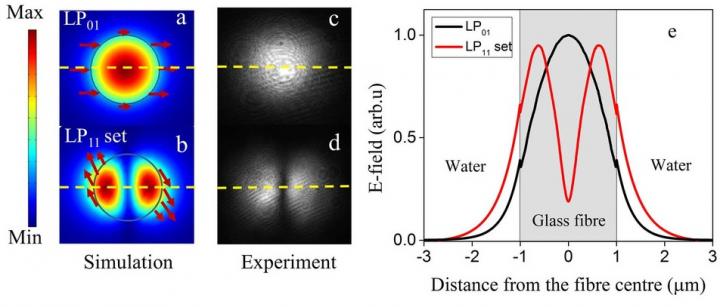

Most people don't realize that light can take different shapes. In the fundamental mode, light energy is most intense at the center and gradually fades towards the edge of the beam.

Light also has higher order modes. For example, the energy pattern can look like a donut, with most of the energy contained in a ring, and none in the hole or middle. Scientists create higher order modes by shining light through crystals and in recent years passing light along optical microfibers or nanofibers to manipulate particles has gained popularity in research labs because it could some day have applications in physics and biology. 

Let’s give a big shoutout to Gawker . They really stuck it to the Times by pointing out that their columnist Nick Bilton, who writes about technology, business, culture, and style (and should probably stick to...

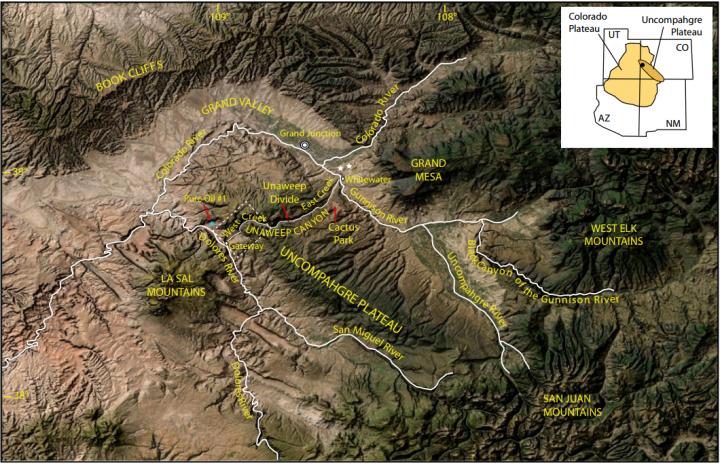
One canyon on Earth has two mouths - but that is not the only mystery.

First formally documented by western explorers mapping the Colorado Territory in the 1800s, Unaweep Canyon is a puzzling landscape and so it has inspired numerous scientific hypotheses for its origin. A new paper published in Geosphere by Gerilyn S. Soreghan and colleagues brings together old and new geologic data of this region to further the hypothesis that Unaweep Canyon was formed in multiple stages.
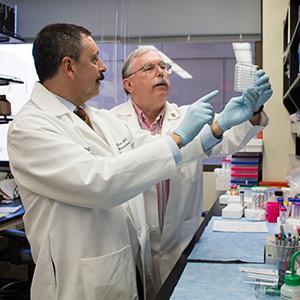
80 percent of patients survive when kidney cancer is detected early - but it is often not easy. However, finding it early has been among the disease's greatest challenges.

Kidney cancer is the seventh most common cancer in men and the 10th most common in women, affecting about 65,000 people each year in the United States. About 14,000 patients die of the disease annually. Like most cancers, kidney tumors are easier to treat when diagnosed early. But symptoms of the disease, such as blood in the urine and abdominal pain, often don't develop until later, making early diagnosis difficult. 

Consumer driven food trends are nothing new.

“Organics”, gluten-free, and more recently buying “local” have all captured consumers, encouraging supermarkets around the globe and in Australia to respond.

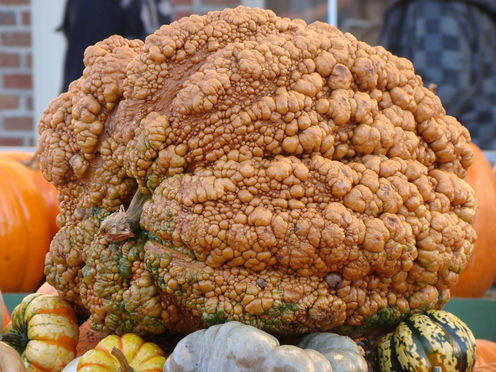
But the next emerging European food trend that may have the biggest impact on what we buy each week is “ugly food”.

Citizen science botanists in the Western Cape Province of South Africa have discovered two new species of beautiful blue-flowered legumes.

Few people take the chance to tramp the empty rolling ranges of mountains and the fragmented and jagged coastline of the Southern Cape in South Africa. Most avoid it because of how wild and tough-going it can be. This region is part of a unique and species rich global flora called the Cape Floral Kingdom. Yet there are a band of intrepid walkers and climbers who traverse these areas every week searching for rare and endangered plants.

Cancer cells crowded tightly together suddenly surrender their desire to spread, and this change of heart is related to a cellular pathway that controls organ size. These two stunning observations are reported today by researchers at Georgetown Lombardi Comprehensive Cancer Center in the journal Oncogene.

Winter storms dumped records amounts of snow on the East Coast and other regions of the country this February, leaving treacherous, icy sidewalks and roads in their wake. Now researchers from Canada are developing new methods to mass-produce a material that may help pedestrians get a better grip on slippery surfaces after such storms.

The material, which is made up of glass fibers embedded in a compliant rubber, could one day be used in the soles of slip-resistant winter boots. The researchers describe the manufacturing process in a paper in the journal Applied Physics Letters, from AIP Publishing.

Using discarded electronic boards, the UPV/EHU researcher Andoni Salbidegoitia has, in collaboration with international researchers, developed a system for obtaining clean hydrogen that can be used as fuel. The researchers have already registered the patent of the process in Japan.

The Chemical Technologies for Environmental Sustainability (TQSA) Group of the Department of Chemical Engineering of the UPV/EHU's Faculty of Science and Technology is aiming to make use of discarded plastic as effectively as possible from the environmental as well as energy and economic point of view.

Bicarbonate (baking soda) makes sparkling water sparkle, causes bread to rise, absorbs odors and can be used for cleaning all sorts of stuff, including your teeth. In the body, it plays essential roles in buffering pH, aiding in digestion and neutralizing lactic acid produced during physical exertion. Much of the bicarbonate in our bodies comes from carbon dioxide, which is produced as a waste product in all cells, although some is ingested with carbonated beverages and certain types of foods.

