Fake Banner
Not Just The Holidays: The Hormonal Shift Of Perimenopause Could Be Causing Weight Gain

You’re in your mid-40s, eating healthy and exercising regularly. It’s the same routine that...

Anxiety For Christmas: How To Cope

Christmas can be hard. For some people, it increases loneliness, grief, hopelessness and family...

The Enceladus Idea In The Search For Life Out There

A small, icy moon of Saturn called Enceladus is one of the prime targets in the search for life...

Deontological Decisions: Your Mother Tongue Never Leaves You

Ιf you asked a multilingual friend which language they find more emotional, the answer would usually...

User picture.
The ConversationRSS Feed of this column.

The Conversation is an independent source of news and views, funded by the academic and research community and delivered direct to the public. The Conversation launched in Australia in March 2011.... Read More »

Blogroll
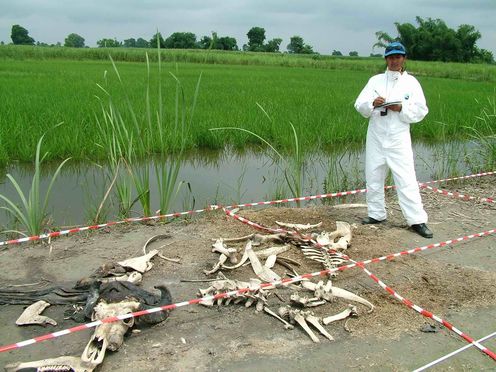
Most people are able to recognize the smell of “death” when they encounter a dead animal on a farm or a roadkill.

But despite its distinctive scent, few know why it actually smells the way it does. Even forensic scientists may not have identified all of the compounds behind it yet – they are still in the process.

Understanding the pattern of change of the chemicals that make up the scent during the process of decomposition could be of huge benefit to forensic science. Not only could it help determining the time of death of a victim, it could also lead to more scientifically rigorous training of cadaver dogs.

How did the world sound to our ancient human relatives two million years ago?

While we obviously don’t have any sound recordings or written records from anywhere near that long ago, we do have one clue: the fossilized bones from inside their ears. The internal anatomy of the ear influences its hearing abilities.

A Catholic, a Jesuit and a scientist walk into a bar. What do they have to talk about? And just how do those conversations go?

This scenario is no joking matter. Conflict as well as collaboration have characterized the historical relations between these three parties since the founding of the Society of Jesus, nearly 500 years ago. How do these three interact today in an era of “War on Science” that tends to politicize so many scientific issues?

The latest report card on Great Barrier Reef water quality shows signs of improvement, but the health of the marine environment close to the shore remains poor, driven by pollution runoff from the land.

Among the good news is that pollution levels in reef waters have declined in the past five years, and most pollutants seem to track towards the pollution reduction targets set for 2018.

It’s been 60 years since the first TV ad was broadcast in the UK. In that time, we’ve moved from the innocent grainy black-and-white “Tingle of Health” of Gibbs SR toothpaste, to the sophisticated hyper-reality of 4K TV and beyond, in lock-step with developing communications technologies.

The next 60 years will certainly see an even faster pace of change. So what can we look forward to (or not) in the realm of advertising?

Volkswagen has set aside €6.5 billion to cover the costs of the growing scandal over cheating on emissions tests in the US. Putting a number on the cost further down line will be far harder, however, as it is a crisis which calls into question the ethical credentials of the company and the industry, as well as posing tough questions about the regulators and authorities who were duped.