Fake Banner
Happy Twelfth Night - Or Divorce Day, Depending On How Your 2026 Is Going

Today is, in Christian observance, Twelfth Night, the end of The 12 Days of Christmas in that song...
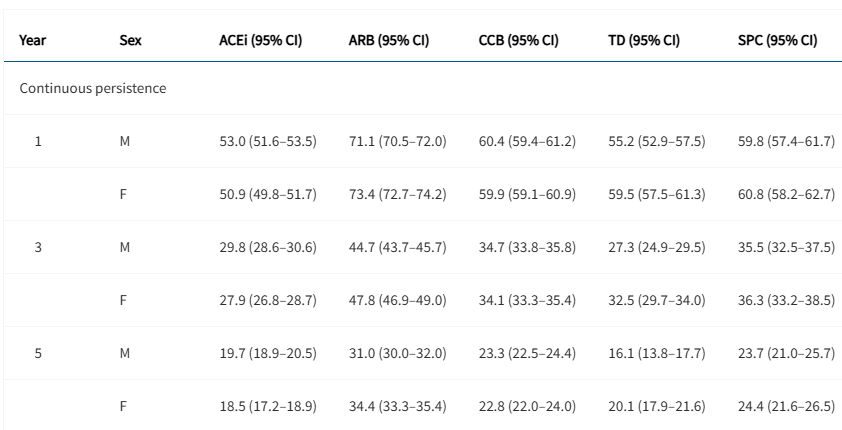
Blood Pressure Medication Adherence May Not Be Cost, It May Be Annoyance At Defensive Medicine

High blood pressure is an important risk factor for developing cardiovascular disease and premature...

On January 5th, Don't Get Divorced Because Of Hallmark Movies

The Monday after New Year's is colloquially called Divorce Day, but it's more than marriages ending...

Does Stress Make Holidate Sex More Likely?

Desire to have a short-term companion for the holidays - a "holidate" - is common enough that it...

User picture.
picture for Tommaso Dorigopicture for Fred Phillipspicture for Hontas Farmerpicture for picture for Patrick Lockerbypicture for Ilias Tyrovolas
Hank CampbellRSS Feed of this column.

I founded Science 2.0® in 2006 and since then it has become the world's largest independent science communications site, with over 300,000,000 direct readers and reach approaching one billion. Read More »

Blogroll
A few years ago, I wrote a piece for Communicating Astronomy with the Public outlining how to more effectively reach the public.(1)

I have some credibility. Science 2.0 has become a well-known movement despite not having media conglomerate backing, a marketing department, a sales force or any government funding, Not many can do that - or they probably would.
University of New Mexico professor Geoffrey Miller is a social/evolutionary psychologist so it's no surprise he is clueless about people - like what it takes to have the willpower to get a Ph.D, beyond his own subjective opinion. And it's even less of a surprise he made an unscientific conjecture. He may have been surprised anyone noticed. If social and evolutionary psychologists aren't finding racism in office clutter or in eating meat or telling us we evolved to like a car grill they don't get much attention. Unless it matches a confirmation bias, no one believes that surveys of psychology undergraduates are meaningful, much less scientific, after all.
Congressman Raul Grijalva, (D-Arizona), has some interesting ideas about science.

Namely, he thinks that all of the government scientists in the State Department who did numerous environmental impact assessments regarding the Keystone XL project don't know what they are talking about. And that he can prove it with a few rocks.
If you want to have a good time, visit Spain. 

It isn't just the tapas. They have bars. A lot of them.  The average is one bar for every 132 residents. For comparison, the US state with the most bars per capita is North Dakota - one for every 1,620 North Dakotans. The lowest region in Spain, Murcia, has one bar for every 531 people, three times as many bars as the booziest state in the US. (1)

And that's after 50,000 bars in Spain have closed due to the lousy economy.
It's not often that the Hallmark Channel gets a shout-out on Science 2.0 but when they send young people into space, I'm in. I got an email about an upcoming movie and it intrigued me so the publicist not only put me in touch with interesting people to interview, they sent along an exclusive clip just for you.  Bonus: There is also a sweepstakes and we all love to win free stuff.
Everyone says they care about science. And everyone says they care about developing nations.

Chocolate may be instrumental in deliciously helping people care about both. Ivory Coast, the world’s top cocoa producer, has a problem; young people are turning to other crops or giving up on small farms because they can't improve yields enough to make their cocoa holdings worthwhile. The choice is lose out on a cultural heritage or turn everything over to giant corporate farms.