Banner
Social Media Is A Faster Source For Unemployment Data Than Government

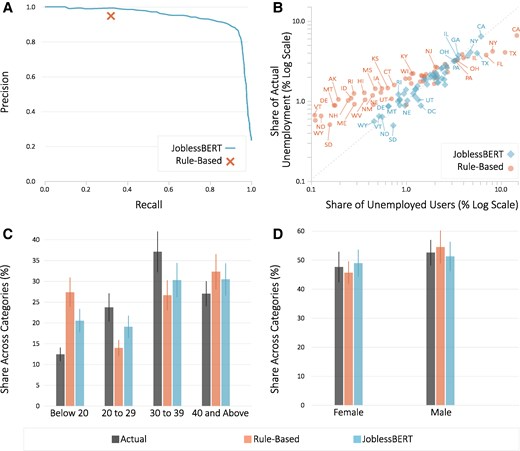
Government unemployment data today are what Nielsen TV ratings were decades ago - a flawed metric...
Gestational Diabetes Up 36% In The Last Decade - But Black Women Are Healthiest

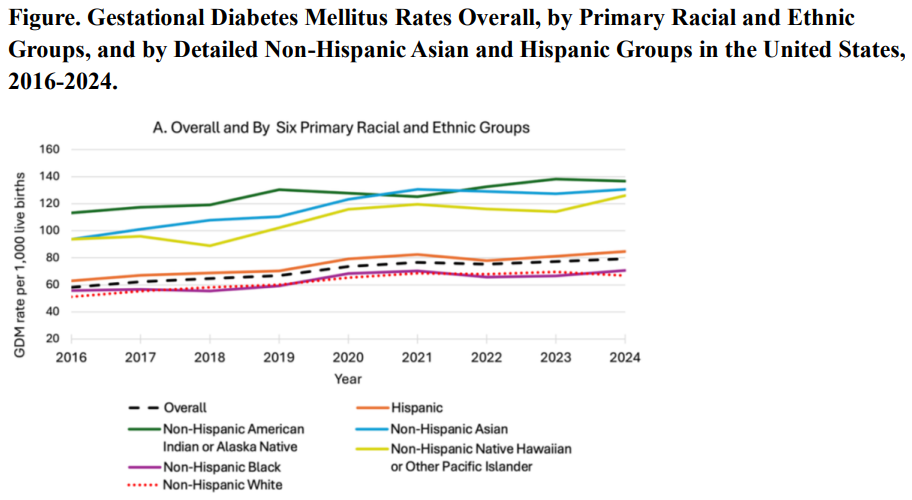
Gestational diabetes, a form of glucose intolerance during pregnancy, occurs primarily in women...

Object-Based Processing: Numbers Confuse How We Perceive Spaces

Researchers recently studied the relationship between numerical information in our vision, and...

Males Are Genetically Wired To Beg Females For Food

Bees have the reputation of being incredibly organized and spending their days making sure our...

User picture.
News StaffRSS Feed of this column.

News Releases From All Over The World, Right To You... Read More »

Blogroll

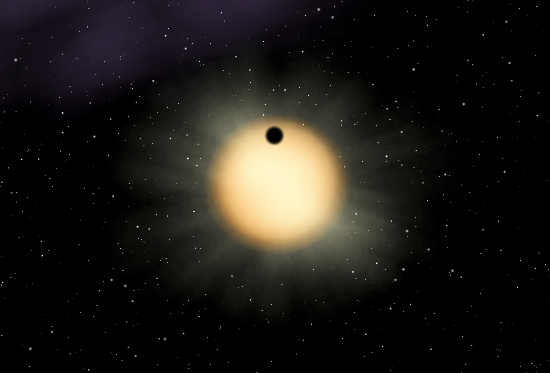
An international team of astronomers with the Trans-atlantic Exoplanet Survey today announce the discovery of their third planet, TrES-3. The new planet was identified by astronomers looking for transiting planets - that is, planets that pass in front of their home star - using a network of small automated telescopes in Arizona, California, and the Canary Islands. TrES-3 was discovered in the constellation Hercules about 10 degrees west of Vega, the brightest star in the summer skies.


A computer-generated simulation of TrES-3 crossing (transiting) the disk of its host star. TrES-3 transits farther from the disk center than any other known transiting planet.

The large molecular gas cloud in the constellation of Taurus is the nearest star formation region and a star formation test environment for expert theorists and observers alike. The XMM-Newton project has provided by far the most sensitive and comprehensive X-ray survey of this region, for the first time systematically detecting almost all young stars embedded in the cloud as X-ray sources, including many objects with the lowest mass, the so-called brown dwarfs, and stars still in the process of growing, the so-called protostars.

Rats paralyzed due to loss of blood flow to the spine returned to near normal ambulatory function six weeks after receiving grafts of human spinal stem cells (hSSCs), researchers from the University of California, San Diego (UCSD) School of Medicine report.

“We demonstrated that when damage has occurred due to a loss of blood flow to the spine’s neural cells, by grafting human neural stem cells directly into the spinal cord we can achieve a progressive recovery of motor function,” said Martin Marsala, M.D., UC San Diego professor of anesthesiology.

It is easy to observe that many networks naturally divide into communities or modules, where links within modules are stronger and denser than those across modules – like the way people from the same age group tend to interact more with each other than with people from different age groups. It is widely believed that networks within cells are modular in much the same way. Drs Zhi Wang and Jianzhi Zhang, from the University of Michigan, now investigate these modular properties and conclude that they may be only a random byproduct of evolution, and not functional at all.

NASA and Columbia University Earth Institute research finds that human-made greenhouse gases have brought the Earth’s climate close to critical tipping points, with potentially dangerous consequences for the planet.

From a combination of climate models, satellite data, and paleoclimate records the scientists conclude that the West Antarctic ice sheet, Arctic ice cover, and regions providing fresh water sources and species habitat are under threat from continued global warming.

Three new drugs are predicted to help transform the long-term prognosis for people with the AIDS virus, says an editorial in BMJ, which points towards highly promising results from trials of three new drugs.

HIV patients in “deep salvage” – meaning those people who have developed multidrug resistant HIV that does not respond to drug combination therapy – could benefit the most.