Fake Banner
A Great Year For Experiment Design

While 2025 will arguably not be remembered as a very positive year for humankind, for many reasons...
Living At The Polar Circle

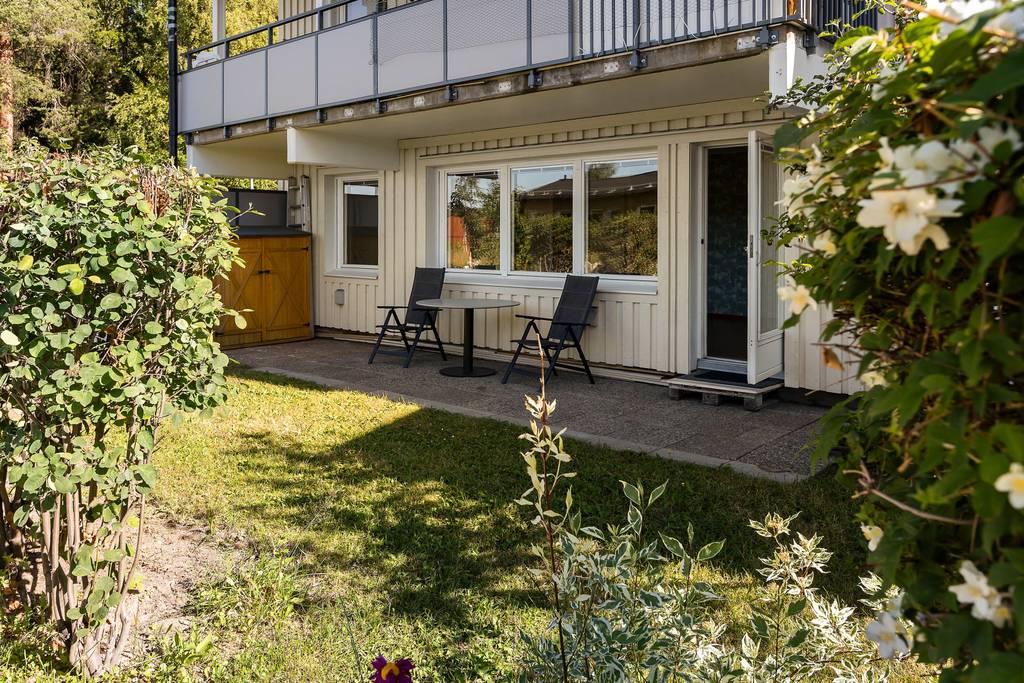
Since 2022, when I got invited for a keynote talk at a Deep Learning school, I have been visiting...

Conferences Good And Bad, In A Profit-Driven Society

Nowadays researchers and scholars of all ages and specialization find themselves struggling with...
USERN: 10 Years Of Non-Profit Action Supporting Science Education And Research

The 10th congress of the USERN organization was held on November 8-10 in Campinas, Brazil. Some...

User picture.
picture for Hank Campbellpicture for Patrick Lockerbypicture for Heidi Hendersonpicture for Bente Lilja Byepicture for Sascha Vongehrpicture for Johannes Koelman
Tommaso DorigoRSS Feed of this column.

Tommaso Dorigo is an experimental particle physicist, who works for the INFN at the University of Padova, and collaborates with the CMS and the SWGO experiments. He is the president of the Read More »

Blogroll
At 125 GeV of mass, the Higgs boson is a very heavy particle; yet its natural width is predicted to be of just 4.15 MeV in the standard model, a value much smaller than that of particles of similar mass. The top quark, for instance, has a width of 1.5 GeV; and the Z boson has a width of 2.5 GeV: three orders of magnitude larger.
The tau lepton is a particle of very complex phenomenology. Although point-like as its lighter counterparts - the electron and the muon - the tau has a quite respectable mass, 1.77 GeV, which makes all the difference from the other charged leptons.

The tau was discovered in 1975 by Martin Perl at the SPEAR electron-positron collider. The acceptance of that observation was quite slow: the events found by Perl and his team were complicated because of the peculiar properties of the newfound particle. Perl had found an excess of events featuring an electron and a muon and an energy imbalance, which were hard to explain unless hypothesizing the creation of a pair of short-lived, heavy leptons.
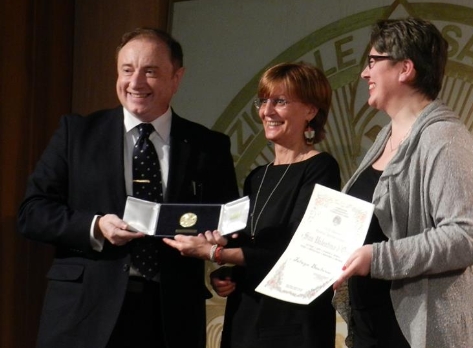
Fabrizio Tamburini, the Italian researcher who has discovered an innovative way to multiply the transmission of electromagnetic signals by exploiting the vorticity of photons, has received last Saturday the "San Valentino prize" at Palazzo Gazzolli in Terni, Italy.

The annual prize was founded in 1969 by Agostino Pensa and is meant to recognize the professional devotion of scientist and artists to their work. In the past years the prize has gone, among others, to several distinguished physicists: Ugo Amaldi, Carlo Rubbia, Emilio Segre', Tullio Regge. 

It is nice to see that the Tevatron experiments are continuing to produce excellent scientific measurements well after the demise of the detectors. Of course the CDF and DZERO collaborations have shrunk in size and in available man-years for data analysis since the end of data taking, as most researchers have increased and gradually maxed their participations to
other experiments - typically the ones at the Large Hadro Collider; but a hard core of dedicated physicists remains actively involved in the analysis of the 10 inverse femtobarns of proton-antiproton collisions acquired in Run 2, in the conviction that the Tevatron data still provides a basis for scientific results that cannot be obtained elsewhere.
Did you know about that dyslectic guy with an impotence problem who once came to Fermilab ? He said he'd been advised to go there as he wanted to get a hadron.
The Super-CDMS dark-matter search has released two days ago the results from the analysis of nine months of data taking. The experiment has excellent sensitivity to weak interacting massive particles producing inelastic scattering with the Germanium in the detector.

The detector is composed of fifteen cylindrical 0.6 kg crystals stacked in groups of three, equipped with ionization and phonon detectors that are capable of measuring the energy of the signals. From that the recoil energy can be derived, and a rough estimate of WIMP candidates mass. The towers are kept at close to absolute zero temperature in the Soudan mine, where backgrounds from cosmic rays and other sources are very small.