Banner
Not So Elementary (the Cosmos, That Is)

Recently there are appeared a paper showing how Physics - Iron–Helium Compounds Form Under...

Carbon — to capture or not to capture

This came up on 2nd November 2024 (give or take a day), a broadcaster objecting to a carbon capture...

Betelgeuse, Gamow, and a Big Red Horse

There has been a lot of talk recently of Betelgeuse possibly going supernova this century or not...

User picture.
picture for Hontas Farmerpicture for Hank Campbellpicture for Patrick Lockerbypicture for Helen Barrattpicture for Sascha Vongehrpicture for Sean Gibbons
Robert H OlleyRSS Feed of this column.

Until recently, I worked in the Polymer Physics Group of the Physics Department at the University of Reading.

I would describe myself as a Polymer Morphologist. I am not an astronaut,

... Read More »

Blogroll
... India, actually.

Today, Wikipedia flagged up a new article, Coffee production in India, with a interesting piece of history.  Quoting in full from the article:
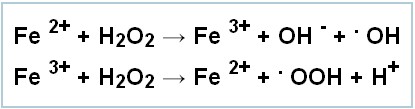
Many metals have special oxygen transfer properties which improve the utility of hydrogen peroxide. By far, the most common of these is iron which, when used in the prescribed manner, results in the generation of highly reactive hydroxyl radicals (. OH). The reactivity of this system was first observed in 1894 by its inventor H.J.H. Fenton, but its utility was not recognized until the 1930s once the mechanisms were identified.

So say US Peroxide, a company marketing ‘Technologies for a Clean Environment’.


Warning! If you’re thinking this is going to be about gruesome punishments or such like, prepare to be disappointed! This is about teaching and learning electromagnetism.
Having read the biography of Oliver Heaviside, I remain aware that I am not really au fait with inductance as I am with resistance and capacitance.  Searching without much success for a textbook that would explain it in a way I could understand, I came upon A Treatise on Electricity and Magnetism - Volume 2 by James Clerk Maxwell.  Turning to the relevant section, my eye fell upon this:

“England is the paradise of individuality, eccentricity, heresy, anomalies.”
So wrote George Santayana http://en.wikipedia.org/wiki/George_Santayana in 1922.

Here we have two words, one in Arabic and one in Hebrew, which scholars of those languages will have no difficulty in recognizing as descending from the same ancient Semitic source. In Arabic the word means “error” in the sense of “error message” from a computer. The Arabic version is pronounced “khata” (with an emphatic “t”), and the Hebrew is quite similar.

I’m sticking with the Arabic for now, because this is the jumping-off point for an interesting bit of medieval mathematical history.