Fake Banner
Happy Twelfth Night - Or Divorce Day, Depending On How Your 2026 Is Going

Today is, in Christian observance, Twelfth Night, the end of The 12 Days of Christmas in that song...
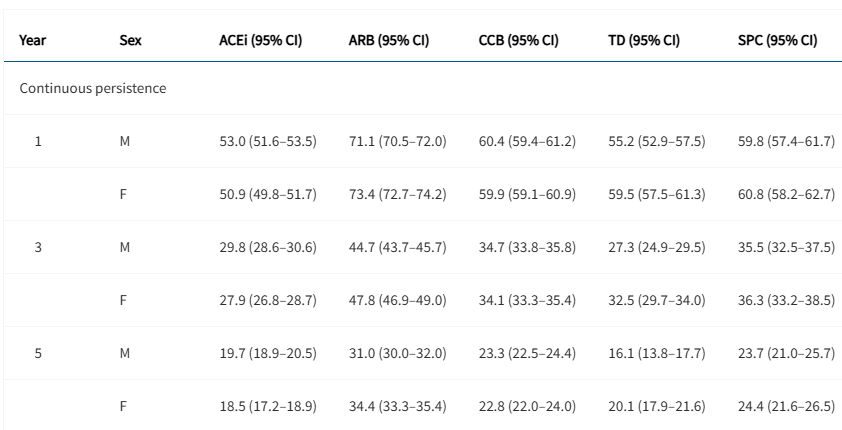
Blood Pressure Medication Adherence May Not Be Cost, It May Be Annoyance At Defensive Medicine

High blood pressure is an important risk factor for developing cardiovascular disease and premature...

On January 5th, Don't Get Divorced Because Of Hallmark Movies

The Monday after New Year's is colloquially called Divorce Day, but it's more than marriages ending...

Does Stress Make Holidate Sex More Likely?

Desire to have a short-term companion for the holidays - a "holidate" - is common enough that it...

User picture.
picture for Tommaso Dorigopicture for Fred Phillipspicture for Hontas Farmerpicture for picture for Patrick Lockerbypicture for Ilias Tyrovolas
Hank CampbellRSS Feed of this column.

I founded Science 2.0® in 2006 and since then it has become the world's largest independent science communications site, with over 300,000,000 direct readers and reach approaching one billion. Read More »

Blogroll
One thing you probably know about black holes, no matter how much science you took, is that they have never actually been seen.   Instead, the science consensus is that masses that sit at the centers of galaxies like our own Milky Way are presumed to be black holes.

Researchers in Nature Physics say a property of light called orbital angular momentum may be detectable because of a 'twist' in this momentum caused by black holes.  And we could detect it, if we just know what to look for.
Is a lack of diversity in science writing a bad thing?   Yes and no.   Obviously if science writing relied on conservatives and the free market where people will only work for what capitalism will bear, Science 2.0 could not exist.   Academics, progressives or liberals in America (I have made the case that they are quite distinct in America, however - see Like Freedom? Thank A Scientist - How Science Made America Possible), both famous and non-famous, have contributed here for no reason other than a desire to communicate science.
I don't get excited about the singularity the way some on Science 2.0 do (and certainly elsewhere) though I admire the optimism.    So when I got an email from a publicity person at PBS about NewsHour Science Correspondent Miles O’Brien’s report on the upcoming match between Jeopardy masters Brad Runner, Ken Jennings and the super computer Watson I had to wonder if this would lead to more claims about an upcoming singularity and exponential leaps in artificial intelligence.
While many in America were happy about the collapse of the Mubarak government, they were likely happy for the wrong reasons.   Optimists, it is said, are people who do not learn from experience and the toppling of a dictator in Egypt looks a lot more like Iran in 1979 than it does America in 1776.

But regardless of the irrational optimism of many in the political spectrum, plenty of scientists are going to be happy that protesters have now turned their sights on Zawi Hawass, a man who could only have gotten his job in a dictatorship and wielded his position just like one.
Online dating is mainstream big business, we all see television commercials for any number of sites catering to any number of interests - but do they work?
Nothing says science like Valentine's Day and we are positively littered with articles on neuroscience, chemistry and social aspects of romance.   Really, we cover it all.   

Not sure who to date? Garth Sundem answers it in The Valentine's Day Man-O-Meter. Be sure to take it as gospel because he never just makes stuff up.  If you need even more help than that, here is his Ultimate Valentine's Day Toolkit.