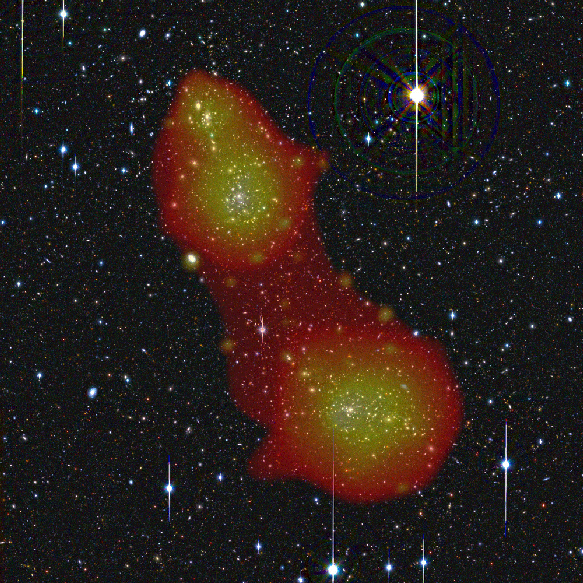





A team of Dutch and German astronomers have discovered part of the missing matter in the Universe using the European X-ray satellite XMM-Newton. They observed a filament of hot gas connecting two clusters of galaxies. This tenuous hot gas could be part of the missing “baryonic” matter.

The existence of this hot gas (with a temperature of 100 000 - 10 000 000 degrees), known as a warm-hot intergalactic medium, was predicted 10 years ago as a possible source for the missing dark matter. Gas at such high temperature and low density is very difficult to detect and many attempts have failed in past years.

The team observed a pair of clusters of galaxies (Abell 222 and Abell 223) using the European X-ray satellite XMM-Newton. Their observations (see Fig. 1) clearly show a bridge connecting both clusters. The gas they observed there is probably the hottest and densest part of the diffuse gas in the cosmic web, which would be part of the missing “baryonic” dark matter.

Scientists used to think that hermaphrodites, due to their low position in the evolutionary scale, did not have sufficiently developed sensory systems to assess the “quality” of their mates.

A new work has shown, however, that earthworms are able to detect the competition by fertilising the eggs that is going to find its sperm, tripling its volume when there is rivalry. This ability is even more refined as they are able to transfer more sperm to more fertile partners.

Hermaphrodites, organisms that have both female and male reproductive organs, such as earthworms, are denied the right to choose their partner. However, a study by researchers at the University of Vigo has shown that worms are capable of telling whether another worm is a virgin or not, and triple the volume of sperm transferred during copulation if they detect a fertilisation competition risk.

The National Geographic Society and the international polling firm GlobeScan today unveiled a new mechanism for measuring and comparing individual consumer behavior as it relates to the environment.

“Greendex™ 2008: Consumer Choice and the Environment — A Worldwide Tracking Survey” looks at environmentally sustainable consumption and behavior among consumers in 14 countries. This first-of-its-kind study reveals surprising differences between consumers in developed and developing countries in terms of environmentally friendly actions.

This year’s results are a baseline against which results of future annual surveys will be compared, in order to monitor improvements or declines in environmentally sustainable consumption at both the global level and within countries.

You wouldn't think that clean air would be bad for the Amazon rainforest but UK and Brazilian climate scientists writing in Nature say just that.

Reduced sulphur dioxide emissions from less burning coal and increased sea surface temperatures in the tropical north Atlantic, are causing a heightened risk of drought in the Amazon rainforest.

A team from the University of Exeter, Centre for Ecology and Hydrology, Met Office Hadley Centre and Brazilian National Institute for Space Studies used the Met Office Hadley Centre climate-carbon model to simulate the impacts of twenty-first century climate change on the Amazon rainforest. They compared the model to data from the 2005 drought, which caused widespread devastation across the Amazon basin.

FREDERICK, Maryland, May 7 /PRNewswire/ --

Vaccinogen Inc. said Dutch health authorities licensed it to manufacture its break-through OncoVAX anti-colon cancer vaccine, immediately clearing the path to more than US$100 million of potential European sales.

The Dutch approval of the company's facility based in Emmen, The Netherlands also paves the way to its pivotal US FDA Phase IIIb clinical trial -- the final step before the vaccine can be sold in the United States.

PALO ALTO, California, May 7 /PRNewswire/ --

Accel Partners, a leading Silicon Valley venture capital firm, today announced the addition of Sameer Gandhi as a partner in their Palo Alto office. Sameer, who was formerly a partner at Sequoia Capital, brings ten years of venture capital investment experience across a range of stages.

In his new role with the Accel team, Sameer will help develop leading companies in the consumer Internet and the software sectors.

"Sameer's investment experience will complement our partnership and extend our capabilities in both software and the consumer internet," said Theresia Gouw Ranzetta, Partner of Accel. "We are excited to have Sameer as part of the Accel team."

A new approach to estimating tumor growth based on breast screening results from almost 400,000 women is published today in Breast Cancer Research. This new model can also estimate the proportion of breast cancers which are detected at screening (screen test sensitivity). It provides a new approach to simultaneously estimating the growth rate of breast cancer and the ability of mammography screening to detect tumors.

The results of the study show that tumor growth rates vary considerably among patients, with generally slower growth rates with increasing age at diagnosis. Understanding how tumours grow is important in the planning and evaluation of screening programs, clinical trials, and epidemiological studies. However, studies of tumour growth rates in people have so far been based mainly on small and selected samples.

DALLAS, May 7 /PRNewswire/ --

Parks Associates and CEA(R) today welcomed Roger Pitton, Program Director, TV Business, Microsoft Corporation, as the Keynote speaker for CONNECTIONS(TM) Europe Summit, taking place May 19, in Nice, France.

This one-day executive seminar will be held in cooperation with TM Forum annual management conference at the Hotel Palais de La Mediterranee.

LONDON, May 7 /PRNewswire/ -- NHS Choices (http://www.nhs.uk), the new digital 'front door' to the NHS, launches a new Live Well bundle aimed to help people stay healthy during their travels abroad.

Based on NHS accredited information, the Live Well Travel health guide (http://www.nhs.uk/livewell/travelhealth/Pages/Travelhealthhome.aspx) enables users to access essential information in seconds and provides them with clinically approved guidance to help them stay healthy on holiday overseas. The Travel health guide is the latest addition to the NHS Choices' extensive Live well section.

The first genome sequencing project of a mammal that lays eggs is complete and, like the animal itself, the DNA of the platypus is something of a patchwork.

The platypus, found in eastern Australia, including Tasmania, is one of the five species of mammals that lay eggs instead of giving birth to live young. The four species of echidna are the other mamimals that share this distinction.

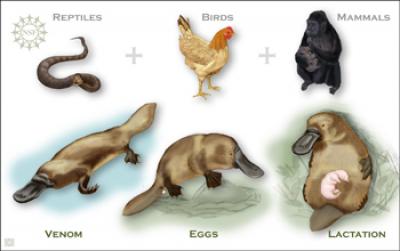
The curious discovery of the duck-billed, egg-laying, otter-footed, beaver-tailed, venomous platypus in 1798, comfortable on land and in water, convinced British scientists that it must be a hoax. Sketches of its appearance were thought to be impossible.

But new research proves that the oddness of the platypus' looks isn't just skin-deep. Platypus DNA is an equally cobbled-together array of avian, reptilian and mammalian lineages that may hold clues for human disease prevention.

