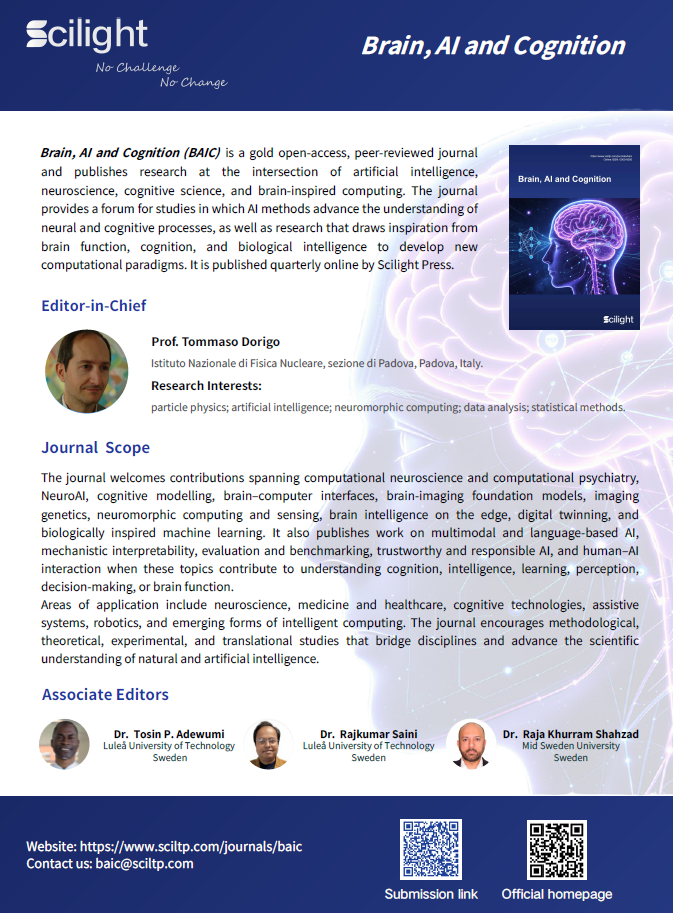
Am thrilled to report here that Scilight just launched
a new gold open-access journal, "
Brain, AI and Cognition", of which I am the editor in chief. Below you can see the front page of a leaflet I will soon be distributing at the
AI4X conference in Singapore, where I am due to give an invited talk (the two events are unrelated, but I think it will be a good place to do some advertisement of the new journal):
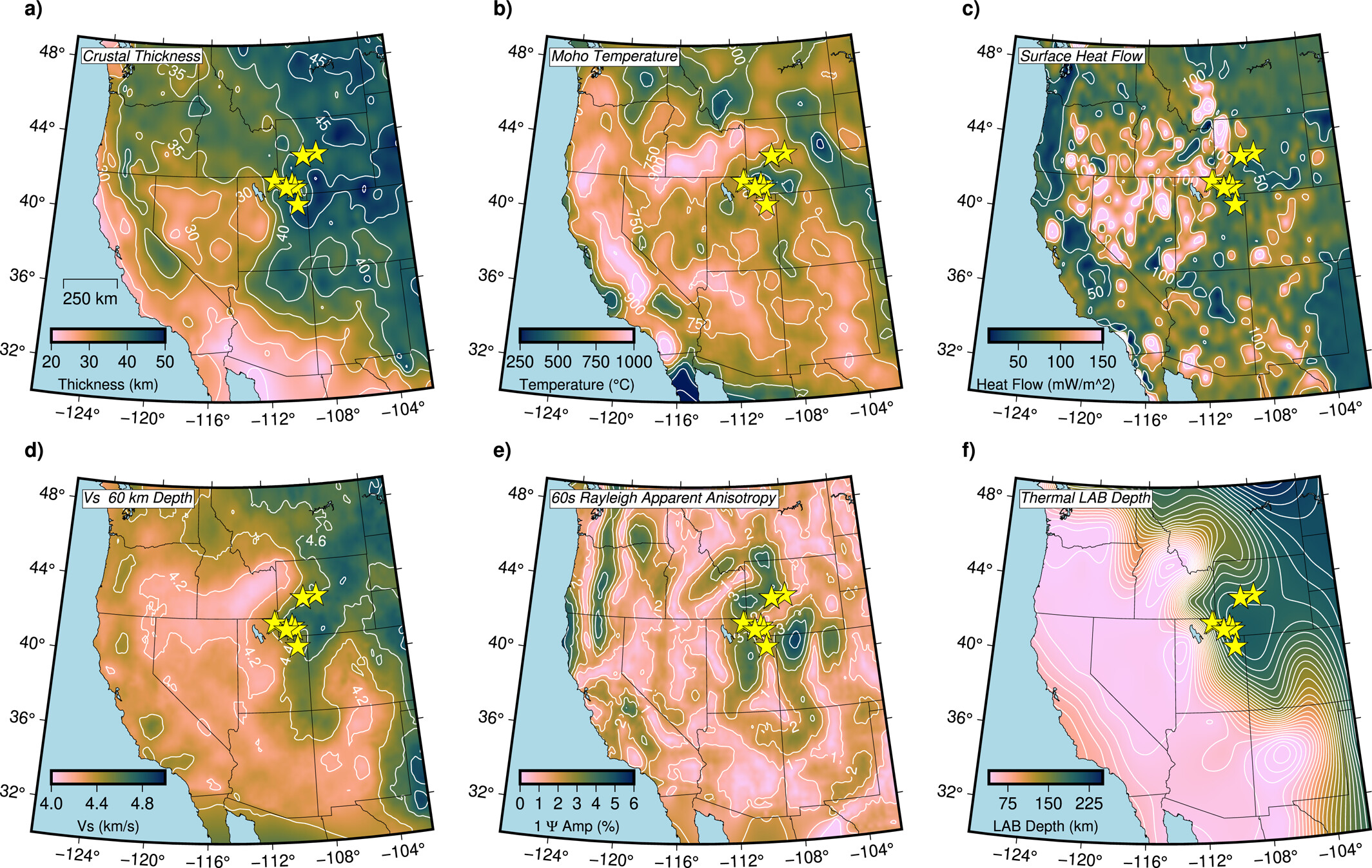
A 1979 seismic event was a different kind of earthquake, and it is has intrigued scientists ever since.
A new look at old data has provided some additional answers.
On Feb. 24th, 1979, seismographs recorded a magnitude 3.8 earthquake under Randolph, Utah, located near the Idaho and Wyoming borders.
Yet no one felt a thing and the seismic data made no obvious sense. Because its focal depth was 50 miles below sea level, the hypocenter wasn't in Earth’s crust, it was well into the upper mantle.
In times of social rancor and strife, most will fight each other, but societies are saved by those who think about the bigger issue.
There is a lesson humans could learn from wasps. Polistes canadensis
wasps are more like China than a democracy, so when their ruler dies, power struggles and social turmoil result. Amidst the violence and chaos, individuals compensate by helping the group rather than fighting each other.
Europe alone has so much unpublished, un-catalogued biological data that it is challenging to take surveys and estimates about extinction risk and the Marine Strategy Framework Directive and the EU's claim it will protect 30 percent of land and sea by 2030 seriously.
A new paper revealed government's don't even know what they are not protecting already. The work revealed 40 years of gathered but never published data on marine amphipods - crustaceans - just in Italy. One type of crustacean in one country isn't even understood yet.
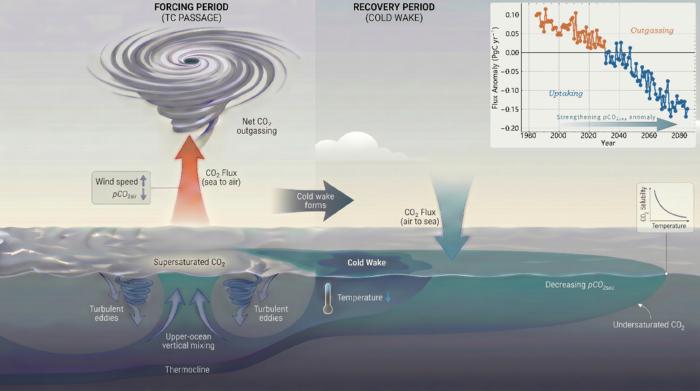
A new computer estimate says that the ocean is an important carbon sink that absorbs 40 to 60 percent of China's anthropogenic CO2 emissions but tropical cyclones prevent the oceans from absorbing more.
Understanding the impact of the ocean on sequestering carbon is important, because China builds two new coal plants each week and emits more pollution than the rest of the top 10 countries combined. Until they stop exempting themselves from pollution treaties it is important to understand what natural effects can help, since developed western countries have already sent their emissions per capita back 100 years and can't realistically get lower.
Five days are left to apply to a 2-year research position at INFN-Padova, to work in the context of the EIC-Pathfinder-2025 winning project "PHINDER" on the simulation of the apparatus.
PHINDER (Picosecond-scale Photonic Heterogeneous Integrated Neuromorphic Detector) is a consortium of seven research institutes led by Lulea Technology University (Sweden), including Universidad de Oviedo, Eindhoven University, Universidad de Cantabria, Lund University, Hewlett-Packard Enterprise, and INFN-Padova.
Nowadays it has become exceedingly hard to distinguish legitimate academic endeavours from scam in my mailbox. Not even AI filters can sort stuff out properly: my inbox often contains invitations to fake conferences, or to publish with non-existing journals, while my spam folder at times contains honest invitations of academic value.
I could touch the reality of the problem a few months ago, when I was invited to an AI conference in Singapore. I was about to trash the email, when something in the name of the sender rang a bell. Upon checking, it turned out that he was a Nobel prize winner in Physics! Needless to say, I was happy to accept the invitation, and indeed in two weeks I will travel to Singapore to deliver my talk at AI4X.
Every now and then, for one reason or another, an academic will have to update one's own CV. This is a chore in general - once you get tenure, why should you care to keep a detailed record of your past activities? - but it also carries some benefits. In fact, by sifting through the data (hard disk folders containing talks, large databases of publications, mailbox) you can get a bird's eye view of where your time has gone, and draw inspiration for future rationalization of your agenda.
Though numerical models and popular films like An Inconvenient Truth projected Arctic ice collapse due to global warming and then climate change, the reverse was true in the real world. Ice expanded. That changed in 2015 and a new model estimates why. The authors say the Southern Ocean which surrounds Antarctica has gotten warmer, bringing salty water from the deep up to the surface.
Those water changes led to record-breaking lows in 2023, which could destabilize the world’s ocean current systems, and it will be due to three changes.
In 2013, they write stronger winds led to salty Circumpolar Deep Water getting closer to the surface.
You may have read that Asian cultures respect the elderly more than Europe but Asian senior citizens may not agree. However, it may not be that young people have gotten less respectful, it could be that young people are wealthier than in the past. And that makes them lonelier.
Over the last 40 years, the wealth of countries like the United States and Japan have increased substantially. Poor people now have a life that the poor even two generations ago could not imagine would be possible. Yet a new cross-temporal meta-analysis says that despite the changes in wealth which make socializing more possible, young people report more loneliness.