



SANTA CLARA, California, May 2 /PRNewswire/ --

Finesse Solutions, LLC, Santa Clara, CA, a manufacturer of measurement and control solutions for life sciences process applications, announced the release of TruViu(TM) PLSS, a vessel utility tower system for pilot and small scale production applications. The PLSS package expands on the RDPD system to include substantially more I/O capability and NEMA 4X enclosures. TruViu(TM) PLSS consists of an I/O tower, a transmitter tower, an optional pump tower, and/or an optional TruFlow(TM) gas manifold. TruViu(TM) PLSS brings the benefits of DeltaV reliability and scalability in an affordable package. It interfaces easily with the TruLogic(TM) Controller and TruBio(TM) software to deliver optimal bioprocess control.

Throughout the history of Earth there have been numerous mass extinctions and there are just as many theories as to why they occurred.

The largest we know of occurred some 250 million years ago, give or take, but the mass extinction of the dinosaurs more recently has long been a favorite topic of scientists and philosophers.

Scientists at the Cardiff University Centre for Astrobiology have a new twist on an old idea and built a computer model to try and support it. Their model mapped our solar system’s movement and found that it continually “bounces” up and down through the plane of the galaxy. As we pass through the densest part of the plane, gravitational forces from the surrounding giant gas and dust clouds dislodge comets from their paths. The comets plunge into the solar system, some of them colliding with the earth.

HOUSTON, May 2 /PRNewswire/ --

Endeavour International Corporation (Amex: END) (LSE: ENDV) announced today that the company will host a conference call to discuss first quarter 2008 financial results at 9:00 a.m. Central Time, 3:00 p.m. UK Time on Thursday, May 8, 2008.

To participate and ask questions during the conference call please enter the confirmation code 53211499 after dialing the local country phone number. In the United States dial +1-866-322-8032 (U.S., toll-free), in the United Kingdom dial 0-808-234-4489 (UK, toll-free), in Norway dial 800-198-31 (Norway, toll-free) and all others dial +1-416-640-3406 (international, tolls apply). To listen only to the live audio web cast access Endeavour's home page at http://www.endeavourcorp.com.

'Clone' is an odd term culturally. Thanks to science fiction on one side and ethical hysteria on the other, people tend to overstate the meaning of it.

Back before genomes, to 'clone a gene' was to basically discover it - it meant you found the stretch of DNA encoding that gene - but now we know where almost all of the genes are. So 'cloning' in this context does not mean 'discovery' and it certainly doesn't mean Sith Lords spitting out an army of warriors to take over the universe - it means taking known genes (in tiny pieces in the genome) and isolating the spliced versions into a format that can be used in the lab.

While a few human genomes have been sequenced, the real work of understanding cancer (and curing it) is still a long way off because most human genes have not been isolated.

MOSCOW, May 2 /PRNewswire/ --

- Broadest range of public and non-governmental sector participants ever to address the changing face of HIV in the region and the critical crossroad the response faces

It makes sense that massive black holes lurking in galactic nuclei and weighing millions of Suns can disrupt stars that come too close. Astrophysicists say that the black hole’s gravity pulls harder on the nearest part of the star, an imbalance that pulls the star apart over a period of hours, once it gets inside the so-called "tidal radius."

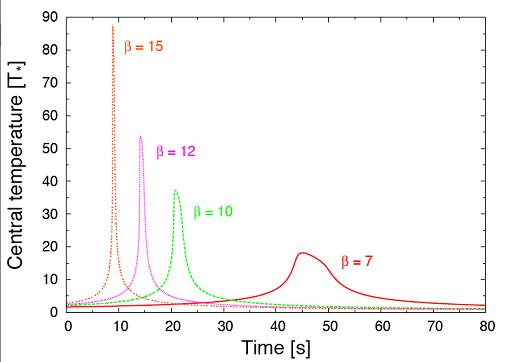
Two astrophysicists from Paris Observatory say the fate of stars that venture too close to massive black holes could be even more violent than previously believed. Not only are they crushed by the black hole’s huge gravity, but the process can also trigger a nuclear explosion that tears the star apart from within. In addition, shock waves in the pancake star carry a brief and very high peak of temperature outwards, that could give rise to a new type of X-ray or gamma-ray bursts.

Yes, it's galactic flambé.

Yes, witness that we are promoting an old media company (Wiley-Blackwell) but only because they aren't charging anyone ridiculous subscription fees and convincing you your career is over if they're not in your citation list when your review comes up.

They have added yet another name to their 1400-title long publication list. But this one is free. We couldn't agree more with free.

A new journal called Evolutionary Applications publishes articles that use evolution to address pressing issues such as climate change, endangered species, food safety, infectious diseases, and invasive species. In other words, someone besides us finally figured out that showing the practical uses of evolution, and how evolutionary biology is absolutely necessary to understanding the biological world, would be a good thing.

EDMONTON, Canada, May 1 /PRNewswire/ -- QSV Biologics, Ltd (QSV), a North American based biologics CMO located in Edmonton, Canada, has been awarded a cGMP manufacturing contract for a recombinant protein under development by Pfizer, Inc. The protein will be manufactured at QSV's Edmonton facility and is intended for clinical trials. Work on the project is to begin immediately, and will include technology transfer, scale-up and cGMP manufacturing.

TORONTO, Canada, May 1 /PRNewswire/ -- A biosimilar protein that can be used to treat neutropenia (a side effect of cancer chemotherapy) is to be developed by Apotex Inc. of Canada in collaboration with Intas Biopharmaceuticals Limited (IBPL) of India. Neukine(R), a recombinant granulocyte colony stimulating factor (G-CSF) is already manufactured and marketed in India and other countries by IBPL. Kwizda Pharma of Austria had been working with IBPL to develop G-CSF for the European market for some time. Effective immediately, Kwizda Pharma has transferred all of its rights in IBPL's G-CSF to Apotex. Apotex and IBPL have concurrently agreed to extend the collaboration to development of G-CSF for North America (US and Canada)

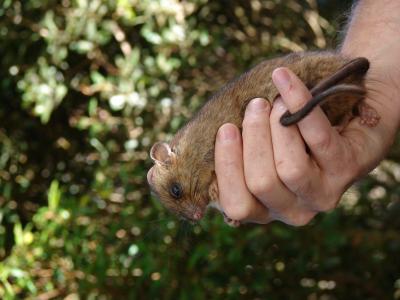
It seems rumors of the greater dwarf cloud rat's demise have been greatly exaggerated. Sure, he stayed low key for the last 112 years but he really never left his natural habitat.

Seeing the little guy once and then declaring him extinct was likely premature.

Carpomys melanurus, the greater dwarf cloud rat, has dense, soft reddish-brown fur, a black mask around large dark eyes, small rounded ears, a broad and blunt snout, and a long tail covered with dark hair. An adult weighs about 185 grams.

"This beautiful little animal was seen by biologists only once previously - by a British researcher in 1896 who was given several specimens by local people, so he knew almost nothing about the ecology of the species," said Lawrence Heaney, Curator of Mammals at the Field Museum and Project Leader. "Since then, the species has been a mystery, in part because there is virtually no forest left on Mt. Data, where it was first found."

