




Excuse my use of the personal pronoun in this short article, but I am writing to get input as much as I am to simply observe a phenomenon.
I am increasingly drawn to the connection between bench science and the companies that provide them with their tools - from commercial assays, probes, and imaging chambers to engineered animals and so-called "experiment in a box" products.
As a journalist I am drawn to the subject for many reasons: it is an industry that is almost completely uncovered and one that supports, via advertisements and sponsorships, a growing number of science magazines and science venues.
And there seem to be a growing number of 'artifactual' findings due to reliance on them.
Perhaps the best known in recent years is the case of resveratrol co-discoverer David Sinclair's trouble with a SIRT probe. Sinclair's SIRT compounds earned a $750 million dollar acquisition price tag (from Glaxo) based on their ability to "cleanly" target one SIRT gene. That's what made it such a desirable acquisition for drug development.
As it turned out, the experiment that supported that claim was deeply flawed. The results turned out to be artifacts of a commercially-available florescent probe. It is unclear whether or not this artifact had something to do with SIRT's failure (so far) as a diabetes drug, but it certainly did not buttress Glaxo shareholders' faith in their giant investment. And, surprise, Sinclair's jealous detractors had a schadenfreude bacchanal with the whole thing, replete with unsubstantiated party-talk about fraud and misconduct.
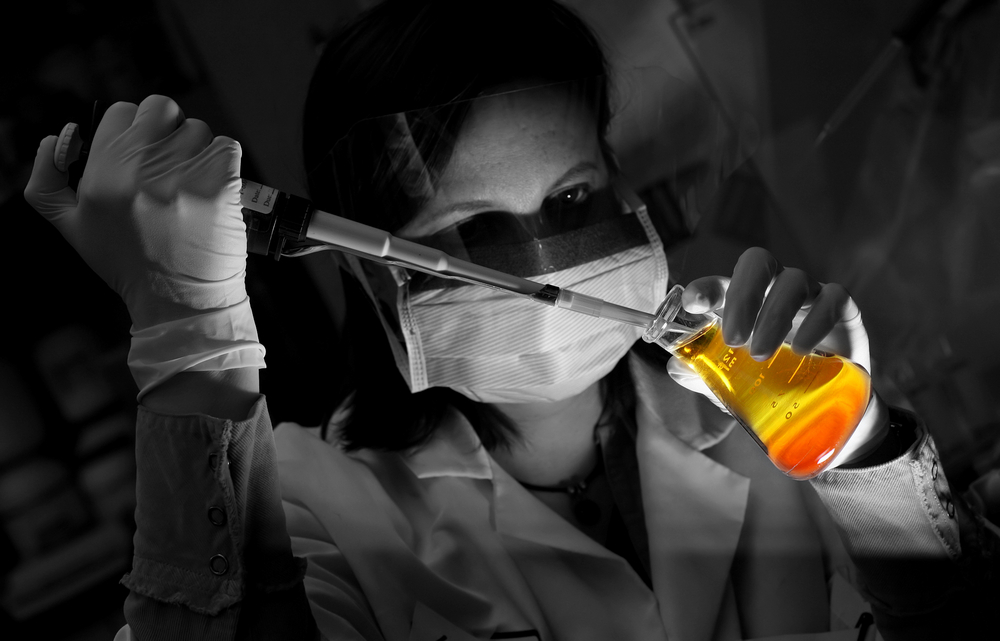
Credit: Shutterstock
Commenting on the modern lab's need for such tools, scholar Mark Willingham of the Department of Pathology at Wake Forest noted in Science: " 'Companies are taking advantage of known pathways for apoptosis and developing specific regulators.' Scientists who must cope with apoptosis in broader investigations, rather than trying to understand it, have different requirements. 'They need user-friendly kits that don't take time to learn...For them the name of the game is convenience.' "
Concern about over-reliance on packaged experimental tools has, so far, come from older investigators who remember the days when researchers had to develop their own tools. As the onetime dean of mammalian physiology, University of Texas's Ed Masaro, once noted, "reliance on such technology is making it possible for young researchers to render findings about results in mammals but without understanding the basic mammalian physiology behind it." And so troubled by the trend was one leading investigator that he "told him to get out until he could figure out something on his own."
I'd like to know your experience or thoughts on this:
Have such tools made 'artifactual' findings more likely?
Can you cite any examples?
What's the price of reliance?
If you can't comment publicly, please write me through my profile page.
Have such tools made 'artifactual' findings more likely?
Can you cite any examples?
What's the price of reliance?
If you can't comment publicly, please write me through my profile page.





Comments