Banner
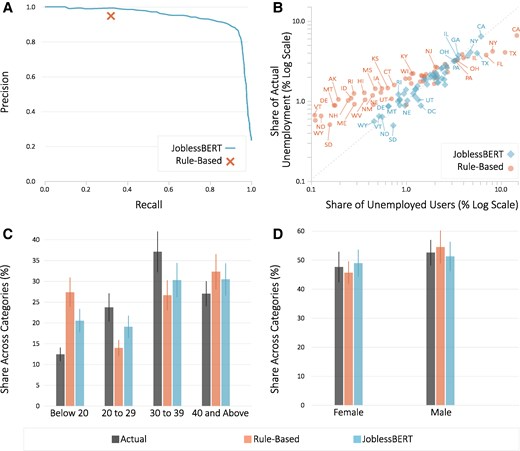
Social Media Is A Faster Source For Unemployment Data Than Government

Government unemployment data today are what Nielsen TV ratings were decades ago - a flawed metric...

Gestational Diabetes Up 36% In The Last Decade - But Black Women Are Healthiest

Gestational diabetes, a form of glucose intolerance during pregnancy, occurs primarily in women...
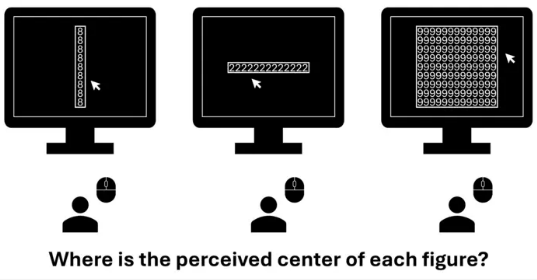
Object-Based Processing: Numbers Confuse How We Perceive Spaces

Researchers recently studied the relationship between numerical information in our vision, and...
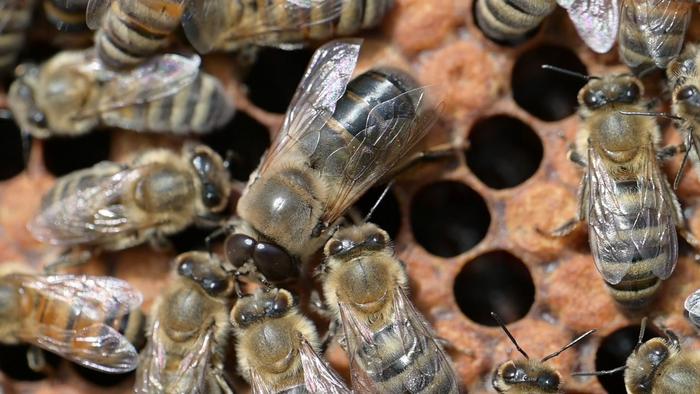
Males Are Genetically Wired To Beg Females For Food

Bees have the reputation of being incredibly organized and spending their days making sure our...

User picture.
News StaffRSS Feed of this column.

News Releases From All Over The World, Right To You... Read More »

Blogroll

The Regea Institute for Regenerative Medicine, which operates under the University of Tampere in Finland, administered the first clinical stem cell therapy to two patients in cooperation with the Tampere University Hospital. The therapy was a success.

The patients suffered from severe, prolonged frontal sinusitis. An implant combining stem cells and biomaterial was inserted into the damaged bone. Since the therapy, the patients have been well and no longer suffer from frontal sinusitis.

Stem cell therapy was administered to patients with prolonged and severely symptomatic frontal sinusitis that destroyed bone tissue in the forehead. Other treatments such as traditional implants or fat tissue transplants failed to relieve infection.

The Internet is serving as a fertile medium for "HIV denialists" to spread false ideas about HIV/AIDS, which could have terrible public health consequences, say scientists in a policy paper in PLoS Medicine.

"It may seem remarkable that, 23 years after the identification of HIV, there is still denial that the virus is the cause of AIDS," say Tara Smith (University of Iowa College of Public Health) and Steven Novella (Yale University School of Medicine). But with the arrival of the Internet, HIV denialist organizations such as "Reappraising AIDS" have reignited their campaign to spread misinformation.

A team has examined over 300,000 genetic markers in thousands of asthmatic children and compared their data with those of healthy controls. The newly found gene, ORMDL3, is a promising object of research: it could help to improve the prevention and diagnosis of asthma, and possibly to develop a new therapy.

The scientists used the fact that the genetic material of different individuals shows differences. One type of DNA variants is called SNPs, short for “Single Nucleotide Polymorphisms”. They can be compared and statistically analysed.

By creating "Teflon" versions of natural antibiotics found in frog skin, a research team led by biological chemist E. Neil Marsh has made the potential drugs better at thwarting bacterial defenses, an improvement that could enhance their effectiveness.

Marsh and collaborators work with compounds called antimicrobial peptides (AMPs), which are produced by virtually all animals, from insects to frogs to humans. AMPs are the immune system's early line of defense, battling microbes at the first places they try to penetrate: skin, mucous membranes and other surfaces. They're copiously produced in injured or infected frog skin, for instance, and the linings of the human respiratory and gastrointestinal tracts also crank out the short proteins in response to invading pathogens.

Non-medicinal interventions are highly effective in preventing the behavioral and academic problems associated with Attention Deficit Hyperactivity Disorder (ADHD), according to a five-year study led by researchers at Lehigh University’s College of Education.

The study, titled “Project Achieve” and funded by the National Institute of Mental Health (NIMH), was the largest of its kind focusing on children aged 3 to 5 who have shown significant symptoms of ADHD. It also involved researchers from Lehigh Valley Hospital in Allentown, Pa.

The researchers, led by George DuPaul, professor of school psychology at Lehigh; Lee Kern, professor of special education at Lehigh; and Dr.

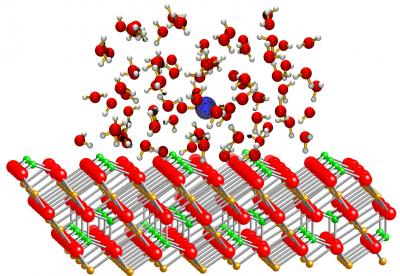
Researchers at Pacific Northwest National Laboratory are uniting theory, computation and experiment to discover exactly how heavy elements, such as uranium and technetium, interact in their environment.

As part of that effort, scientists have combined sensitive experimental measurements with fi rst principle electronic structure calculations to measure, and to really understand, the structural and bonding parameters of uranyl, the most common oxidation state of uranium in systems containing water.

The insights were achieved by PNNL scientist Bert de Jong and associates Gary Groenewold of Idaho National Laboratory and Michael Van Stipdonk of Wichita State University, employing the supercomputing resources of the William R.