Banner
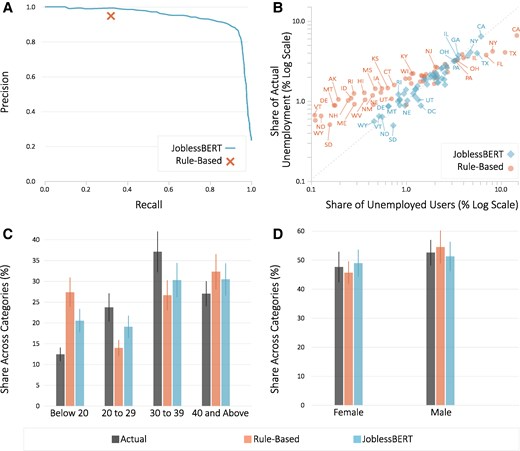
Social Media Is A Faster Source For Unemployment Data Than Government

Government unemployment data today are what Nielsen TV ratings were decades ago - a flawed metric...

Gestational Diabetes Up 36% In The Last Decade - But Black Women Are Healthiest

Gestational diabetes, a form of glucose intolerance during pregnancy, occurs primarily in women...
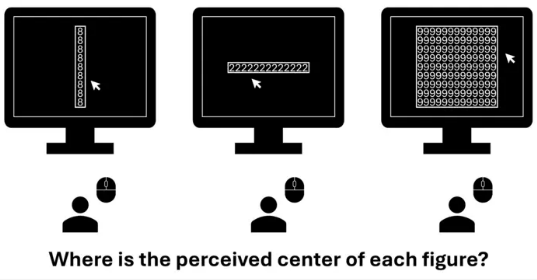
Object-Based Processing: Numbers Confuse How We Perceive Spaces

Researchers recently studied the relationship between numerical information in our vision, and...
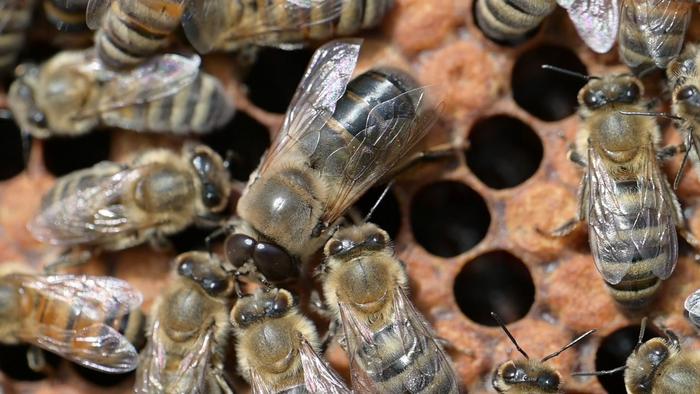
Males Are Genetically Wired To Beg Females For Food

Bees have the reputation of being incredibly organized and spending their days making sure our...

User picture.
News StaffRSS Feed of this column.

News Releases From All Over The World, Right To You... Read More »

Blogroll

Chemical engineers at Purdue believe they have discovered a fundamental flaw in the conventional view of how liquids form bubbles that grow and turn into vapors and that their findings cast into doubt some aspects of a theory dating back to the 1920s, said David S. Corti, an associate professor of chemical engineering at Purdue University.

The research could lead to a more precise understanding of the "phase transition" that takes place when bubbles form, grow and then become a vapor, which could, in turn, have implications for industry and research, Corti said.

Dozens of scientists from several countries gathered at the University of Alaska Fairbanks to discuss the latest findings on noctilucent clouds and other phenomena of the earth’s upper atmosphere during the Eighth International Workshop on Layered Phenomena in the Mesopause Region.

“The question which everyone in Alaska is dealing with is what are the symptoms of climate change and, as in medicine, how do these symptoms reflect the underlying processes,” said Richard Collins, a researcher at the Geophysical Institute at the University of Alaska Fairbanks. “It is believed that [these clouds] are an indicator of climate change.”

Noctilucent clouds form under conditions that counter common logic. They only form in the summer, when solar radiation is most intense, Collins said.

Huntington disease (HD) is a neurological disorder resulting from degeneration of brain cells. The degeneration causes uncontrolled limb movements and loss of intellectual faculties, eventually leading to death. There is no treatment. HD is a familial disease, passed from parent to child through a mutation in the normal gene. The disorder is estimated to affect about one in every 10,000 persons.

Ray Truant, professor in the Department of Biochemistry and Biomedical Sciences at McMaster University and PhD candidate Randy Singh Atwal, have discovered a small protein sequence in huntingtin that allows it to locate to the part of the cell critical for protein quality control.

The question of whether Titan can retain its thick, organic atmosphere for the rest of its lifetime could hinge on how efficiently methane molecules were packed inside water “crates” during a period of the moon’s formation.

Dr Vasili Dimitrov, who spoke at the European Planetary Science Congress in Potsdam, said, “If Titan runs out of methane and loses its ‘veil’, it will become a completely different type of astrophysical body. Methane drives the chemical reactions in Titan’s atmosphere but, because it’s so highly reactive and therefore short-lived, it must be replenished. We need to find out just how much methane is stored in the primordial reserve in Titan’s interior at a level where it can escape to the surface.

Evidence from laboratory experiments on rats and on human colon cancer cells also suggests that anthocyanins, the compounds that give color to most red, purple and blue fruits and vegetables appreciably slow the growth of colon cancer cells.

The findings also bring scientists a step closer to figuring out what exactly gives fruits and vegetables their cancer-fighting properties.

“These foods contain many compounds, and we're just starting to figure out what they are and which ones provide the best health benefits,” said Monica Giusti, the lead author of the study and an assistant professor of food science at Ohio State University.

Giusti presented the findings, which represent the collaborative efforts of Giusti and her colleagues, on August 19 at the national meeting of the Ameri

A Virginia Tech researcher is working on a device to create biofuels from bird litter - bedding, manure, feathers, spilled feed and everything else on the floor of chicken coops.

Foster Agblevor, associate professor of biological systems engineering, and a team are developing transportable pyrolysis units that will convert the waste into bio-oil by heating the litter until it vaporizes. The vapor is then condensed to produce the bio-oil, and a slow release fertilizer is recovered from the reactor. The gas can then be used to operate the pyrolysis unit, making it a self-sufficient system.

Three value-added products from one device. It can help produce some energy and get rid of pollution.