Banner
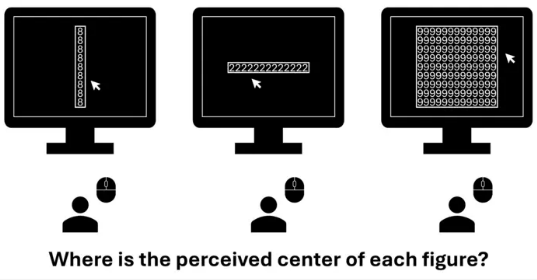
Object-Based Processing: Numbers Confuse How We Perceive Spaces

Researchers recently studied the relationship between numerical information in our vision, and...
Males Are Genetically Wired To Beg Females For Food

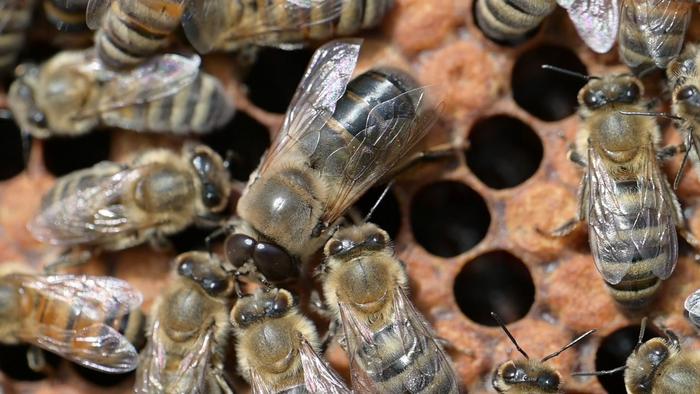
Bees have the reputation of being incredibly organized and spending their days making sure our...

The Scorched Cherry Twig And Other Christmas Miracles Get A Science Look

Bleeding hosts and stigmatizations are the best-known medieval miracles but less known ones, like ...

$0.50 Pantoprazole For Stomach Bleeding In ICU Patients Could Save Families Thousands Of Dollars

The inexpensive medication pantoprazole prevents potentially serious stomach bleeding in critically...

User picture.
News StaffRSS Feed of this column.

News Releases From All Over The World, Right To You... Read More »

Blogroll

For years, scientists have searched in vain for slivers of the brain that might drive the dramatic differences between male and female behavior. Now biologists at Harvard University say these efforts may have fallen flat because such differences may not arise in the brain at all.

Rather, they say, the epicenter of sex-specific behavior in many species may be a small sensory organ found in the noses of all terrestrial vertebrates except higher primates.

MIT neuroscientists exploring how memory formation differs between children and adults have found that although the two groups have much in common, maturity brings richer memories.

The MIT team reports that children rival adults in forming basic memories, but adults do better at remembering the rich, contextual details of that information. The MIT study provides new insights into how children learn that are not only theoretically important, but could also inform practical learning in everyday settings.

The ability to remember factual information - who, what, where, when - emerges gradually during childhood, and plays a critical role in education.

Cancer causing mutations occur in our bodies every day – but luckily, we have specific genes that recognize these malignant events and keep cells from growing out of control. Only a few of these genes – called tumor suppressors – are currently known.

Now scientists at the University of North Carolina at Chapel Hill School of Medicine and Harvard Medical School have added to the list another powerful tumor suppressor, a gene called LKB1. Their research indicates that this gene is mutated in almost a quarter of all human lung cancers. In mice, these mutations result in tumors that are more aggressive and more likely to spread throughout the body.

With the finding that fever is produced by the action of a hormone on a specific site in the brain, scientists have answered a key question as to how this adaptive function helps to protect the body during bacterial infection and other types of illness.

Reported by researchers at Beth Israel Deaconess Medical Center (BIDMC), the study results appear today in Nature Neuroscience’s Advance Online Publication.

“This study shows how the brain produces fever responses during infections,” explains senior author Clifford Saper, MD, PhD, Chairman of the Department of Neurology at BIDMC and James Jackson Putnam Professor of Neurology and Neuroscience at Harvard Medical School.

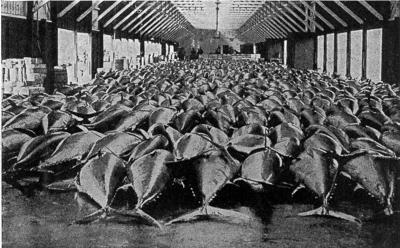
Ocean historians affiliated with the Census of Marine Life have painted the first detailed portrait of a burst of fishing from 1900 to 1950 that preceded the collapse of once abundant bluefin tuna populations off the coast of northern Europe.

The chronicle of decimation of the bluefin tuna population in the North Atlantic is being published as other affiliated researchers release the latest results of modern electronic fish tagging efforts off Ireland and in the Gulf of Mexico, revealing remarkable migrations and life-cycle secrets of the declining species.

Dusting off sales records, fishery yearbooks and other sources, researchers Brian R.

When explorers like Magellan and Columbus sailed from Europe to the New World 500 years ago, they amazingly managed to navigate the open sea without terrestrial landmarks, natural boundaries or the navigational technology we have today.

Historical reports suggest that some explorers and other seafaring people did so by imagining an island just over the horizon; if they kept track of where the "virtual island" was, they knew which direction to go in the open water.

But new research from the University of Iowa suggests that people's ability to imagine virtual islands -- without any perceptual cues to help -- is quite limited.