Banner
Object-Based Processing: Numbers Confuse How We Perceive Spaces

Researchers recently studied the relationship between numerical information in our vision, and...

Males Are Genetically Wired To Beg Females For Food

Bees have the reputation of being incredibly organized and spending their days making sure our...

The Scorched Cherry Twig And Other Christmas Miracles Get A Science Look

Bleeding hosts and stigmatizations are the best-known medieval miracles but less known ones, like ...

$0.50 Pantoprazole For Stomach Bleeding In ICU Patients Could Save Families Thousands Of Dollars

The inexpensive medication pantoprazole prevents potentially serious stomach bleeding in critically...

User picture.
News StaffRSS Feed of this column.

News Releases From All Over The World, Right To You... Read More »

Blogroll

One of the unique characteristics of humans that distinguish us from the animal kingdom is the ability to represent others’ beliefs in our own minds. This sort of intuitive mind-reading, according to experts, lays the cognitive foundations of interpersonal understanding and communication.

Despite its importance, scientists have yet to reach a consensus on how this psychological function develops. Some argue that this complex and flexible ability is acquired at the age of 3-4 years and only after prerequisites such as language grammar are fulfilled. Others suggest specialized developmental mechanisms are in place at birth, allowing infants to refine this ability very early in life.

The length of heat waves in Europe has doubled and the frequency of extremely hot days has nearly tripled in the past century, according to new research. The new data shows that many previous assessments of daily summer temperature change underestimated heat wave events in western Europe by approximately 30 percent.

Paul Della-Marta and a team of researchers at the University of Bern in Switzerland compiled evidence from 54 high-quality recording locations from Sweden to Croatia and report that heat waves last an average of 3 days now—with some lasting up to 4.5 days—compared to an average of around 1.5 days in 1880.

Special effects in movies have always had a problem: water drops are a consistent size. The one thing that always tips a viewer off in old movies are water drops that look huge next to scaled models.

It hasn't improved much in the last 50 years. Water looks fake and beer is even harder because of the bubbles but computer animation is a $55 billion global industry so it's only a matter of time before someone meets the challenge. A group of scientists think they have done it.

“As you pour beer into a glass, you see bubbles appearing on what are called nucleation sites, where the glass isn’t quite smooth,” CSIRO fluids researcher Dr Mahesh Prakash says.

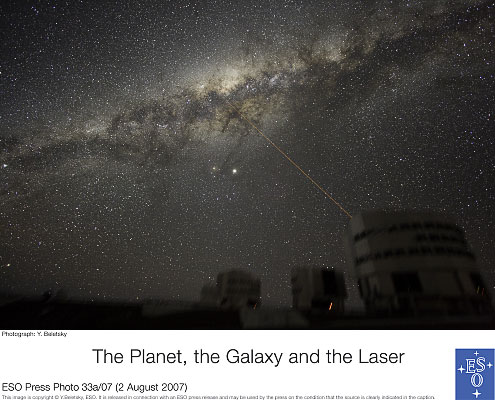
On the night of 21 July, ESO astronomer Yuri Beletsky took images of the night sky above Paranal, the 2600m high mountain in the Chilean Atacama Desert home to ESO's Very Large Telescope. The amazing images bear witness to the unique quality of the sky, revealing not only the Milky Way in all its splendour but also the planet Jupiter and the laser beam used at Yepun, one of the 8.2-m telescopes that make up this extraordinary facility.

"The images are not composite", emphasises Yuri Beletsky. "The camera was being tracked on the stars, which can be easily noticed if you look at the telescope domes on the image (they look a little fuzzy).

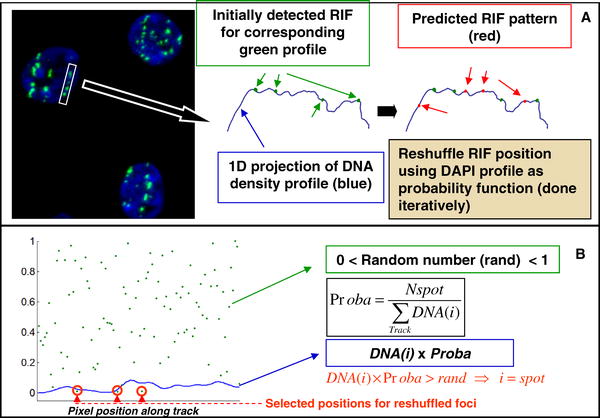
There are a number of things which can damage DNA - toxic chemicals are the primary concern on earth but, in space, ionized radiation is the worry. Unrepaired DNA can lead to mutations, which in turn can lead to diseases like cancer. Intricate DNA repair mechanisms in the cells' nuclei are constantly working to fix what's broken, but whether the repair work happens "on the road" — right where the damage occurs — or "in the shop" — at specific regions of the nucleus — is an unanswered question.

NASA scientists are working on understanding where and how DNA is repaired so they can be prepared for long distance space travel.

The dream of theoretical physics is to unite behind a common theory that explains everything, but that goal has remained highly elusive.

String theory emerged 40 years ago as one of the most promising candidates for such a theory, and has since slipped in and out of favor as new innovations have occurred. Now Europe is fortunate to have one of the world’s leading experts in string theory working on an ambitious project that could make significant progress towards a unified theory, and at least help resolve two mysteries.

One is how the universe emerged in the beginning as a random fluctuation of a vacuum state, and the other is a common explanation for all sub-atomic particles.