Banner
Males Are Genetically Wired To Beg Females For Food

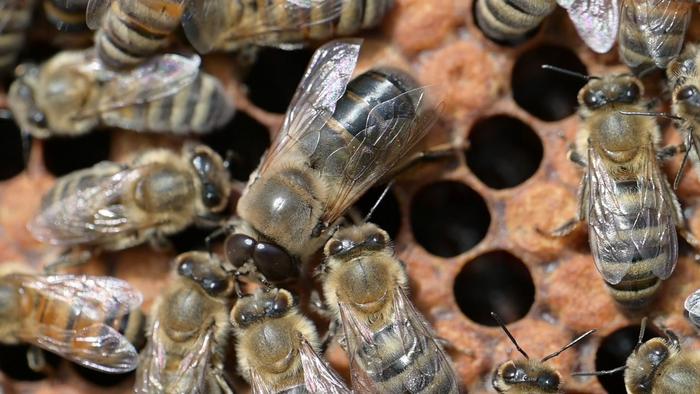
Bees have the reputation of being incredibly organized and spending their days making sure our...

The Scorched Cherry Twig And Other Christmas Miracles Get A Science Look

Bleeding hosts and stigmatizations are the best-known medieval miracles but less known ones, like ...

$0.50 Pantoprazole For Stomach Bleeding In ICU Patients Could Save Families Thousands Of Dollars

The inexpensive medication pantoprazole prevents potentially serious stomach bleeding in critically...

Metformin Diabetes Drug Used Off-Label Also Reduces Irregular Heartbeats

Adults with atrial fibrillation (AFib) who are not diabetic but are overweight and took the diabetes...

User picture.
News StaffRSS Feed of this column.

News Releases From All Over The World, Right To You... Read More »

Blogroll

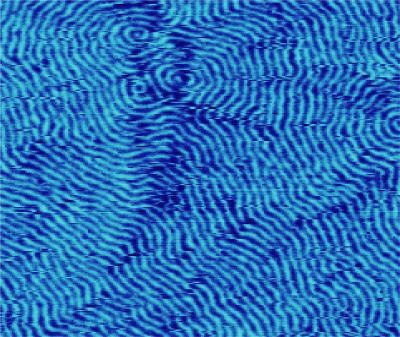
An international research team, led by scientists at the London Centre for Nanotechnology (LCN), has found a way to switch a material’s magnetic properties from ‘hard’ to ‘soft’ and back again – something which could lead to new ways of controlling electromagnetic devices. The research shows how a magnet can be ‘tuned’ by subjecting it to a second magnetic field, perpendicular to the original.

Magnets can be classified by their ‘hard’ or ‘soft’ magnetic properties. Hard magnets, sometimes called ‘permanent’ magnets, have fixed or ‘pinned’ domain walls which mean the material stays magnetised for a long time. Soft magnets have moveable domain walls that can be easily flipped.

How high is Mount Everest exactly?

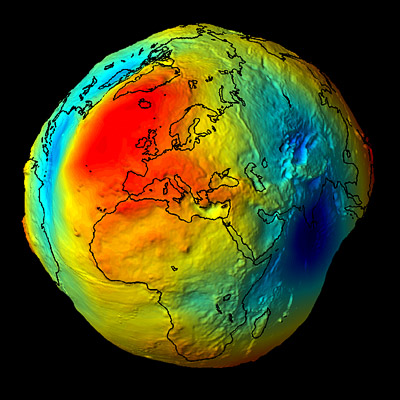
Recent surveys have come up with heights that differ by more than five meters. An expedition called the Geodetic Journey is making its way through China and Tibet to highlight the importance of geodesy and how an accurate model of the geoid from ESA's GOCE mission will lead to a unified system for measuring heights.

Geodesy is concerned with measuring and mapping the shape of the Earth's surface, to the benefit of all branches of Earth sciences and has many practical applications. Although surveying techniques go back thousands of years, it traditionally involves taking very precise three-dimensional positioning of points.

Narcolepsy is a sleep disorder that causes people to fall asleep uncontrollably during the day. It also includes features of dreaming that occur while awake. Other common symptoms include sleep paralysis, hallucinations and cataplexy.

About one out of every 2,000 people is known to have narcolepsy. The chance that you have narcolepsy is higher when a relative also has it. It is very rare for more than two people in the same family to have this sleep disorder. It affects the same number of men and women.

Puzzling? It sure is - but Susumu Tanaka, PhD, of the Tokyo Institute of Psychiatry in Japan has written the first report to identify the biological markers of narcolepsy using gene expression in white blood cells.

Inside the body, our organs are elegantly kept apart by slick membranes. Inside our smallest components, our cells, a similar separation is upheld with the help of electrical charges. In the same way that reversed magnets repel each other, gauzes of negative charges prevent proteins, genetic material, and fats from sticking to each other in the wrong way.

Mikael Oliveberg, professor of biochemistry at Stockholm University in Sweden, describes how disturbances in these functions underlie the hereditary form of the motor-neuron disease Amyotrophic Lateral Sclerosis (ALS).

Learning to fly is easy, if you are a bird. But why is it that birds learn so easily how to fly? It is well known that birds learn through practice, and that they gradually refine their innate ability into a finely tuned skill.

According to a new theory by Dr Stone of Sheffield University, skills such as flying are easy to refine because the innate ability of today's birds depends indirectly on the learning that their ancestors did, which leaves a genetically specified latent memory for flying.

The theory has been tested on simple models of brains called artificial neural networks, which can be made to evolve using genetic algorithms.

Whilst these networks do not fly, they do learn associations, and these associations could take the form of a skill such as flying.

In a recent survey conducted by the University of Maryland’s Center for Food Nutrition and Agriculture Policy, consumers listed tuna, salmon and shrimp as the fish with the highest levels of mercury. But when the question was reversed — which fish had the lowest levels of mercury? — the responses were identical: tuna, salmon and shrimp.