

Banner
The Scorched Cherry Twig And Other Christmas Miracles Get A Science Look

Bleeding hosts and stigmatizations are the best-known medieval miracles but less known ones, like ...

$0.50 Pantoprazole For Stomach Bleeding In ICU Patients Could Save Families Thousands Of Dollars

The inexpensive medication pantoprazole prevents potentially serious stomach bleeding in critically...
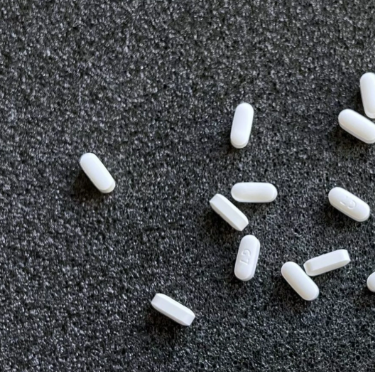
Metformin Diabetes Drug Used Off-Label Also Reduces Irregular Heartbeats

Adults with atrial fibrillation (AFib) who are not diabetic but are overweight and took the diabetes...

Your Predator: Badlands Future - Optical Camouflage, Now Made By Bacteria

In the various 'Predator' films, the alien hunter can see across various spectra while enabling...

User picture.
News StaffRSS Feed of this column.

News Releases From All Over The World, Right To You... Read More »

Blogroll

Drinking more than one soft drink daily — whether it’s regular or diet — may be associated with an increase in the risk factors for heart disease.

“We were struck by the fact that it didn’t matter whether it was a diet or regular soda that participants consumed, the association with increased risk was present,” said Ramachandran Vasan, M.D., senior author of the Framingham Heart Study and professor of medicine at Boston University School of Medicine.

In an advance that could help curb global demand for oil, MIT researchers have demonstrated how ordinary spark-ignition automobile engines can, under certain driving conditions, move into a spark-free operating mode that is more fuel-efficient and just as clean.

The mode-switching capability could appear in production models within a few years, improving fuel economy by several miles per gallon in millions of new cars each year. Over time, that change could cut oil demand in the United States alone by a million barrels a day. Currently, the U.S. consumes more than 20 million barrels of oil a day.

Many researchers are studying a new way of operating an internal combustion engine known as “homogeneous charge compression ignition” (HCCI).

Scientists thought that most new genes were formed from existing genes, but Cornell researchers have discovered a gene in some fruit flies that appears to be unrelated to other genes in any known genome.

The new gene, called hydra, exists in only a small number of species of Drosophila fruit flies, which suggests it was created about 13 million years ago, when these melanogaster subgroup species diverged from a common ancestor.

And early evidence indicates that the new gene is functional (as opposed to being nonfunctional "junk" DNA) and is likely to express a protein involved in late stages of sperm cell development (spermatogenesis).

What do sand, coal, cereal, ice cubes, marbles, gravel, sugar, pills, and powders have in common" They are all granular materials, members of an unruly family of substances that refuse to completely conform to the laws of behavior for either solids or liquids—much to the consternation of theoretical physicists and manufacturers alike. Whether it’s a huge grain silo, a coal hopper or a pharmaceutical manufacturing plant, being able to predict the behavior of dense granular packings subjected to different external stresses is key to keeping things from jamming up or collapsing.

A quarter of adult New Yorkers have elevated blood mercury levels, according to survey results released today by the Health Department, and the elevations are closely tied to fish consumption. Asian and higher-income New Yorkers eat more fish, and have higher average mercury levels, than others both locally and nationally.

These mercury levels pose little if any health risk for most adults, but may increase the risk of cognitive delays for children whose mothers had very high mercury levels during pregnancy.

Today’s findings are the latest presented from New York City’s Health and Nutrition Examination Survey (NYC-HANES), the first such survey ever conducted by a U.S. city. It’s possible that other cities have similarly high levels, or higher ones, but haven’t yet documented them.

University of New South Wales (UNSW) researchers have uncovered an important naturally occurring mechanism in the body where "bad" cells that cause blockages in our blood vessels are kept under strict growth control, while "good" cells that keep our blood vessels free of clots and growths are left unaffected.

The discovery is expected to benefit those who will need heart coronary bypass surgery, an angioplasty - the mechanical widening of a narrowed or totally blocked blood vessel - or will undergo haemodialysis.





