Banner
The Scorched Cherry Twig And Other Christmas Miracles Get A Science Look

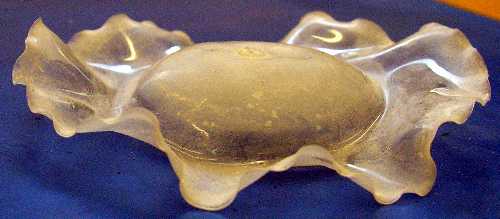
Bleeding hosts and stigmatizations are the best-known medieval miracles but less known ones, like ...
$0.50 Pantoprazole For Stomach Bleeding In ICU Patients Could Save Families Thousands Of Dollars

The inexpensive medication pantoprazole prevents potentially serious stomach bleeding in critically...
Metformin Diabetes Drug Used Off-Label Also Reduces Irregular Heartbeats

Adults with atrial fibrillation (AFib) who are not diabetic but are overweight and took the diabetes...

Your Predator: Badlands Future - Optical Camouflage, Now Made By Bacteria

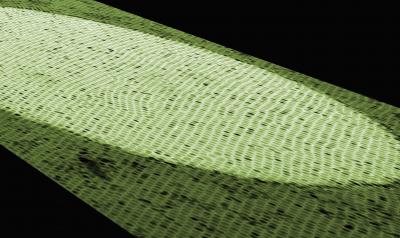
In the various 'Predator' films, the alien hunter can see across various spectra while enabling...

User picture.
News StaffRSS Feed of this column.

News Releases From All Over The World, Right To You... Read More »

Blogroll

Improved sensing and detection to combat terrorism has brought the need for advanced defense technologies to the forefront and laser-based defense systems are now being designed for this need, including the use of infrared countermeasures to protect aircraft from heat-seeking missiles and highly sensitive chemical detectors for reliable early detection of trace explosives and other toxins at a safe distance for personnel.

Since practical systems must be easily portable by a soldier, aircraft or unmanned vehicle, they must be lightweight, compact and power efficient. In addition, such systems also would need to be widely deployable and available to all soldiers, airplanes and public facilities, which requires a low production and operating cost.

There are many objects in nature, such as flowers, that are “pre-programmed” to develop into delicate, beautiful and intrically shaped forms. But can this pre-determined process be duplicated by man starting with plain, flat surfaces?

Yes, say Dr. Eran Sharon and his co-workers, Yael Klein and Efi Efrati, at the Hebrew University of Jerusalem Racah Institute of Physics, who have succeded for the first time anywhere in programming polymer sheets to bend and wrinkle by themselves into prescribed structures. Their work was described in the journal Science.

They made flat discs of a soft gel that, when warmed gently, curved into domes, saddles and even sombrero shapes.

“It’s an amazing little marvel,” said Heinrich Jaeger, Professor in Physics at the University of Chicago. “This is not a very fragile layer, but rather a robust, resilient membrane.”

Even when suspended over a tiny hole and poked with an ultrafine tip, the membrane boasts the equivalent strength of an ultrathin sheet of plexiglass that maintains its structural integrity at relatively high temperatures.

When nicotine binds to a neuron, how does the cell know to send the signal that announces a smoker’s high?

As with other questions involving good sensations, the answer appears to be sugar. A University of Southern California study proposes a role for sugar as the hinge that opens a gate in the cell membrane and brings news of nicotine’s arrival.

Structural biologist Raymond Stevens of The Scripps Research Institute, who was not involved in the study, called it “a landmark accomplishment for the fields of structural biology and neuronal cell signaling.”

The driving forces behind major shifts in recent human evolution and adaptation have been the subject of intense debate for more than 100 years.

Should adolescents with depression be prescribed antidepressants, and if so, should they be given only with a psychological therapy, as advocated by the National Institute for Health and Clinical Excellence (NICE)?

A study published on bmj.com last month found that adding cognitive behaviour therapy (CBT) to selective serotonin reuptake inhibitor (SSRI) treatment is unlikely to improve outcomes for adolescents with moderate to severe depression.

These findings challenge current NICE guidelines that recommend SSRIs be prescribed only in conjunction with psychological therapies.