Banner
The Scorched Cherry Twig And Other Christmas Miracles Get A Science Look

Bleeding hosts and stigmatizations are the best-known medieval miracles but less known ones, like ...

$0.50 Pantoprazole For Stomach Bleeding In ICU Patients Could Save Families Thousands Of Dollars

The inexpensive medication pantoprazole prevents potentially serious stomach bleeding in critically...
Metformin Diabetes Drug Used Off-Label Also Reduces Irregular Heartbeats

Adults with atrial fibrillation (AFib) who are not diabetic but are overweight and took the diabetes...

Your Predator: Badlands Future - Optical Camouflage, Now Made By Bacteria

In the various 'Predator' films, the alien hunter can see across various spectra while enabling...

User picture.
News StaffRSS Feed of this column.

News Releases From All Over The World, Right To You... Read More »

Blogroll

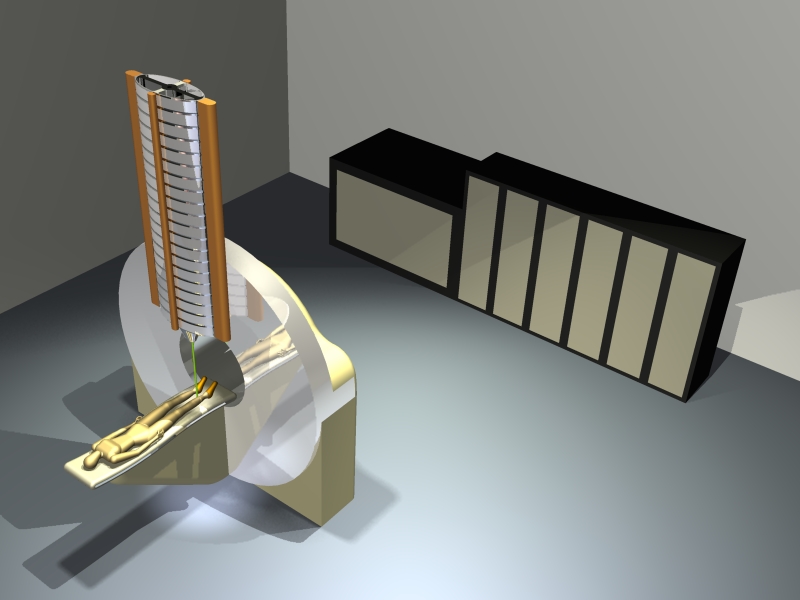
Using innovative physics, researchers have proposed a system that may one day bring proton therapy, a state-of-the-art cancer treatment method currently available only at a handful of centers, to radiation treatment centers and cancer patients everywhere. Thomas R. Mackie, a professor at the University of Wisconsin and co-founder of the radiation therapy company TomoTherapy, will present this new design at next week's annual meeting of the American Association of Physicists in Medicine in Minneapolis.

Compared to the x rays conventionally used in radiation therapy, protons are potentially more effective, as they can deposit more cell-killing energy in their tumor targets and less in surrounding healthy tissue.

New research suggests that an eyedrop used to diagnose a rare syndrome in infants can cause severe lethargy lasting up to 10 hours and requiring hospital admission and oxygen administration.

In the article “Adverse Effects of Apraclonidine Used in the Diagnosis of Horner Syndrome in Infants”, published in the June issue of Journal of the American Association for Pediatric Ophthalmology and Strabismus, Dr. Patrick Watts and coauthors described five cases of extreme drowsiness or unresponsiveness after infants under 6 months of age were administered 1% apraclonidine eyedrops.

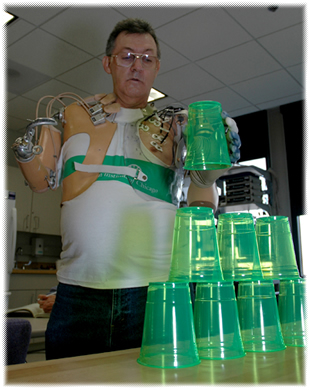
Jesse Sullivan, a double amputee from Dayton, Tenn., has been called the world's first "bionic man" with his thought-controlled, state-of-the-art prosthetic arm. He can eat with a fork, pick up a cup, paint his house or guide a weed eater by bending his advanced appendage's elbow and rotating its forearm. But he still cannot grasp and throw a baseball, cast a fishing line, tie his shoes or type on a computer keyboard as naturally as before.

That may change with the help of numerous organizations including Oak Ridge National Laboratory, some 50 miles north of Sullivan's hometown.

In 2001 while working as a utility lineman, Sullivan lost both arms after a 7000-volt shock in a power-line accident.

Pediatrics researchers at The Children’s Hospital of Philadelphia and McGill University in Montreal have identified a gene variant that raises a child’s risk for type 1 diabetes, formerly called juvenile diabetes. As investigators continue to pinpoint genes contributing to diabetes, they have their eyes on providing a scientific basis for designing better treatments and preventive measures for the disease.

The research adds a new gene and new knowledge to the four genes previously discovered for type 1 diabetes, in which the immune system destroys insulin-producing beta cells in the pancreas and makes patients dependent on frequent insulin injections to keep the body’s blood sugar under control.

Researchers from MIT have uncovered a molecular mechanism that governs the formation of fears stemming from traumatic events. The work could lead to the first drug to treat the millions of adults who suffer each year from persistent, debilitating fears - including hundreds of soldiers returning from conflict in Iraq and Afghanistan.

A study conducted by the Army in 2004 found that one in eight soldiers returning from Iraq reported symptoms of post-traumatic stress disorder (PTSD). According to the National Center for PTSD in the United States, around eight percent of the population will have PTSD symptoms at some point in their lives. Some 5.2 million adults have PTSD during a given year, the center reports.

A tumor paint developed by researchers will help surgeons see where a tumor begins and ends more precisely by illuminating the cancerous cells.

The study shows that the tumor paint can help surgeons distinguish between cancer cells and normal brain tissue in the operating room. The paint is a scorpion-derived peptide called chlorotoxin that is linked to the molecular beacon Cy5.5.Until now there has been no way to allow surgeons to see tumors “live” during surgery.