Banner
The Scorched Cherry Twig And Other Christmas Miracles Get A Science Look

Bleeding hosts and stigmatizations are the best-known medieval miracles but less known ones, like ...

$0.50 Pantoprazole For Stomach Bleeding In ICU Patients Could Save Families Thousands Of Dollars

The inexpensive medication pantoprazole prevents potentially serious stomach bleeding in critically...
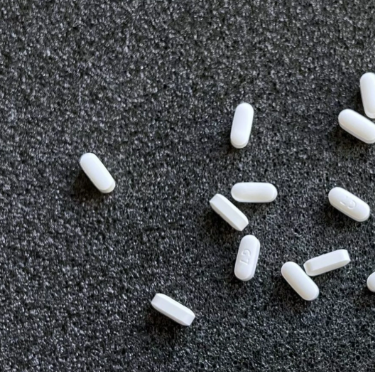
Metformin Diabetes Drug Used Off-Label Also Reduces Irregular Heartbeats

Adults with atrial fibrillation (AFib) who are not diabetic but are overweight and took the diabetes...

Your Predator: Badlands Future - Optical Camouflage, Now Made By Bacteria

In the various 'Predator' films, the alien hunter can see across various spectra while enabling...

User picture.
News StaffRSS Feed of this column.

News Releases From All Over The World, Right To You... Read More »

Blogroll

Scientists have made significant advances towards the development of a technique that could be used to confirm whether someone is infected with variant CJD.

The technique, which has so far been used mainly in animal models, works by mimicking and accelerating the replication of prions - abnormal proteins that progressively kill off brain tissue and are thought to cause the disease.


Prion aggregates in the brain in variant CJD - one is stained by a conventional stain (pink), the other is stained with an antibody that labels the abnormal prion protein (brown).

The development of a living being is based on general laws written into the genetic code of each cell and which enable them to develop a specialist function, modifying the way they divide, their form and their behavior.

These changes are coordinated through a series of instructions that must be correctly interpreted within the cell, and this means that the information must pass along a pathway of signalling molecules. These pathways have been conserved across evolution, and therefore studies using models such as the fruit fly provide information about these same processes in humans and other animals.

Not all fat is bad. Brown fat is a type of adipose tissue that generates heat and counters obesity caused by overeating.

Researchers at Dana-Farber Cancer Institute have identified a long-sought "master switch" in mice for the production of brown fat and they say that turning up the equivalent switch in people might be a new strategy for treating overweight and obesity. The investigators said their next step is to rev up the control in mice and overfeed them to see if they are resistant to becoming obese.

Brightly colored birds are among the species most adversely affected by the high levels of radiation around the Chernobyl nuclear plant, ecologists have discovered. The findings help explain why some species are harder hit by ionising radiation than others.

Dr Anders Møller of the Université Pierre et Marie Curie and Professor Timothy Mousseau of the University of South Carolina examined 1,570 birds from 57 different species in the forests around Chernobyl at varying distances from the reactor. They found that populations of four groups of birds - those whose red, yellow and orange plumage is based on carotenoids, those that laid the biggest eggs, and those that migrated or dispersed the furthest - declined more than other species.

Scientists at the University of Bonn, together with colleagues from Romania, have discovered a gene variant that significantly increases the risk of developing gallstones.

It is estimated that one in ten Europeans has this variant in their hereditary disposition. For those affected, the likelihood of developing a gallstone in the course of their life is two to three times higher. The relevant gene contains the instructions for building a molecular pump which transports cholesterol from the liver into the bile ducts – cholesterol being the substance from which most gallstones are formed.

The genetic modification appears to cause this pump to work permanently at high speed.

A detailed understanding of key chemical reactions that take place in interstellar space has been provided by groundbreaking research at two U.S. Department of Energy national laboratories and two European universities.

Argonne National Laboratory senior chemist Stephen Klippenstein – along with colleagues at Sandia National Laboratories; the Institute of Physics, University of Rennes, France; and the University of Cambridge, U.K. – has developed a detailed understanding of the dynamics of reactions between neutral radicals and neutral molecules, known as “neutral-neutral” reactions, at temperatures as low as 20 Kelvin, approximately the temperature of interstellar space.