
Banner
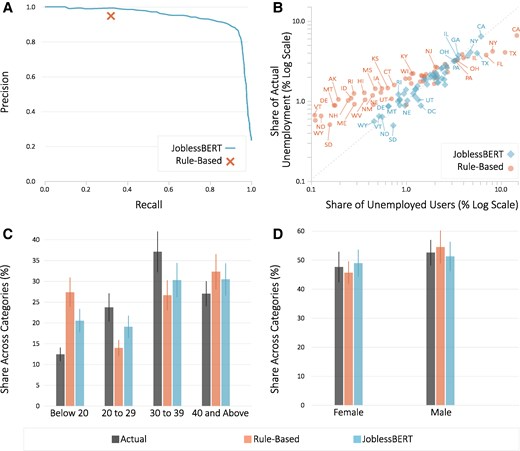
Social Media Is A Faster Source For Unemployment Data Than Government

Government unemployment data today are what Nielsen TV ratings were decades ago - a flawed metric...

Gestational Diabetes Up 36% In The Last Decade - But Black Women Are Healthiest

Gestational diabetes, a form of glucose intolerance during pregnancy, occurs primarily in women...
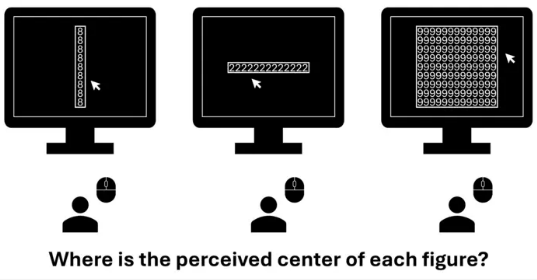
Object-Based Processing: Numbers Confuse How We Perceive Spaces

Researchers recently studied the relationship between numerical information in our vision, and...
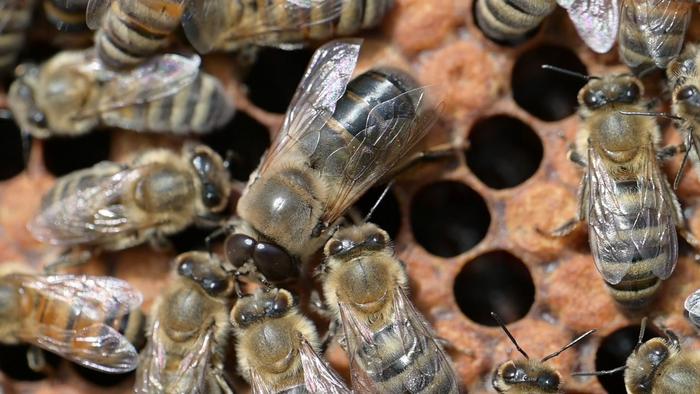
Males Are Genetically Wired To Beg Females For Food

Bees have the reputation of being incredibly organized and spending their days making sure our...

User picture.
News StaffRSS Feed of this column.

News Releases From All Over The World, Right To You... Read More »

Blogroll

Breast-feeding is back. When it comes to early establishment of gut and immune health for babies, 'breast is best' according to a new study of how 'good' bacteria arrive in babies' digestive systems.

How babies acquire a population of good bacteria can also help to develop formula milk that more closely mimics nature.

Our early ancestors developed a taste for spicy food at the time they were beginning to transition to agriculture.

The researchers discovered traces of garlic mustard (Alliaria petiolata), along with animal and fish residues, on the charred remains of pottery dating back nearly 7,000 years. The silicate remains were discovered through microfossil analysis of carboniszed food deposits from pots found at sites in Denmark and Germany. The pottery dated from the Mesolithic-Neolithic transition from hunter-gathering to agriculture.

On August 21st, 2013 at 1:24 am EDT, the sun erupted with an Earth-directed coronal mass ejection - CME - a solar phenomenon that can send billions of tons of particles into space and reach Earth one to three days later.

These particles cannot travel through the atmosphere to harm humans on Earth, but they can affect electronic systems in satellites and on the ground.

Experimental NASA research models, based on observations from NASA's Solar Terrestrial Relations Observatory show that the CME left the sun at speeds of around 380 miles per second, which is a fairly common speed for CMEs.

Tuberculosis (TB) is a wildly successful pathogen, if your goal is to infect up to two billion people in every corner of the world, with a new infection of a human host every second.

A new analysis of dozens of tuberculosis genomes gathered from around the world has shed some light on how it evolves to resist countermeasures - it that marches in lockstep with human population growth and history, evolving to take advantage of the most crowded and wretched human conditions.

The analysis reveals that tuberculosis experienced a 25-fold expansion worldwide in the 17th century, a time when human populations underwent explosive growth and European exploration of Africa, the Americas, Asia and Oceania was at its peak.

A new type of camera allows scientists to take sharper images of the night sky than ever before.  It combines a telescope with a large diameter primary mirror is being used for digital photography at its theoretical resolution limit in visible wavelengths – the light that the human eye can see.

The design team has been developing this technology for more than 20 years at observatories in Arizona, most recently at the Large Binocular Telescope, and has now deployed this latest version in the high desert of Chile at the Magellan 6.5-meter telescope.

A new hypothesis by computational physicists states that "zombie vortices" help lead to the birth of a new star.

They even find a way to make it about angular momentum, saying that variations in gas density lead to instability, which then generates the whirlpool-like vortices needed for stars to form.

Astronomers accept that in the first steps of a new star's birth, dense clouds of gas collapse into clumps that, with the aid of angular momentum, spin into one or more Frisbee-like disks where a protostar starts to form. But for the protostar to grow bigger, the spinning disk needs to lose some of its angular momentum so that the gas can slow down and spiral inward onto the protostar. Once the protostar gains enough mass, it can kick off nuclear fusion.



