
Banner
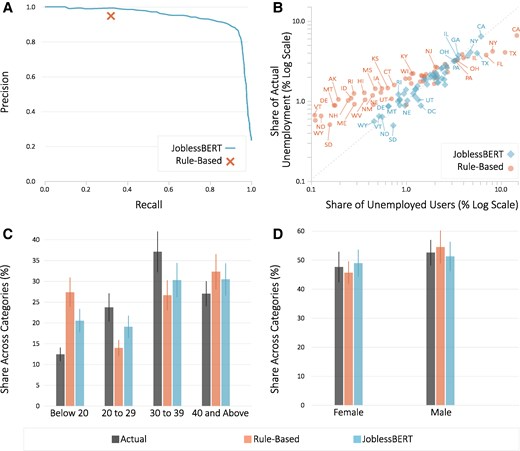
Social Media Is A Faster Source For Unemployment Data Than Government

Government unemployment data today are what Nielsen TV ratings were decades ago - a flawed metric...

Gestational Diabetes Up 36% In The Last Decade - But Black Women Are Healthiest

Gestational diabetes, a form of glucose intolerance during pregnancy, occurs primarily in women...
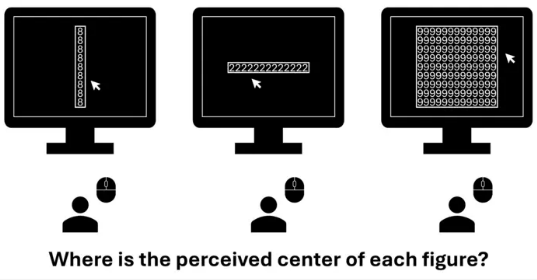
Object-Based Processing: Numbers Confuse How We Perceive Spaces

Researchers recently studied the relationship between numerical information in our vision, and...
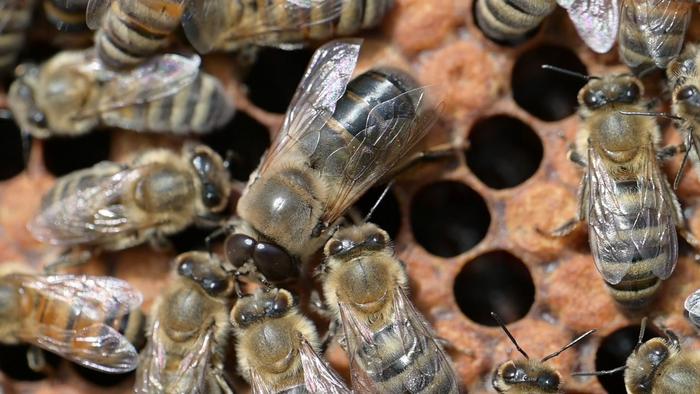
Males Are Genetically Wired To Beg Females For Food

Bees have the reputation of being incredibly organized and spending their days making sure our...

User picture.
News StaffRSS Feed of this column.

News Releases From All Over The World, Right To You... Read More »

Blogroll

University of California - Davis biochemists have shown for the first time that the ergodic theorem can be demonstrated by a collection of individual protein molecules; specifically, a protein that unwinds DNA.

If you have ever used a GPS system to find a route to somewhere, you might have wondered on occasion how they can be so wrong - though it's often not the signal itself that is wrong.

Yet sometimes a distorted signal can be a good thing. By figuring out how messed up GPS satellite signals get when bouncing around in a storm, researchers have found a way to do something completely outside their original intent: measure and map the wind speeds of hurricanes.

Tick-borne illnesses are on the rise, or at least better reported to the U.S. Centers for Disease Control and Prevention. Lyme disease leads the pack, with some 35,000 cases reported annually but in the Northeast, the black-legged ticks (Ixodes scapularis) also infect people with other maladies, among them anaplasmosis, babesiosis, and now Powassan encephalitis, according to a new paper in Parasites and Vectors.

Powassan encephalitis is caused by Powassan virus and its variant, deer tick virus. The virus is spread to people by infected ticks, and can cause central nervous system disruption, encephalitis, and meningitis. There is a 10-15% fatality rate in reported cases, with many survivors suffering long-term neurological damage.

Satellite observations of the ice sheets of Greenland and the Antarctic haven't been around long enough, and prior methods were too inaccurate, to be able to say whether the loss of ice today will persist in the future.

Predictions of the contribution of both ice shields to the sea level by the year 2100 may be off by more than 35 centimeters - but whether they will be too high or too low is unclear. Too high is obviously no problem. Too low could be a real worry.

A 'rather bizarre' result using a robotic frog and recorded mating call may provide insight into how complex traits evolve by hooking together much simpler traits.

Researchers have discovered that two wrong mating calls can make a right for female túngara frogs. It's not a defect in the frog brain, but an example of how well frogs have evolved to extract meaning from noise, much the way humans have. 

The best way to reduce carbon emissions and combat climate change is through the use of a European-style cap-and-trade scheme, according to a paper by business school scholars.



