

Banner
The Scorched Cherry Twig And Other Christmas Miracles Get A Science Look

Bleeding hosts and stigmatizations are the best-known medieval miracles but less known ones, like ...

$0.50 Pantoprazole For Stomach Bleeding In ICU Patients Could Save Families Thousands Of Dollars

The inexpensive medication pantoprazole prevents potentially serious stomach bleeding in critically...
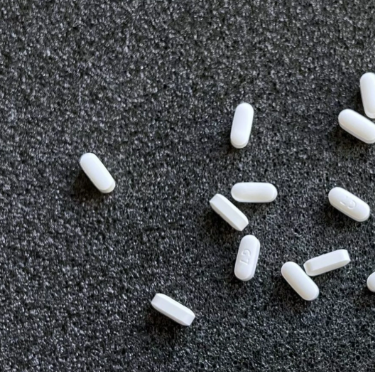
Metformin Diabetes Drug Used Off-Label Also Reduces Irregular Heartbeats

Adults with atrial fibrillation (AFib) who are not diabetic but are overweight and took the diabetes...

Your Predator: Badlands Future - Optical Camouflage, Now Made By Bacteria

In the various 'Predator' films, the alien hunter can see across various spectra while enabling...

User picture.
News StaffRSS Feed of this column.

News Releases From All Over The World, Right To You... Read More »

Blogroll

New research hopes to create reactions necessary for industries such as pharmaceutical companies but eliminate the resulting waste from traditional methods. 

Traditional methods – dating back thousands of years – involve using solutions to speed up chemical reactions that are used to make products that we use every day. However, the leftover waste or solvents can often be a volatile compound.

Disposal and recycling is also becoming a growing and more costly challenge for companies as they follow increasing federal environmental regulations.

Researchers have designed a new kind of adaptive material with tunable transparency and wettability features - imagine a tent that blocks light on a dry and sunny day, and becomes transparent and water-repellent on a dim, rainy day. Or highly precise, self-adjusting contact lenses that also clean themselves. 

The new material was inspired by natural dynamic, self-restoring systems, such as the liquid film that coats your eyes - tears. Individual tears join up to form a dynamic liquid film with an obviously significant optical function that maintains clarity, while keeping the eye moist, protecting it against dust and bacteria, and helping to transport away any wastes – doing all of this and more in literally the blink of an eye. 

Animal and dairy scientists  presenting at the Lactation Biology Symposium in Phoenix, Arizona have discovered that drinking milk at an early age can help mammals throughout their lives. The presentations focused on epigenetics, or how gene expression changes based on factors like environment or diet. Epigenetic changes modify when or how certain traits are expressed. 

But understanding exactly how milk affects the body is a complicated story of hormones, antibodies and proteins, as well as other cells and compounds researchers have not yet identified.

Health plans that offer low premiums and high deductibles believe that patients with deductibles of $1,000 or more for individual coverage (or twice that for family coverage) will shop around for the best price to get their health care.

A model based on global population data spanning the years from 1900 to 2010 has caused a research team to predict the opposite of what Doomsday Prophets of the 1960s and beyond insisted would happen -  the number of people on Earth will stabilize around the middle of the century and perhaps even start to decline. 

The results coincide with the United Nation's downward estimates, which claim that by 2100 Earth's population will be 6.2 billion, if low fertility and birth rate continues on its current path, below the 7 billion we are at now. 

NASA's Hubble Space Telescope has found the farthest supernova so far. Supernova UDS10Wil, nicknamed SN Wilson after American President Woodrow Wilson, exploded more than 10 billion years ago.

SN UDS10Wil is a Type Ia supernovae. These beacons can be used as a yardstick for measuring cosmic distances. One of the debates surrounding Type Ia supernovae is the nature of the fuse that ignites them. This latest discovery adds credence to one of two competing theories of how they explode. Although preliminary, the evidence so far favors the explosive merger of two burned out stars; small, dim, and dense stars known as white dwarfs, the final state for stars like our Sun.




