

Banner
The Scorched Cherry Twig And Other Christmas Miracles Get A Science Look

Bleeding hosts and stigmatizations are the best-known medieval miracles but less known ones, like ...

$0.50 Pantoprazole For Stomach Bleeding In ICU Patients Could Save Families Thousands Of Dollars

The inexpensive medication pantoprazole prevents potentially serious stomach bleeding in critically...
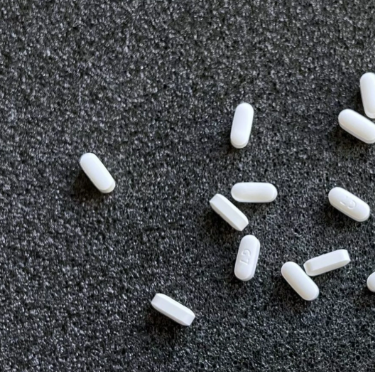
Metformin Diabetes Drug Used Off-Label Also Reduces Irregular Heartbeats

Adults with atrial fibrillation (AFib) who are not diabetic but are overweight and took the diabetes...

Your Predator: Badlands Future - Optical Camouflage, Now Made By Bacteria

In the various 'Predator' films, the alien hunter can see across various spectra while enabling...

User picture.
News StaffRSS Feed of this column.

News Releases From All Over The World, Right To You... Read More »

Blogroll

Scientists say they have done laboratory resurrections of several 2 to 3 billion-year-old proteins, ancient ancestors of the enzymes that enable today's antibiotic-resistant bacteria to shrug off huge doses of penicillins, cephalosporins and other modern drugs.

Antibiotic resistance existed long before Alexander Fleming discovered the first antibiotic in 1928. Genes that contain instructions for making the proteins responsible for antibiotic resistance have been found in 30,000-year-old permafrost sediment and other ancient sites. The new study research focused on beta-lactamases, enzymes responsible for resistance to the family of antibiotics that includes penicillin, which scientists believe originated billions of years ago.

Older people who don't expect a satisfying future may be more likely to live longer, healthier lives than those who see brighter days ahead, according to a paper in
Psychology and Aging

Scholars examined data collected from 1993 to 2003 for the national German Socio-Economic Panel, an annual survey of private households consisting of approximately 40,000 people 18 to 96 years old. The researchers divided the data according to age groups: 18 to 39 years old, 40 to 64 years old and 65 years old and above.

Through mostly in-person interviews, respondents were asked to rate how satisfied they were with their lives and how satisfied they thought they would be in five years.

Trust fools you into remembering that your partner was more considerate and less hurtful than they actually were, say psychologists who examined the role of trust in biasing memories of transgressions in romantic partnerships. 

People who are highly trusting tended to remember transgressions in a way that benefits the relationship, remembering partner transgressions as less severe than they originally reported them to be. People low on trust demonstrated the opposite pattern, remembering partner transgressions as being more severe than how they originally reported them to be, they concluded. 

Preclinical, laboratory studies suggest immunotherapy could potentially work like a vaccine against metastatic cancers.

Results from the recent study show the therapy could treat metastatic cancers and be used in combination with current cancer therapies while helping to prevent the development of new metastatic tumors and train specialized immune system cells to guard against cancer relapse.

Researchers at the Max Planck Institute for Demographic Research in Rostock, Germany, say life expectancy changes have been so rapid since 1900 that "72 is the new 30" - by that, they mean primitive hunter gatherers had the same odds of dying at age 30 as a modern man in the developed world faces at age 72.

The English know they drink too much alcohol, but they all think it is someone else doing it. In actuality, as many as 75% of people in England are drinking in excess of the recommended daily alcohol limit, according to a new paper in the European Journal of Public Health.

The scholars investigated the potential public health implications related to the under-reporting of alcohol consumption. International surveys have shown that self-reported alcohol consumption only accounts for between 40 and 60 per cent of alcohol sales- that discrepancy reveasl the potential impact of this 'missing' alcohol on public health.






