

Banner
The Scorched Cherry Twig And Other Christmas Miracles Get A Science Look

Bleeding hosts and stigmatizations are the best-known medieval miracles but less known ones, like ...

$0.50 Pantoprazole For Stomach Bleeding In ICU Patients Could Save Families Thousands Of Dollars

The inexpensive medication pantoprazole prevents potentially serious stomach bleeding in critically...
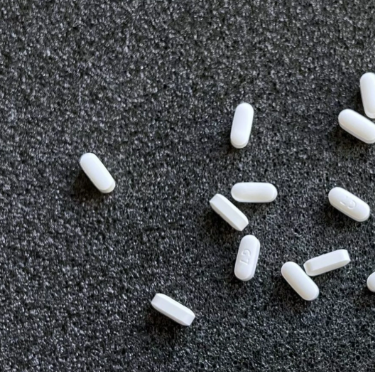
Metformin Diabetes Drug Used Off-Label Also Reduces Irregular Heartbeats

Adults with atrial fibrillation (AFib) who are not diabetic but are overweight and took the diabetes...

Your Predator: Badlands Future - Optical Camouflage, Now Made By Bacteria

In the various 'Predator' films, the alien hunter can see across various spectra while enabling...

User picture.
News StaffRSS Feed of this column.

News Releases From All Over The World, Right To You... Read More »

Blogroll

Science has always had a social component. Much of science is a neutral endeavor for the public good but in modern times the political component has meant navigating treacherous social and environmental policy waters. 

Not an easy task when science requires help from outside its field. Different social and science fields use different methods and scientists and policy makers rarely work together.  The government has taken over increased government control of projects and funding since World War II but modern problems mean that modern types of research centers are needed, as are new ways of organizing collaborations between scientists and policy makers - it can't be just political appointees handing out money to research the administration happens to like. 

Bacteria didn't just impact our evolution, we impacted the evolution of bacteria also, according to a study of DNA preserved in calcified bacteria on the teeth of ancient human skeletons.

The ancient genetic record reveals the negative changes in oral bacteria brought about by the dietary shifts as humans became farmers, and later with the introduction of food manufacturing in the Industrial Revolution.

Despite being in use for almost 20 years with no health or safety issues, controversy continues to surround genetically modified crops and their regulation.

Bruce Chassy, a professor emeritus of food science and human nutrition at the University of Illinois at Urbana-Champaign, believes that after thousands of research studies and worldwide planting, "genetically modified foods pose no special risks to consumers or the environment" and are over-regulated.

Engineers from the University at Buffalo engineers have created technology that could lead to breakthroughs in solar energy, stealth technology and other areas - but they had to catch some rainbows first. 

Qiaoqiang Gan, PhD, an assistant professor of electrical engineering at  the University at Buffalo, and a team of graduate students developed a "hyperbolic metamaterial waveguide," which is essentially an advanced microchip made of alternate ultra-thin films of metal and semiconductors and/or insulators. The waveguide halts and ultimately absorbs each frequency of light, at slightly different places in a vertical direction  to catch a "rainbow" of wavelengths.  

Offshore wind has potential to help the United States meet its growing energy needs, but the U.S. marine renewable energy industry has lagged behind Europe for decades.

Recent government subsidies have accelerated renewable energy development in U.S. waters, particularly along the East Coast, but a critical challenge is finding space for a growing number of turbines in an ocean crowded with fishing, marine transportation and recreational boating.

Why is the world so full of "morons" and "degenerates" and what, if anything, can be done to fix them?

These are questions that Robert W. Sussman, PhD, a professor of anthropology in Arts&Sciences at Washington University in St. Louis, explored Feb. 15th at the AAAS meeting in Boston.




