Banner
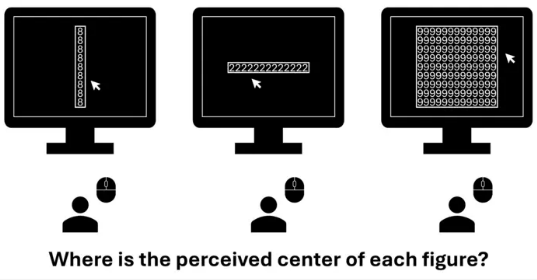
Object-Based Processing: Numbers Confuse How We Perceive Spaces

Researchers recently studied the relationship between numerical information in our vision, and...
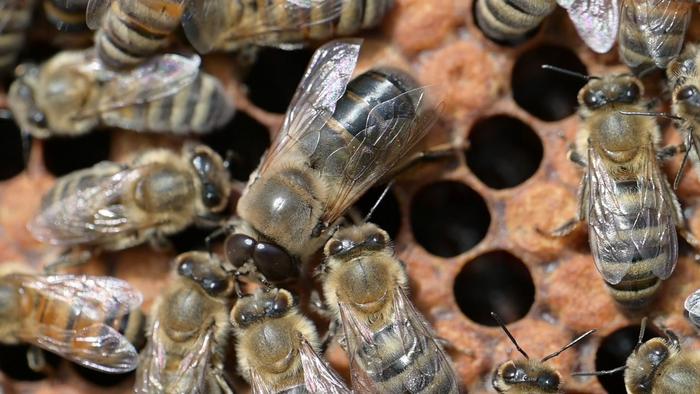
Males Are Genetically Wired To Beg Females For Food

Bees have the reputation of being incredibly organized and spending their days making sure our...

The Scorched Cherry Twig And Other Christmas Miracles Get A Science Look

Bleeding hosts and stigmatizations are the best-known medieval miracles but less known ones, like ...

$0.50 Pantoprazole For Stomach Bleeding In ICU Patients Could Save Families Thousands Of Dollars

The inexpensive medication pantoprazole prevents potentially serious stomach bleeding in critically...

User picture.
News StaffRSS Feed of this column.

News Releases From All Over The World, Right To You... Read More »

Blogroll

Some time this month, in Poker Flat, Alaska, a team of scientists from  The Aerospace Corporation of El Segundo, Calif.and NASA's Goddard Space Flight Center of Greenbelt, Md., will launch a sounding rocket up through the Northern Lights. 

Biologists have discovered a bioelectric signal that can identify cells that are likely to develop into tumors. The researchers also found that they could lower the incidence of cancerous cells by manipulating the electrical charge across cells' membranes. 

Bioelectric signals underlie an important set of control mechanisms that regulate how cells grow and multiply. The study investigated the bioelectric properties of cells that develop into tumors in Xenopus laevis frog embryos. 

Here is a conundrum in the culture wars; genetically modified tobacco has been shown to have numerous beneficial effects and now another one has been added.

The treatment for rabies (painful shots, thankfully not all in the stomach in 2013) is not as bad as the disease (death) but it is hardly civilized, so here is hoping the anti-science crowd does not claim genetically modified tobacco will create giant rats with SuperRabies.  Rabies deaths are not a big issue in the USA, 10 a year or so, and therefore it may be safe to do fundraising campaigns about Frankentobacco here, but for developing nations a better solution would save a lot of lives. 

Mathematicians have shown how to use an algorithm for analyzing void space in sphere packing where the spheres need not all be the same size. 

This method could be applied to analyze the geometry of liquids present between multi-sized spheres that are akin to a model for porous material. This provides a tool for studying the flow of such fluids through porous material. More importantly, it can also be used to study the packing geometry of proteins.

There have been several previous attempts to calculate the volume and the surface area of packing of spheres. But few methods have taken into account the connectivity of empty space between spheres, which matters, for example, when detecting buried cavities in proteins.

There are projections that coral reefs will decline due to global warming but evolution disagrees. A number of coral species survive at seawater temperatures far higher than estimates for the tropics during the next century. 

We associate coral reefs with tropical seas of around 28 degrees so in that mindset even slight warming can have devastating effects on corals. But in the Arabian/Persian Gulf, corals survive seawater temperatures of up to 36 degrees Celsius every summer, heat levels that would kill corals elsewhere. Corals have adapted. 

Scientists have described 24 new species of dipterans belonging to Quichuana genus after studying the forests of Central and Southern America for ten years. The Quichuana genus is also known as 'flower flies'. 

Only 24 species were previously known and this genus belongs to the Syrphidae family, which is a group with similar characteristics to that of bees and wasps but with a different taxonomic order.