Banner
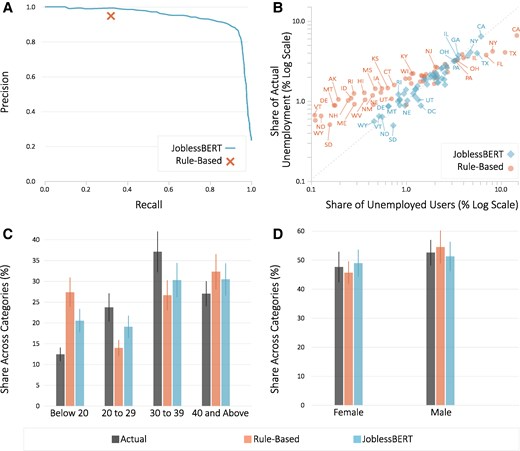
Social Media Is A Faster Source For Unemployment Data Than Government

Government unemployment data today are what Nielsen TV ratings were decades ago - a flawed metric...

Gestational Diabetes Up 36% In The Last Decade - But Black Women Are Healthiest

Gestational diabetes, a form of glucose intolerance during pregnancy, occurs primarily in women...
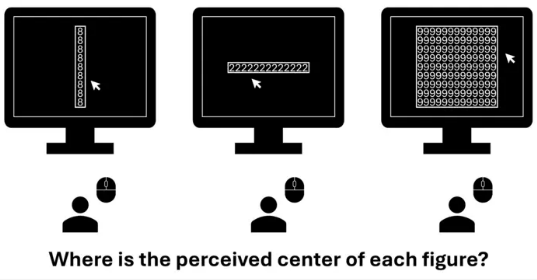
Object-Based Processing: Numbers Confuse How We Perceive Spaces

Researchers recently studied the relationship between numerical information in our vision, and...
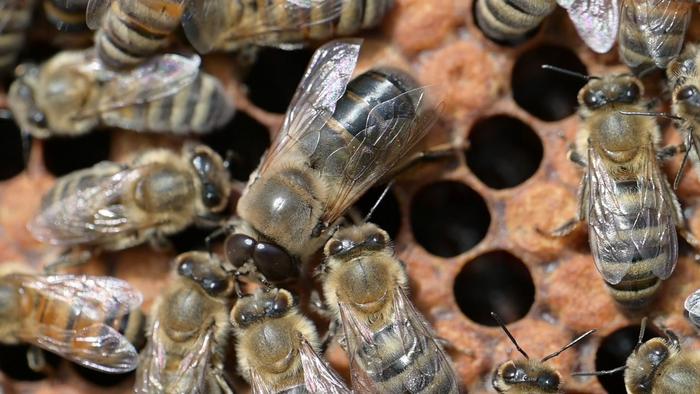
Males Are Genetically Wired To Beg Females For Food

Bees have the reputation of being incredibly organized and spending their days making sure our...

User picture.
News StaffRSS Feed of this column.

News Releases From All Over The World, Right To You... Read More »

Blogroll

There are projections that coral reefs will decline due to global warming but evolution disagrees. A number of coral species survive at seawater temperatures far higher than estimates for the tropics during the next century. 

We associate coral reefs with tropical seas of around 28 degrees so in that mindset even slight warming can have devastating effects on corals. But in the Arabian/Persian Gulf, corals survive seawater temperatures of up to 36 degrees Celsius every summer, heat levels that would kill corals elsewhere. Corals have adapted. 

Scientists have described 24 new species of dipterans belonging to Quichuana genus after studying the forests of Central and Southern America for ten years. The Quichuana genus is also known as 'flower flies'. 

Only 24 species were previously known and this genus belongs to the Syrphidae family, which is a group with similar characteristics to that of bees and wasps but with a different taxonomic order.

Newly forming stars feed on huge amounts of gas and dust from dense envelopes surrounding them at birth and a team of astronomers reported observing an unusual "baby" star that periodically emits infrared light bursts, suggesting it may be a binary star. 

The young object is called LRLL 54361, is about 100,000 years old and located about 950 light years away toward the Perseus constellation. Years of monitoring its infrared with the Spitzer instrument reveal that it becomes 10 times brighter every 25.34 days. This periodicity suggests that a companion to the central forming star is likely inhibiting the infall of gas and dust until its closest orbital approach, when matter eventually comes crashing down onto the protostellar "twins." 

Comet explosions did not end the prehistoric human culture, known as Clovis, in North America 13,000 years ago, according to a new paper.

Researchers from Sandia National Laboratories, Royal Holloway and 13 other universities across the United States and Europe have found evidence which rebuts the belief that a large impact or airburst caused a significant and abrupt change to the Earth's climate and terminated the Clovis culture. They argue that other explanations must be found for the apparent disappearance.

Clovis is the name archaeologists have given to the earliest well-established human culture in the North American continent. It is named after the town in New Mexico, where distinct stone tools were found in the 1920s and 1930s.

With greater wealth comes lesser need to worry about costs like diapers, it seems. Or Western parents don't know how to whistle.

In the western world, babies now need diapers until an average of three years of age, nearly twice as long as 40 years ago. The situation in Vietnam is just the opposite. A study by scholars at Sahlgrenska Academy, University of Gothenburg, Sweden, followed 47 infants and their mothers in Vietnam, where potty training starts at birth and the need for diapers is usually eliminated by nine months of age. 

The secret? Learning to be sensitive to when the baby needs to urinate.

The British Department of Health's marketing campaign to school girls and their parents for the human papillomavirus (HPV) vaccination program has so far proven to be one of the most successful in the world - except in London. 

 A Healthcare Protection Agency report shows an average uptake rate for three HPV doses in Year 8 schoolgirls aged 12-13 years across London of 76%, compared with the national (England) average of 84%. While many London boroughs achieve high uptake rates, those in Barnet, Kingston, City&Hackney, Camden, and Kensington&Chelsea fall 20-30% below the national average for uptake of all three HPV vaccine doses amongst 12 to 13 year old girls in the 2010/2011 school year.