Banner
Social Media Is A Faster Source For Unemployment Data Than Government

Government unemployment data today are what Nielsen TV ratings were decades ago - a flawed metric...

Gestational Diabetes Up 36% In The Last Decade - But Black Women Are Healthiest

Gestational diabetes, a form of glucose intolerance during pregnancy, occurs primarily in women...
Object-Based Processing: Numbers Confuse How We Perceive Spaces

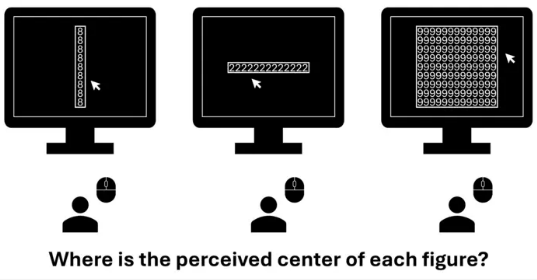
Researchers recently studied the relationship between numerical information in our vision, and...
Males Are Genetically Wired To Beg Females For Food

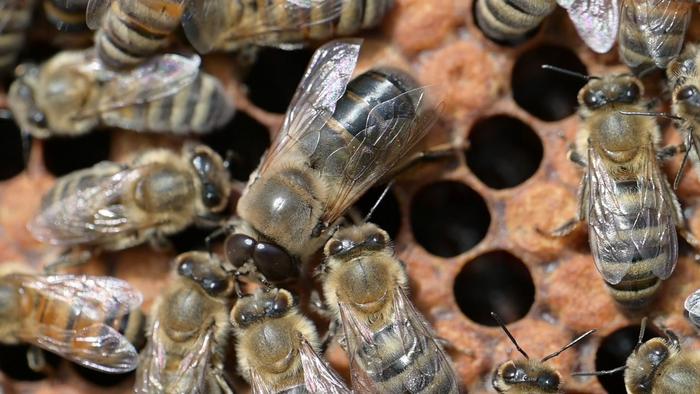
Bees have the reputation of being incredibly organized and spending their days making sure our...

User picture.
News StaffRSS Feed of this column.

News Releases From All Over The World, Right To You... Read More »

Blogroll

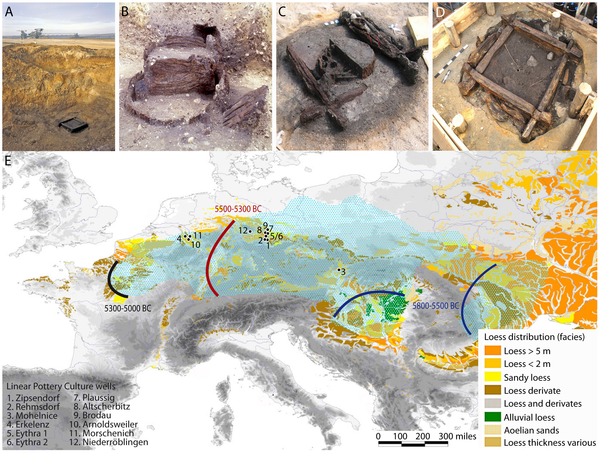
Prehistoric farming communities in Europe constructed water wells out of oak timbers - it seems early farmers were skilled carpenters long before metal was discovered or used for tools. 

 These first Central European farmers migrated from the Great Hungarian Plain approximately 7,500 years ago, and left an archaeological trail of settlements, ceramics and stone tools across the fertile regions of the continent, a record named Linear Pottery Culture (Linearbandkeramik - LBK). However, much of the lifestyle of these early settlers is still a mystery, including the climate they lived in and technology or strategies they used to cope with their surroundings. 

Solar panels are easily susceptible to mechanical problems.  Storms, leaves, you name it - but some of that is because they are rigid.  That rigidity also limits their applications.

New flexible, decal-like solar panels that can be peeled off like band-aids and stuck to virtually any surface, from papers to window panes, could make solar power a lot more deployable.  The world's first peel-and-stick thin-film solar cells have been created by researchers at Stanford University and unlike standard thin-film solar cells, their peel-and-stick version does not require any direct fabrication on the final carrier substrate.

When is diversity a bad thing?  When it comes to environmental action, according to a new paper from  the University of East Anglia (UEA). 

Scandinavian countries, low in ethnic and religious diversity, take more collective action than more diverse nations, like the UK, China and the United States. But the UEA paper frames diversity using the more negative term 'fragmentation'.

Americans may love separation of church and state and the mix of multiple religions in the USA but Dr. Elissaios Papyrakis, a senior lecturer in UEA's School of International Development and a senior researcher at Vrije Universiteit
in Holland, found that religious diversity has an even greater detrimental impact on environmental performance than ethnic diversity. 

Human hands and their remarkable dexterity have given us everything from the guitar of Segovia to the art of the Dutch masters but, says David Carrier from the University of Utah, they evolved to be what they are for a more practical reason.  As a weapon. 

Carrier and colleague Michael Morgan publish their hypothesis that human hands evolved their square palms and long thumb to stabilise the fist and produce a compact club for use in combat in The Journal of Experimental Biology.

Scientists have found that therizinosaurs defied the sterotype of sensory abilities of plant-eating animals. Their  exceptional sensory abilities - smell, hearing and balance - were well developed and might have affected or benefited from an enlarged forebrain, something typically associated with predators. 

Evaporative cooling has been used to cool atoms to extraordinarily low temperatures. The process was used in 1995 to create a new state of matter, the Bose-Einstein condensate (BEC) of rubidium atoms (see Nobel laureate Carl Wieman and his Science 2.0 articles here), which was so revolutionary and unnatural that BEC atoms travel at a rate of only three feet per hour.  Now in its 50th year, Joint Institute for Laboratory Astrophysics (JILA) physicists have met a goal once bordering on the impossible -  they have chilled a gas of molecules to very low temperatures by adapting the familiar process by which a hot cup of coffee cools