The Las Cañadas volcanic caldera on Tenerife in the Canary Islands has generated at eight major eruptions during the last 700,000 years, catastrophic events which resulted in eruption columns of over 10 miles high and expelled widespread pyroclastic material over 60 miles.
For comparative purposes, even the smallest of those Tenerife eruptions expelled over 25 times more material than the 2010 eruption of Eyjafjallajökull, Iceland. The Las Cañadas volcano is an IAVCEI (International Association of Volcanology and Chemistry of the Earth's Interior) Decade Volcano – identified by the international community as being worthy of particular study in light of their history of large, destructive eruptions and proximity to populated area.
A concrete marker to condemn the assassination of Julius Caesar has confirmed that the legendary statesman and general was stabbed right at the bottom of the Curia of Pompey while he sat, presiding over a meeting of the Senate. Currently, the remains of this building are located in the archaeological area of Torre Argentina, right in the historic center of the Roman capital.
Caesar's adopted son and successor, Augustus, ordered the structure created to protest the death of his father. The classical texts had stated Julius Caesar was stabbed in the Curia of Pompey on March 15th of the year 44 B.C. but it lacked material evidence.
A rocky planet twice Earth's size, called 55 Cancri e, that orbits a nearby star is likely a diamond planet, according to new research.
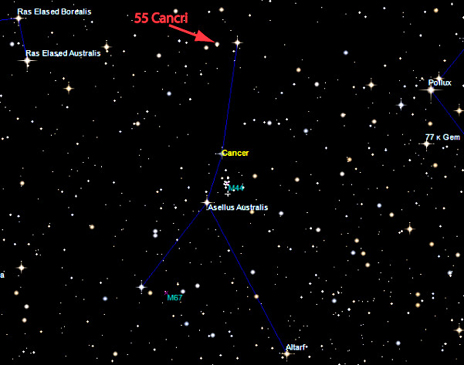
55 Cancri e has a radius twice Earth's and a mass eight times greater, making it a "super-Earth." It is one of five planets orbiting the sun-like star, 55 Cancri, that is located 40 light years from Earth yet visible to the naked eye in the constellation of Cancer. The planet orbits at hyper speed; its year lasts just 18 hours, in contrast to Earth's 365 days. It is also blazing hot, with a temperature of about 3,900 degrees Fahrenheit, researchers said, a far cry from a habitable world.
Recently, some people subjected themselves to perhaps the most annoying study of 2012; they had to sample and pick the most irritating noises in the world, and they did it for science.
Researchers used functional magnetic resonance imaging (fMRI) to examine how the brains of 13 volunteers responded to a range of sounds. Listening to the noises inside the scanner they rated them from the most unpleasant to the most pleasing. Scientists were then able to study the brain response to each type of sound and they believe they have found the interaction between the region of the brain that processes sound, the auditory cortex, and the amygdala, which is active in the processing of negative emotions when we hear unpleasant sounds.
Scientists have used a three GeV synchrotron radiation facility to visualize an interaction between gluten and T-cells in the human immune system, providing insight into how celiac disease is triggered. And it will lead to a vaccine, they believe.
An increasingly diagnosed chronic inflammatory disorder, celiac disease affects the digestive process of the small intestine. When a person with celiac disease consumes gluten, a protein found in wheat, rye and barley, their immune system triggers T-cells to fight the offending proteins, which damages the small intestine and inhibits absorption of important nutrients into the body. There are no treatments, apart from making sure to eat no foods with gluten.
Can researchers improve the quality of matter akin to that found in plasma screens? A new study improves the understanding of plasma sources, where a certain portion of the particles are ionized.
Under certain circumstances, plasma tends to form structures - filaments of electric discharge that are like mini-lightning. Researchers recently investigated barrier discharge, which features at least one electrical insulating material within the discharge gap that acts as an electrically insulating barrier and can be used as a plasma source. They investigated the transition from a highly ordered filament pattern, which is arranged hexagonally, to a disordered system due to the reduction of the externally applied voltage.


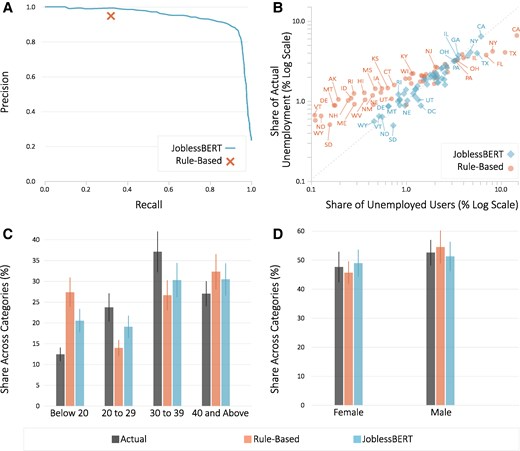 Social Media Is A Faster Source For Unemployment Data Than Government
 Gestational Diabetes Up 36% In The Last Decade - But Black Women Are Healthiest
 Object-Based Processing: Numbers Confuse How We Perceive Spaces
 Males Are Genetically Wired To Beg Females For Food