
Banner
Social Media Is A Faster Source For Unemployment Data Than Government

Government unemployment data today are what Nielsen TV ratings were decades ago - a flawed metric...

Gestational Diabetes Up 36% In The Last Decade - But Black Women Are Healthiest

Gestational diabetes, a form of glucose intolerance during pregnancy, occurs primarily in women...

Object-Based Processing: Numbers Confuse How We Perceive Spaces

Researchers recently studied the relationship between numerical information in our vision, and...
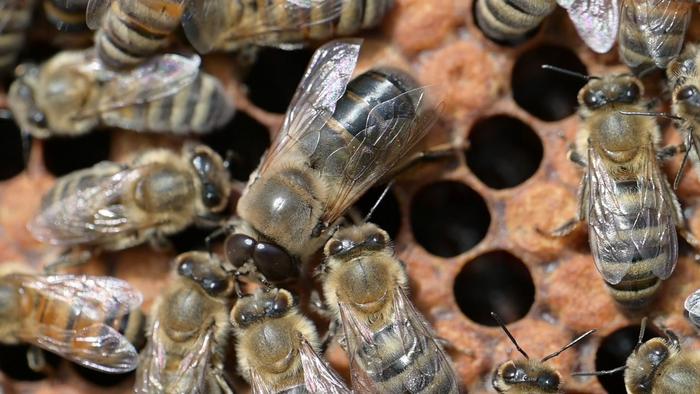
Males Are Genetically Wired To Beg Females For Food

Bees have the reputation of being incredibly organized and spending their days making sure our...

User picture.
News StaffRSS Feed of this column.

News Releases From All Over The World, Right To You... Read More »

Blogroll

Scientific studies of why foods such as Brussels sprouts and stout beer are horribly bitter-tasting to some people but palatable to others are shedding light on a number of questions, from the mechanisms of natural selection to understanding how our genes affect our dietary habits.

Dr. Stephen Wooding, a population geneticist at UT Southwestern Medical Center in Dallas, studies how slight variations in genes give rise to variations in traits among a given human population.

Part of Dr. Wooding's research focuses on variations in the genes responsible for bitter-taste receptors, tiny receptacles on the tongue that intercept harsh-tasting chemicals from food.

Industrial agriculture faces painful challenges: the end of cheap energy, depleted water resources, impaired ecosystem services, and unstable climates. Scientists searching for alternatives to the highly specialized, energy intensive industrial system might profitably look to the biological synergies inherent in multi-species systems, according to an article in the March-April 2007 issue of Agronomy Journal. The paper's author, Fred Kirschenmann, Distinguished Fellow for Leopold Center for Sustainable Agriculture, Iowa State University, states that industrial agriculture assumes:


From roundworm to human, most cells in an animal’s body ultimately come from stem cells. When one of these versatile, unspecialized cells divides, the resulting “daughter” cell receives instructions to differentiate into a specific cell type. In some cases this signal comes from other cells. But now, for the first time, researchers at the Carnegie Institution’s Department of Embryology have found a type of stem cell that directly determines the fate of its daughters.


Intestinal stem cells (ISCs) in the gut of the fruit fly, Drosophila melanogaster, directly determine the fate of their daughter cells. The signaling protein called Delta, seen here in red, determines what type of cell the ISCs will produce.

Here is some news that will certainly get on people's nerves: In a study to be published in the March 2007 issue of The FASEB Journal, scientists from East Carolina University report that a key molecular mechanism, RNA interference (RNAi), plays a role in the regeneration and repair of periphery nerves, which are the nerves located outside of the brain and spinal column. This research may lead to new therapies that manipulate RNAi to treat people with damaged nerves resulting from degenerative disorders and injury.

Andrew Z. Fire of Stanford University and Craig C. Mello of the University of Massachusetts won the 2006 Nobel Prize for the discovery of RNAi.

Doctors who fear their own death say they are more prepared than other doctors to hasten death in sick newborns for whom further medical treatment is considered futile, reveals research published ahead of print in the Fetal & Neonatal Edition of Archives of Disease in Childhood.

The findings are based on an anonymous survey of 138 doctors specialising in the care of sick newborns (neonatologists) across Australia and New Zealand.

The doctors were asked questions about their ethical practice and to complete the Multidimensional Fear of Death Scale (MFODS), which measures different facets of personal fear of death.

Of the 138 doctors contacted, 78 (56%) completed the questionnaire.

In a study spanning the United States, Europe, the Middle East and Asia, researchers writing in the Feb. 15 New England Journal of Medicine say a nasal spray flu vaccine reduced the influenza "attack rate" in children by 55 percent when compared with a group of children who received the traditional flu shot in the arm or thigh.

"Children get the flu twice as often as adults," said Robert Belshe, M.D., a vaccine researcher at Saint Louis University School of Medicine and the lead author of the study. "It's important to vaccinate kids against influenza -- and to identify new and more effective flu vaccine options -- because kids have a higher attack rate for influenza infection than adults.