Banner
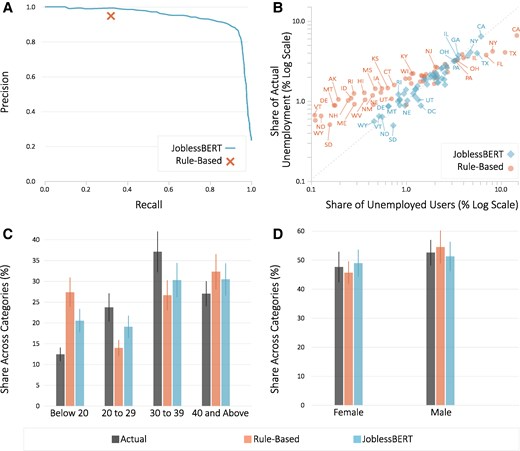
Social Media Is A Faster Source For Unemployment Data Than Government

Government unemployment data today are what Nielsen TV ratings were decades ago - a flawed metric...

Gestational Diabetes Up 36% In The Last Decade - But Black Women Are Healthiest

Gestational diabetes, a form of glucose intolerance during pregnancy, occurs primarily in women...
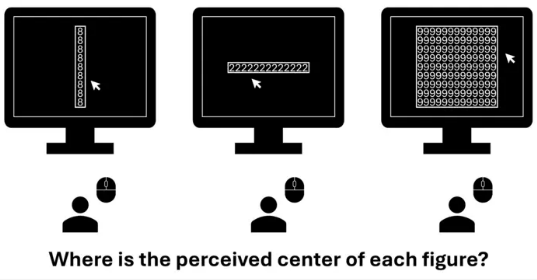
Object-Based Processing: Numbers Confuse How We Perceive Spaces

Researchers recently studied the relationship between numerical information in our vision, and...
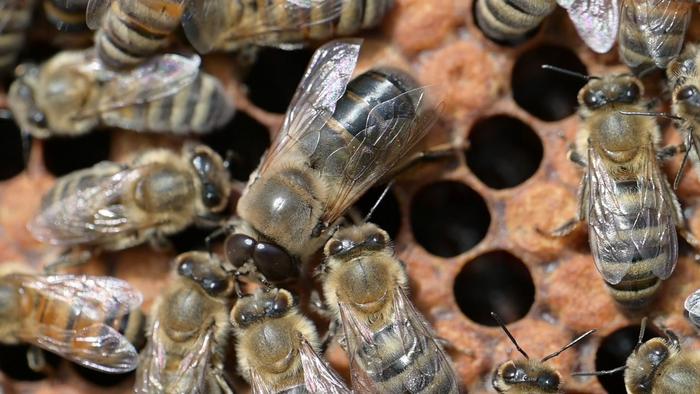
Males Are Genetically Wired To Beg Females For Food

Bees have the reputation of being incredibly organized and spending their days making sure our...

User picture.
News StaffRSS Feed of this column.

News Releases From All Over The World, Right To You... Read More »

Blogroll

VK Raina, leading glaciologist and former ADG of the Geological Society of India, told the Hindustan Times that out of 9,575 glaciers in India, till date, research has been conducted only on about 50. Nearly 200 years data has shown that nothing abnormal has occurred in any of these glaciers.

It is simple. The issue of glacial retreat is being sensationalised by a few individuals, the septuagenarian Raina claimed.

New research challenges traditional perceptions of contemporary climate as sole determiner of richness of species.

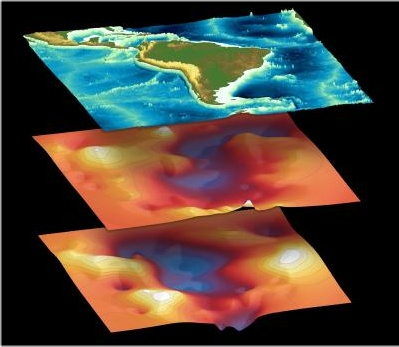
The climate is changing! But how does that affect nature? New research challenges traditional perceptions of contemporary climate as sole determiner of richness of species.

An international research team led by Professor Carsten Rahbek from Department of Biology, University of Copenhagen, questions traditional beliefs that contemporary climate alone determines richness of species, that is, how life is distributed on earth. The current issue of Science magazine highlights the research in Editor’s choice.

An artificial nose could be a real benefit at times: this kind of biosensor could sniff out poisons, explosives or drugs, for instance. Researchers at the Max Planck Institute for Polymer Research and the Max Planck Institute of Biochemistry recently revealed a technique for integrating membrane proteins into artificial structures.

Membrane proteins have several important functions in the cell, one of which is to act as receptors, passing on signals from molecules in the air, for example, to the cell interior. They are thus ideal biosensors, but until now were difficult to access in the lab.

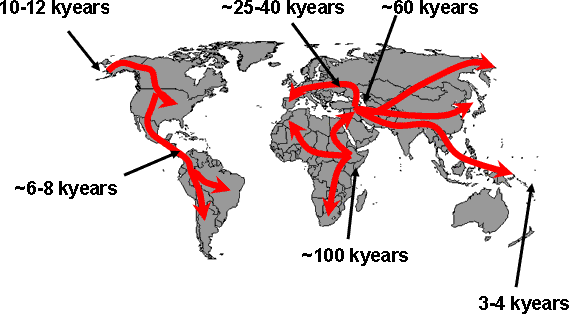
When man made his way out of Africa some 60,000 years ago to populate the world, he was not alone: He was accompanied by the bacterium Helicobacter pylori, which causes gastritis in many people today. Together, man and the bacterium spread throughout the entire world. This is the conclusion reached by an international team of scientists led by Mark Achtman from the Max Planck Institute for Infection Biology in Berlin, Germany. The researchers also discovered that differences developed in the genetic makeup of the bacteria populations, just as it did in that of the various peoples of the world.

What caused the extinction of the woolly rhinoceros ten thousand years ago from an area in Europe covering the coasts of the Arctic Ocean in the north to the coasts of the Mediterranean in the south? What caused the extinction of the mammoth while other ice age mammals like the musk ox just barely survived to present day? A new scientific methodological approach to detect genetic material will help researchers to solve the many mysteries of the past.

"I'm confident that the new methodological approach, will be of great importance to molecular biology", says Professor Eske Willerslev at the Centre for Ancient Genetics, University of Copenhagen, Denmark. One of his PhD students recently came up with a brilliant idea.

The rise of multicellular animals about 540 million years ago was a turning point in the history of life. A group of Finnish scientists suggests a new climate-biosphere interaction mechanism for the underlying processes in a new study, which will be published on February 14, 2007 in PLoS ONE, the international, peer-reviewed, open-access, online publication from the Public Library of Science (PLoS).

The theory invokes cold, ice-containing climates as a key precursor for multicellular life. If the model turns out to be correct, one can assume that complex life might exist also around stars which are more massive and short-lived than the Sun.