
Banner
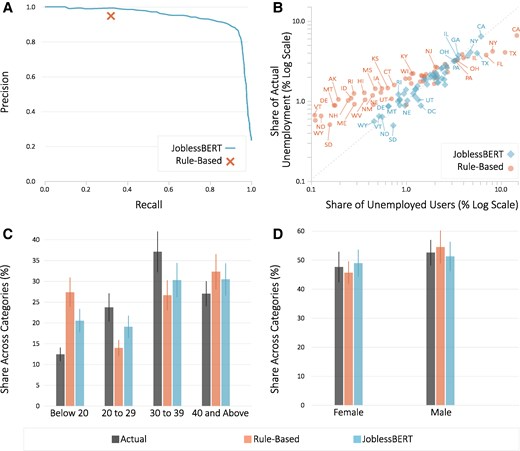
Social Media Is A Faster Source For Unemployment Data Than Government

Government unemployment data today are what Nielsen TV ratings were decades ago - a flawed metric...

Gestational Diabetes Up 36% In The Last Decade - But Black Women Are Healthiest

Gestational diabetes, a form of glucose intolerance during pregnancy, occurs primarily in women...
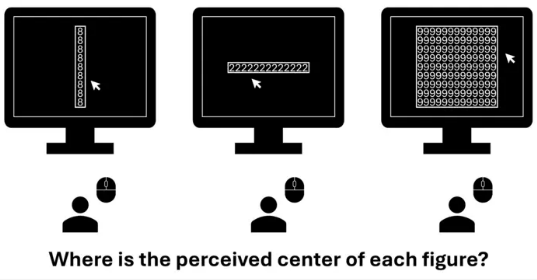
Object-Based Processing: Numbers Confuse How We Perceive Spaces

Researchers recently studied the relationship between numerical information in our vision, and...
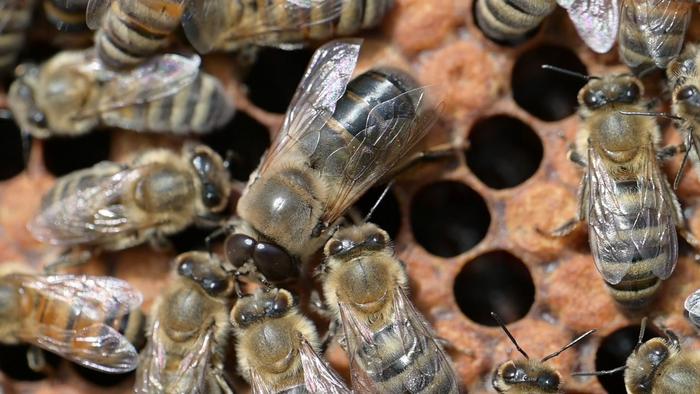
Males Are Genetically Wired To Beg Females For Food

Bees have the reputation of being incredibly organized and spending their days making sure our...

User picture.
News StaffRSS Feed of this column.

News Releases From All Over The World, Right To You... Read More »

Blogroll

Separate teams of scientists have found faint signatures of water in the atmospheres of five distant planets, the first study to conclusively measure and compare the profiles and intensities of these signatures on multiple worlds.

The five planets - WASP-17b, HD209458b, WASP-12b, WASP-19b and XO-1b - are hot Jupiters, massive worlds that orbit close to their stars. The strengths of their water signatures varied. WASP-17b, a planet with an especially puffed-up atmosphere, and HD209458b had the strongest signals. The signatures for the other three planets, WASP-12b, WASP-19b and XO-1b, also are consistent with water.

Extraction using hydraulic fracturing - fracking - has made North America the world's largest producer of oil and gas, while US CO2 emissions from energy have dropped back to early 1990s levels and the most offensive producer, coal, has been pushed back to 1980s levels. Despite those benefits, there have endless protests from environmentalists that fracking is worse for pollution. 

Does drilling for natural gas really cause pollution levels to skyrocket, the way activists claim? 


Thermionic conversion to heat energy, such as light from the sun or heat from burned fossil fuels, can mean very high efficiency, and because of its promise has been researched for over 50 years with little success.

That may soon change, thanks to a new design, dubbed a thermoelectronic generator, described in the Journal of Renewable and Sustainable Energy.

Modern science has made it possible to synthesize increasingly targeted drugs but Ma Nature is not out of it yet - it just took science to discover what nature could do. Pyridomycin, a substance produced by non-pathogenic soil bacteria, has been found to be a potent antibiotic against a related strain of bacteria that cause tuberculosis. 

The
Ecole Polytechnique Fédérale de Lausanne
scientists who discovered this property now have a better understanding of how its complex, three-dimensional structure allows it to act simultaneously on two parts of a key enzyme in the tuberculosis bacillus, and in doing so, dramatically reduce the risk that the bacteria will develop multiple resistances. 

Science, technology, engineering and mathematics (STEM) advocacy has become all the rage at colleges, universities and other institutions as the US government spends billions doing outreach to make students more technical.

A new, internationally agreed radiocarbon calibration curve method will allow key past events to be dated more accurately.

The work led by Professors Paul Blackwell and Caitlin Buck from the University of Sheffield's School of Mathematics and Statistics and Professor Paula Reimer from Queen's University Belfast will lead to improved accuracy for archaeologists, environmental scientists and climate researchers who rely on radiocarbon dating to put their findings onto a reliable time-scale.

The release of the new curve will mean that more precise date estimates can be obtained than previously possible and will reduce uncertainty about the timing of major events in the history and development of humans, plants and animals and the environments in which they lived.






