

Banner
Social Media Is A Faster Source For Unemployment Data Than Government

Government unemployment data today are what Nielsen TV ratings were decades ago - a flawed metric...

Gestational Diabetes Up 36% In The Last Decade - But Black Women Are Healthiest

Gestational diabetes, a form of glucose intolerance during pregnancy, occurs primarily in women...
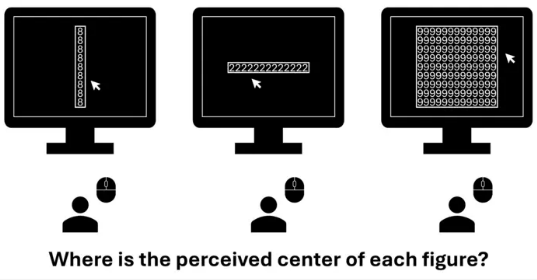
Object-Based Processing: Numbers Confuse How We Perceive Spaces

Researchers recently studied the relationship between numerical information in our vision, and...

Males Are Genetically Wired To Beg Females For Food

Bees have the reputation of being incredibly organized and spending their days making sure our...

User picture.
News StaffRSS Feed of this column.

News Releases From All Over The World, Right To You... Read More »

Blogroll

Archaeologists working in Nepal have uncovered evidence of a structure at the birthplace of the Buddha dating to the sixth century B.C., the first archaeological material linking the life of the Buddha and the movement he founded to a specific century.

The Maya Devi Temple at Lumbini, Nepal, has long been considered the birthplace of the Buddha and now excavations have uncovered the remains of a previously unknown sixth-century B.C. timber structure under a series of brick temples. Laid out on the same design as those above it, the timber structure contains an open space in the center that links to the nativity story of the Buddha himself. 

Playing violent video games not only increases aggression, it also leads to less self-control and more cheating, according to  a paper in Social Psychological and Personality Science.

The psychologists found that teens who played violent video games ate more chocolate and were more likely to steal raffle tickets in a lab experiment than were teens who played nonviolent games. The effects were strongest in those who scored high on a measure of moral disengagement – the ability to convince yourself that ethical standards don't apply to you in a particular situation. 

Global warming was set in motion around 1600 AD, it seems. 

Because carbon dioxide emissions persist for a long time, even a sudden halt today means the carbon dioxide already in Earth's atmosphere could continue to warm our planet for hundreds of years, according to a numerical model which suggests that it might take a lot less carbon than previously thought to reach the global temperature scientists deem unsafe.

Awe-inspiring moments, like the sight of the Grand Canyon or the Aurora Borealis, might increase our tendency to believe in God and the supernatural, according to a new paper in Psychological Science which suggests that awe-inspiring sights increase our motivation to make sense of the world around us. Learning geology may be too hard to it's easier to default to aliens or religion. 

Zombies are really popular - "...and zombies" attached to the end of well-established works of fiction have become a common trope and once they began to swarm over the literary canon, it was only a matter of time before English Lit academics began to overthink the phenomenon.

An international collaboration has discovered a novel receptor, which allows the immune system of modern humans to recognize dangerous invaders, and subsequently elicits an immune response. The blueprint for this advantageous structure was also identified in the genome of Neanderthals, hinting at its origin.

The receptor provided these early humans with immunity against local diseases. The presence of this receptor in Europeans but its absence in early men suggests that it was inherited from Neanderthals.



